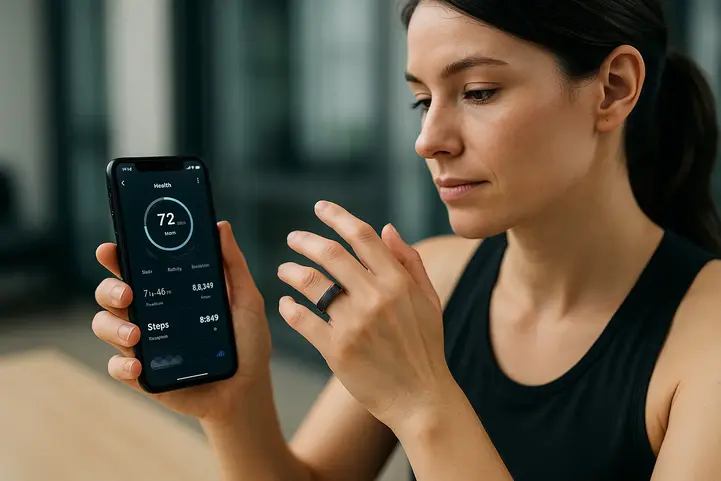
You strap on your smart ring expecting real-time health insights, but the heart rate numbers jump around like a caffeinated squirrel, your sleep data contradicts how you actually feel, and you’re left wondering if smart rings ppg accuracy is just marketing hype or if you’re using it wrong.
The search for accuracy
As young adults, we’re drawn to sleek gadgets that promise to decode our bodies with minimal effort. Smart rings with PPG technology seem like the holy grail, offering instant access to heart rate, sleep patterns, and activity data without the bulk of a smartwatch. But here’s where reality hits hard. I spent three weeks testing a popular smart ring, comparing its readings to my gym’s chest strap monitor and a medical-grade pulse oximeter. The inconsistencies were jarring. One morning, the ring showed my resting heart rate at 58 bpm while my chest strap read 72 bpm. That 14-beat difference might not sound massive, but it’s enough to make you question whether you should trust it for actual health decisions. The frustration builds when you’re trying to optimize your training, track recovery, or monitor stress levels, only to find the data doesn’t align with how your body actually feels.
- Inconsistent heart rate readings can cause confusion and concern about your actual fitness level and recovery status.
- Ambiguous sleep tracking data may lead to sleepless nights of doubt about whether you’re truly getting quality rest.
- Questionable activity monitoring can impact workout routines when calorie counts and step counts don’t match reality.
Navigating the data maze
Once you accept that your smart ring data might not be perfectly accurate, the next challenge emerges: what do you actually do with all these numbers? I found myself drowning in graphs showing heart rate variability, sleep stages, and activity trends, but without a clear framework for interpreting them. A friend of mine obsessed over her ring’s sleep score, which fluctuated wildly from 62 to 89 without any obvious reason. She started changing her entire evening routine based on these scores, cutting out coffee at 2 PM, adjusting her bedtime, all in pursuit of that elusive 90-plus score. The real kicker? She felt more anxious about sleep than ever before. The data became noise instead of insight. Learning to filter signal from noise requires patience and experimentation. You need to track patterns over weeks, not days, and cross-reference ring data with how you actually feel, your workout performance, and your energy levels throughout the day.
💬 Ready to feel better in 2 minutes?choose where to begin:
Achieving balance and trust
Building trust in a device that occasionally lies to you is a strange psychological journey. I realized I had to shift my mindset from treating the smart ring as a medical device to viewing it as a personal wellness companion with known limitations. This shift changed everything. Instead of obsessing over exact numbers, I started using the ring’s data to spot trends and patterns. If my heart rate variability dipped for three consecutive days, that signaled I might be stressed or under-recovered, prompting me to dial back workouts or prioritize sleep. But I didn’t panic if one reading seemed off. I also learned to validate the ring’s insights against my own body awareness. When the ring suggested I was well-rested but I felt exhausted, I trusted my body and took it easy anyway. This balanced approach means using technology as a tool for self-awareness rather than as the ultimate truth about your health.
Embracing the experience
After weeks of testing and frustration, I stopped fighting the smart ring’s limitations and started leveraging its strengths. Yes, the absolute accuracy might not rival medical devices, but the consistency of data collection over time is genuinely valuable. I use my ring now to notice when my baseline shifts, when stress creeps in, or when I’m pushing too hard. The real power isn’t in any single reading but in the story the data tells over days and weeks. I’ve learned to appreciate the convenience of having health metrics on my wrist without letting them dictate my decisions. Young adults especially benefit from this approach because we’re naturally inclined toward self-optimization and data-driven living. The smart ring satisfies that impulse while still leaving room for intuition and self-awareness. It’s a tool for understanding yourself better, not a replacement for listening to your body or consulting actual healthcare professionals when something feels genuinely wrong.
Smart rings offer young adults a convenient way to track health metrics, but their PPG accuracy comes with real limitations that require realistic expectations. By understanding where these devices excel and where they fall short, treating data as trends rather than absolutes, and balancing technology with body awareness, you can use smart rings effectively without letting imperfect readings drive anxiety or poor decisions.
How accurate are PPG readings from smart rings?
PPG readings from smart rings can vary in accuracy due to factors like device quality, fit, skin tone, and individual differences. While they provide a general idea of your health trends, they may not always be as precise as medical-grade monitors or chest strap devices. Most smart rings are accurate enough to spot patterns and trends over time, but individual readings can sometimes be off by 5 to 15 beats per minute.
Can smart rings replace medical devices for monitoring health?
Smart rings can offer valuable insights into your health and wellness trends but are not substitutes for professional medical devices or healthcare providers. If you have specific health concerns, need accurate measurements for medical reasons, or suspect something is wrong, consult healthcare professionals for accurate diagnoses and treatment recommendations rather than relying solely on smart ring data.
Others also read:
Disclaimer: This article is for informational purposes only and is not a substitute for professional medical advice. Always consult a healthcare professional for personal guidance.
This article presents an experience-based perspective and has been reviewed by the GlobalHealthBeacon editorial team in 2026. It provides structured, evidence-based information to support informed health decisions.
