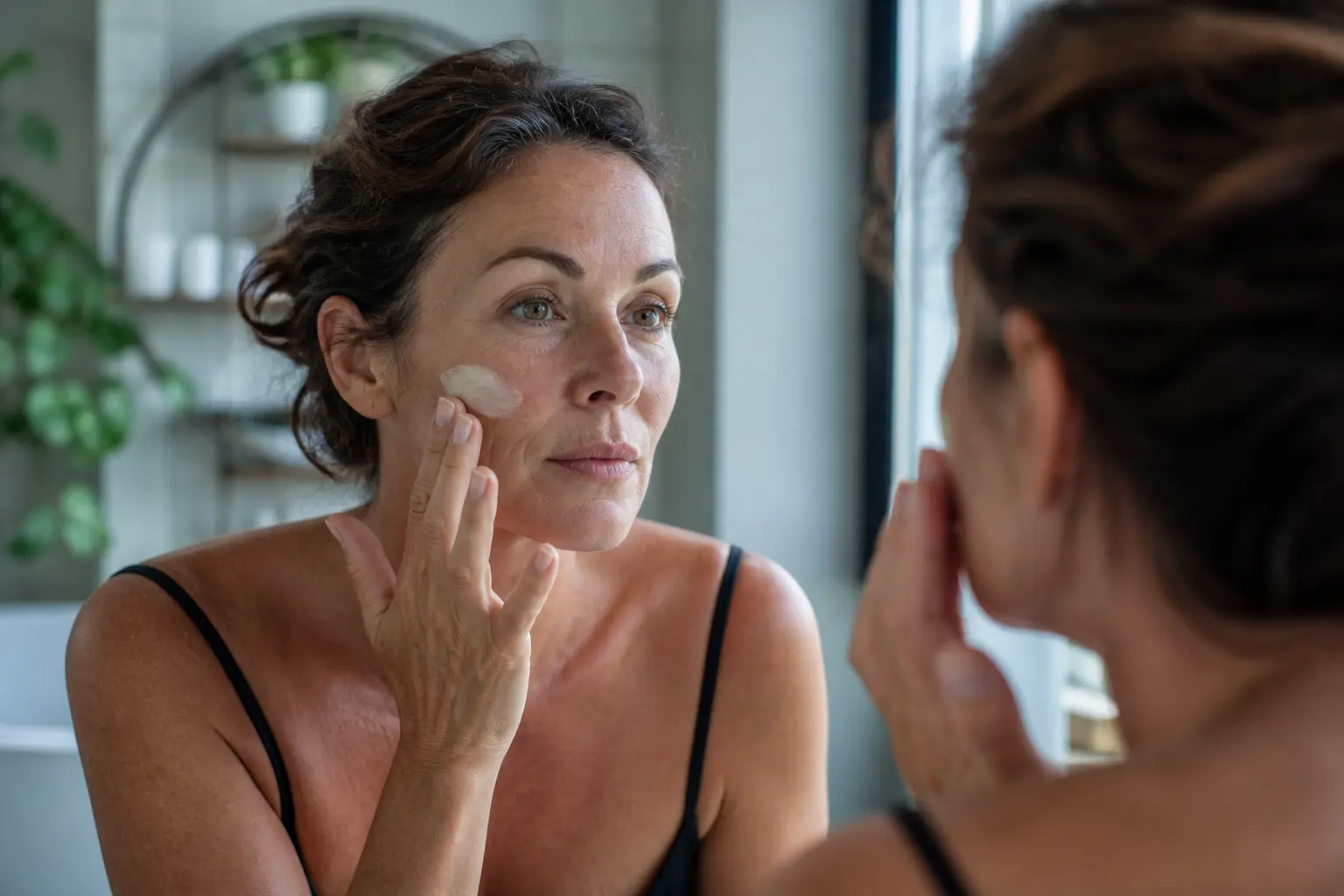
You’re looking in the mirror and noticing your skin doesn’t bounce back like it used to, age spots are creeping in, and those fine lines feel deeper every year – but here’s the thing: understanding spf anti aging benefits could be the single most effective move you make to stop this progression in its tracks.
Understanding the importance of SPF for aging skin
Think about what happens to your skin over decades of sun exposure. Every time you walk to the mailbox, sit by a window, or spend time gardening without protection, UV rays are silently damaging the collagen and elastin that keep your skin firm and smooth. By your 60s and 70s, this cumulative damage shows up as wrinkles, age spots, and leathery texture that feels irreversible. The good news is that SPF works like a shield against this ongoing assault. It blocks both UVA rays, which penetrate deep and break down collagen, and UVB rays, which cause surface burns and DNA damage. When you use SPF consistently from this point forward, you’re essentially hitting pause on further damage. Your skin won’t magically erase past sun damage, but it will stop getting worse, and over time, with proper care, some of that damage can actually fade. Many seniors find that after just three to six months of daily SPF use combined with other skincare practices, their skin looks noticeably calmer and more even-toned.
- SPF shields your skin from UVA and UVB rays, which are major contributors to skin aging.
- Regular use of SPF can help maintain your skin’s firmness and elasticity as you age.
- Incorporating SPF into your skincare routine can prevent the development of skin cancers associated with sun exposure.
Choosing the right SPF for aging skin
Walking down the sunscreen aisle can feel overwhelming when you’re trying to figure out what actually works for mature skin. Here’s what matters: you need broad-spectrum protection, which means it covers both UVA and UVB rays, and an SPF of at least 30. SPF 30 blocks about 97 percent of UVB rays, while SPF 50 blocks 98 percent, so the jump from 30 to 50 is minimal but still worth considering if you spend a lot of time outdoors. Look for products specifically labeled for mature or aging skin, as these tend to include hydrating ingredients like hyaluronic acid or ceramics that prevent the chalky, tight feeling some sunscreens leave behind. If your skin is sensitive or prone to rosacea, mineral sunscreens with zinc oxide or titanium dioxide are gentler than chemical ones. If you have oily skin, look for mattifying formulas. If your skin is dry, seek out creamy or lotion-based options. Many seniors find that a moisturizer with built-in SPF simplifies their routine, though you’ll need to use enough to get the full protection benefit, which is often more than people apply.
📘 Fix your day in under 2 minuteschoose where to begin:
Applying SPF correctly for maximum protection
Here’s where most people mess up: they apply way too little sunscreen to actually get the protection promised on the bottle. The standard recommendation is a quarter teaspoon for your face and neck combined, which sounds like almost nothing but is actually the amount needed to achieve the SPF rating listed. Start by dispensing that amount into your palm, warm it between your hands, and press it gently into your face using upward motions. Don’t rub or massage it in aggressively, as this can disrupt the protective barrier. Pay special attention to your ears, the back of your neck, and your jawline, areas seniors often forget. Apply sunscreen as the last step in your morning skincare routine, after your moisturizer has set. If you’re going to be outside for more than two hours, reapply every two hours, or immediately after swimming or sweating. On cloudy days, UV rays still penetrate clouds, so don’t skip it. Many seniors keep a compact sunscreen stick or powder SPF in their bag for touch-ups throughout the day without disturbing their makeup.
Incorporating SPF into your daily routine
The key to making SPF a lasting habit is removing friction from the process. If you have to hunt for your sunscreen every morning, you’ll eventually skip it. Instead, keep it right next to your toothbrush or on your bathroom counter where you can’t miss it. Pair the habit with something you already do, like applying it right after you brush your teeth or immediately after your morning shower. If you find traditional sunscreen too heavy or greasy, try a hydrating sunscreen mist, a tinted mineral powder, or a moisturizer with SPF built in. Some seniors prefer sunscreen sticks for their face because they’re less messy and easier to reapply on the go. Others use a combination approach: a moisturizer with SPF 30 as their base, then a higher SPF product on areas most exposed to sun, like the nose and cheekbones. The goal isn’t perfection but consistency. Even if you miss some days, the cumulative effect of using SPF most days of the week will significantly slow down skin aging compared to using nothing at all.
Seeking professional advice on SPF and aging skin
If you have specific skin concerns like rosacea, eczema, melasma, or a history of skin cancer, a dermatologist can recommend SPF products and additional protective strategies tailored to your situation. They can also assess whether your skin needs prescription treatments alongside SPF, such as retinoids to boost collagen production or hydroquinone for stubborn age spots. Some seniors benefit from professional treatments like laser therapy or chemical peels to address existing sun damage, which work best when combined with consistent SPF use going forward to prevent new damage. Your dermatologist can also check for precancerous spots or melanoma during a full-body skin exam, catching problems early when they’re most treatable. If you don’t have a dermatologist, your primary care doctor can refer you to one, or you can find one through your insurance provider’s website. Even one consultation can clarify which products are worth your money and which are marketing hype, saving you frustration and expense in the long run.
SPF is a vital component of a skincare routine, especially for seniors looking to combat the signs of aging naturally. By understanding the importance of SPF, choosing the right product, applying it correctly, and seeking professional advice, you can protect your skin and maintain a youthful appearance.
Can SPF alone prevent all signs of aging?
While SPF is essential for protecting your skin from sun damage, it is not a cure-all for aging. It helps prevent premature aging signs but should be combined with other skincare practices for optimal results.
Is it necessary to use SPF every day, even when it’s cloudy?
Yes, it is crucial to apply SPF daily, regardless of the weather. UV rays can penetrate clouds and cause skin damage, so consistent UV protection is necessary to prevent aging signs.
Others also read:
Disclaimer: This article is for informational purposes only and is not a substitute for professional medical advice. Always consult a healthcare professional for personal guidance.
This guide has been prepared and reviewed by the GlobalHealthBeacon editorial team and reflects current medical research as of 2026. It provides structured, evidence-based information to support informed health decisions.
