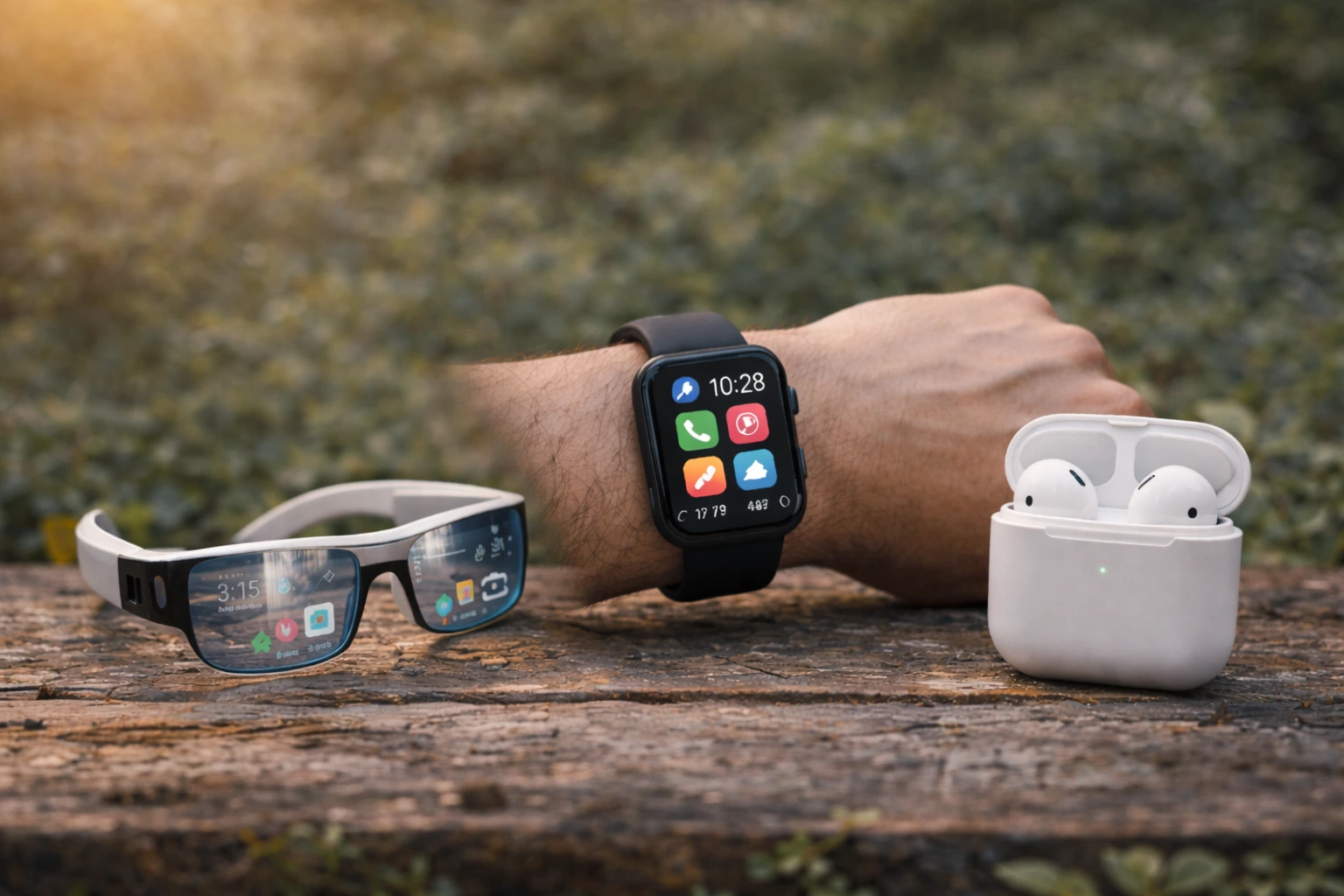
Tired of your phone owning your attention, draining your battery by noon, and feeling like the only way to stay connected is to stay glued to a screen? Technologies replacing mobile phones are finally here, and they work differently than you think.
Understanding the landscape
The tech world has shifted dramatically. You’re no longer limited to one device that does everything poorly. Instead, you can mix and match tools designed for specific needs. Smartwatches handle notifications without pulling you into endless scrolling. AR glasses let you navigate without looking down. Voice devices manage your smart home while you cook or exercise. Think of it like this: instead of carrying a Swiss Army knife that’s uncomfortable to use, you’re building a toolkit where each tool excels at one job. Before you jump in, spend a week noticing what frustrates you most about your phone. Is it the screen time? The notifications? The battery life? The answer shapes which alternative makes sense for you. Some young adults realize they only need their phone for messaging and maps, making a smartwatch plus a voice device the perfect combo. Others discover they’re addicted to social media, so removing the phone entirely becomes the goal. Understanding your actual pain point, not just the general idea of phone alternatives, is where smart decisions begin.
- Explore the advancements in wearable tech for on-the-go convenience.
- Dive into the realm of augmented reality to experience a new dimension of interaction.
- Consider voice-controlled devices for a hands-free experience that streamlines tasks.
Embracing wearable tech
Smartwatches have evolved beyond fitness trackers. A modern smartwatch handles calls, texts, payments, and navigation without needing your phone nearby. Imagine being at the gym and getting an important message, responding with a voice reply, all without breaking your workout. That’s the reality now. The practical advantage is freedom from your pocket. You get notifications on your wrist, which feels less intrusive than your phone buzzing. You can ignore non-urgent messages without guilt because they’re not demanding your full attention. Start with a device that syncs with your existing phone ecosystem. If you use Apple products, an Apple Watch integrates seamlessly. Android users benefit from Wear OS watches. Battery life varies from one to three days depending on the model, so factor that into your decision. A common mistake young adults make is expecting the watch to replace the phone entirely. It won’t handle heavy work tasks or content creation. But for daily communication, fitness tracking, and quick information access, a smartwatch genuinely reduces your phone dependency. Many users report they now check their phone once or twice daily instead of constantly.
📘 Fix your day in under 2 minuteschoose where to begin:
Diving into augmented reality
AR glasses represent the frontier of phone alternatives, though they’re still maturing. These devices overlay digital information onto the real world. Navigation arrows appear on the street ahead. Messages pop up in your field of vision. Gaming becomes immersive without a screen in your hands. The appeal for young adults is obvious: you stay present in your environment while accessing information. You’re not hunched over a phone screen at dinner or while walking. Current options like Meta Ray-Bans and Microsoft HoloLens vary in price and capability. The budget-friendly Ray-Bans focus on photos, calls, and audio. HoloLens targets professional work and complex applications. Before investing, consider your actual use case. If you want to photograph moments hands-free, Ray-Bans work well. If you’re imagining full phone replacement, you’re not there yet. Battery life is still a limitation, typically four to eight hours. The technology is improving rapidly, so waiting six months might give you better options. Many young adults are using AR glasses as a supplement, not a replacement, combining them with smartwatches and voice devices for a complete ecosystem.
Exploring voice-controlled devices
Voice assistants like Alexa and Google Home handle the tasks you don’t need a screen for. Setting reminders, playing music, checking weather, controlling lights, ordering groceries, all through conversation. The advantage is simplicity and speed. Asking Alexa to set a timer takes two seconds. Unlocking your phone, opening an app, and tapping takes ten. Over a day, those seconds add up. Voice devices work best when you’re already using smart home technology. If your lights, thermostat, and speakers are connected, voice control becomes genuinely useful. If you’re still using manual switches, the benefit is limited. A practical scenario: you’re cooking dinner and realize you need an ingredient. You ask your device to add it to your shopping list without touching anything. That’s the real value. The common mistake is thinking voice devices replace phones for communication. They don’t handle texts or calls well. They’re best for information retrieval, home automation, and quick tasks. Young adults often use a voice device in their bedroom or kitchen, paired with a smartwatch for on-the-go needs. This combination handles most daily tasks without requiring a phone.
Making the switch wisely
Switching away from your phone isn’t an all-or-nothing decision. Most young adults find success by gradually reducing phone dependency rather than quitting cold turkey. Start by identifying one specific problem your phone causes. Maybe it’s bedtime scrolling, work notifications bleeding into personal time, or constant distraction. Choose one alternative that directly solves that problem. If it’s bedtime scrolling, a smartwatch in your bedroom handles alarms and early morning messages without the temptation to browse. If it’s work stress, a voice device in your living room lets you check weather and news without opening email. Use that single tool for two weeks. Notice what works and what you miss. Then add a second tool if needed. This staged approach prevents the shock of sudden change and helps you identify which alternatives genuinely improve your life versus which ones are just novelty. Consider your existing tech ecosystem. Switching to Apple Watch makes sense if you own an iPhone, but less sense if you’re on Android. Compatibility matters because friction kills adoption. Also think about your social life. If your friend group coordinates via WhatsApp, you can’t fully abandon your phone. But you might keep it in another room and check it once an hour instead of constantly. The goal isn’t perfection. It’s intentional use of technology that serves your life instead of controlling it.
Technologies replacing mobile phones offer real alternatives when you choose them strategically. Smartwatches reduce constant notifications. AR glasses keep you present. Voice devices automate routine tasks. The path forward isn’t abandoning your phone overnight. It’s building a toolkit where each device handles what it does best, and you regain control over your attention and time.
Are these technologies affordable for young adults?
Prices vary widely. Smartwatches start around 150 dollars and go up to 400 dollars. Voice devices range from 50 to 200 dollars. AR glasses currently cost 300 to 3500 dollars depending on capability. Budget-friendly options exist for smartwatches and voice devices. AR glasses are still premium. Start with one affordable device rather than buying everything at once.
Can these alternatives fully replace mobile phones?
Not yet for most people. Smartwatches and voice devices handle many daily tasks but lack the processing power for content creation or complex work. AR glasses are advancing but still limited in battery and app availability. Most young adults find success combining multiple devices rather than replacing their phone entirely. A smartwatch plus voice device covers 70 to 80 percent of typical phone use.
Others also read:
Disclaimer: This article is for informational purposes only and is not a substitute for professional medical advice. Always consult a healthcare professional for personal guidance.
This guide has been prepared and reviewed by the GlobalHealthBeacon editorial team and reflects current medical research as of 2026. It provides structured, evidence-based information to support informed health decisions.
