Your phone buzzes constantly, drains your battery by noon, and you’re stuck in the same upgrade cycle every two years, but what if technologies replacing mobile phones could actually break that exhausting pattern and give you something genuinely different?
Biological adaptation vs. technological evolution
Think about the last time you switched devices. Your brain didn’t just accept the new interface overnight, right? There’s actual neuroscience happening behind the scenes. When we encounter new technologies replacing mobile phones, our neural pathways literally rewire themselves through a process called neuroplasticity. Young adults are particularly adaptable because their brains are still optimizing executive function and habit formation. Consider someone switching from a traditional smartphone to a wearable-first ecosystem. Initially, reaching for a watch instead of a phone feels awkward, almost wrong. But within weeks, new neural connections strengthen while old ones weaken. This mirrors biological adaptation in nature, where organisms adjust to environmental pressures. The difference is speed. Evolution takes generations; our brains adapt to tech in days. Understanding this gap helps explain why some people embrace phone replacement technologies immediately while others resist. Your brain isn’t being stubborn, it’s protecting established patterns.
The rise of wearable tech
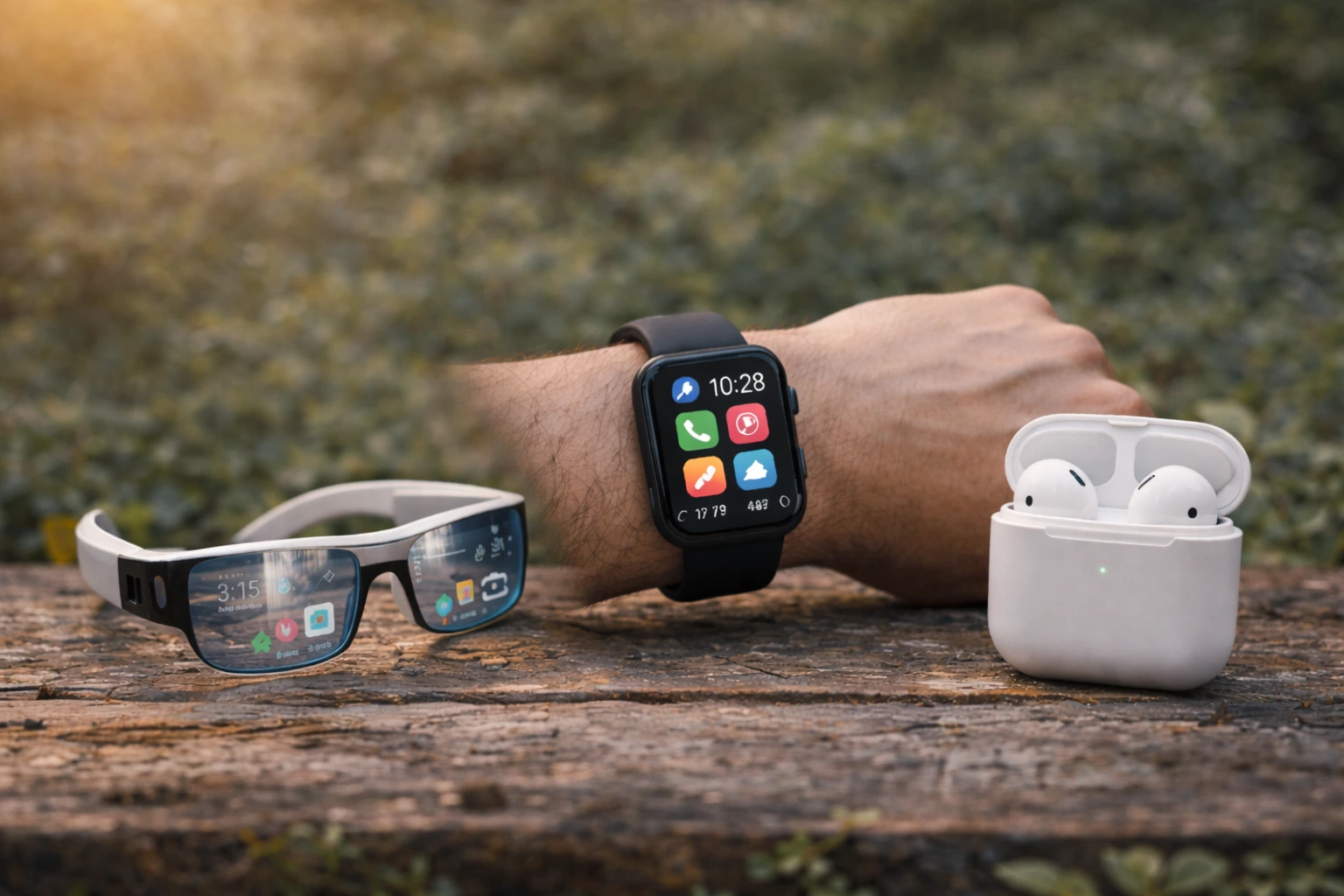
Wearable devices have quietly become the frontline of technologies replacing mobile phones. Smartwatches like the Apple Watch and Samsung Galaxy Watch now handle calls, messages, payments, and health monitoring without ever needing to pull out your pocket device. Augmented reality glasses represent the next frontier, though they’re still in early adoption phases. Imagine checking your calendar, responding to messages, and navigating your day through lightweight glasses perched on your nose. Companies like Meta and Google are investing billions into this vision. The efficiency gain is real: no more fishing through bags or pockets, no more screen time guilt from constant checking. Wearables integrate seamlessly because they’re always accessible and contextually aware. A runner gets heart rate data without stopping. A commuter reads notifications without stopping traffic. The trade-off involves battery life and processing power, which manufacturers are steadily improving. For young adults juggling work, social life, and personal projects, wearables offer a middle ground between constant connectivity and digital minimalism.
Exploring AI-powered virtual assistants
AI virtual assistants have evolved from novelty features to genuine productivity tools. Siri, Alexa, Google Assistant, and ChatGPT represent different approaches to voice-first interaction, which fundamentally changes how we access information and control our environments. Instead of typing or tapping, you simply speak. This shift toward conversational interfaces is one of the most significant technologies replacing mobile phones because it removes the screen entirely from many daily tasks. Picture your morning routine: you ask Alexa to read your calendar and emails while showering, then ask your car’s AI assistant for traffic updates during your commute. By the time you reach the office, you’ve consumed information that once required phone screen time. The inner workings involve natural language processing, machine learning models trained on billions of conversations, and cloud computing infrastructure that interprets intent rather than just keywords. Privacy concerns are legitimate, though, as these systems record and analyze voice data. Young adults often weigh convenience against data collection, making informed choices about which assistants they trust with their information.
- Understand the capabilities of AI virtual assistants in performing daily tasks.
- Explore the privacy concerns associated with AI technology in communication devices.
- Evaluate the convenience and efficiency of using virtual assistants over traditional mobile phones.
🔬 Science-backed benefits in 2 minuteschoose where to begin:
The role of biometric authentication
Biometric authentication methods like facial recognition and fingerprint scanning have become standard security features, but their role extends beyond unlocking phones. These technologies replacing mobile phones represent a shift from something you know (passwords) to something you are (your unique biological markers). Your face contains over 80 distinct landmarks that facial recognition algorithms map and compare. Your fingerprint has roughly 40 unique characteristics. This specificity makes biometric authentication simultaneously more secure and more convenient than traditional passcodes. A young adult can unlock their device, authorize payments, and access sensitive apps in seconds without remembering complex passwords. However, the trade-off involves data storage and potential misuse. Your biometric data is permanent, unlike passwords that can be changed. If compromised, you can’t simply create a new face. Companies implement encryption and secure enclaves to protect this information, but the risks remain. Understanding both the convenience and the privacy implications helps you make informed decisions about which biometric methods to enable on your devices.
5G connectivity and its implications
5G networks represent a fundamental shift in how devices communicate, enabling technologies replacing mobile phones to function in ways previously impossible. While 4G LTE maxes out around 100 megabits per second, 5G delivers gigabits per second with latency measured in milliseconds instead of tens of milliseconds. This speed difference sounds technical, but the real-world impact is profound. Imagine downloading a full-length movie in seconds, or experiencing virtual reality without lag or motion sickness. Augmented reality applications become practical. Cloud-based computing becomes viable for real-time tasks. A surgeon could perform remote surgery with minimal delay. Young adults benefit from seamless video calls, instant file sharing, and responsive gaming experiences. The infrastructure rollout is still ongoing, with coverage varying significantly by location. 5G also enables the Internet of Things, where billions of devices communicate simultaneously without overwhelming networks. This connectivity backbone supports the entire ecosystem of wearables, AI assistants, and smart environments that represent the future of communication technology.
The future of communication devices
Looking ahead, the technologies replacing mobile phones become increasingly speculative but genuinely fascinating. Holographic displays could project 3D interfaces into the air, eliminating the need for physical screens entirely. Brain-computer interfaces, currently in research phases, might allow direct neural communication without any external device. Neural implants could theoretically let you access information, send messages, or control devices through thought alone. While this sounds like science fiction, companies like Neuralog are already testing early versions. For young adults, the timeline matters. Holographic tech might be mainstream within a decade. Brain-computer interfaces will likely remain experimental for 20+ years. The evolution of communication tools reflects broader human desires: faster connection, less friction, more intuitive interaction. Each generation of technology removes another layer of complexity. Keyboards replaced punch cards. Touchscreens replaced keyboards. Voice replaced touchscreens. The next step might eliminate the device entirely, embedding communication directly into our environment or our biology. Understanding this trajectory helps you navigate current technologies with perspective, knowing that today’s cutting-edge becomes tomorrow’s outdated.
Advancements in phone replacement technologies such as wearable tech, AI virtual assistants, biometric authentication, 5G connectivity, and futuristic communication devices are reshaping the landscape of modern communication.
What are the key trends in phone replacement technologies?
Key trends include the rise of wearable tech, AI virtual assistants, biometric authentication, 5G connectivity, and the development of futuristic communication devices.
How are AI virtual assistants changing the way we communicate?
AI virtual assistants are enhancing communication by offering convenience, efficiency, and personalized experiences, gradually replacing traditional mobile phones in performing various tasks.
Others also read:
Disclaimer: This article is for informational purposes only and is not a substitute for professional medical advice. Always consult a healthcare professional for personal guidance.
This article has been prepared and reviewed by the GlobalHealthBeacon editorial team and is based on current medical research and published scientific literature available in 2026. It provides structured, evidence-based information to support informed health decisions.
← Back to the Main page on: technologies replacing mobile phones
