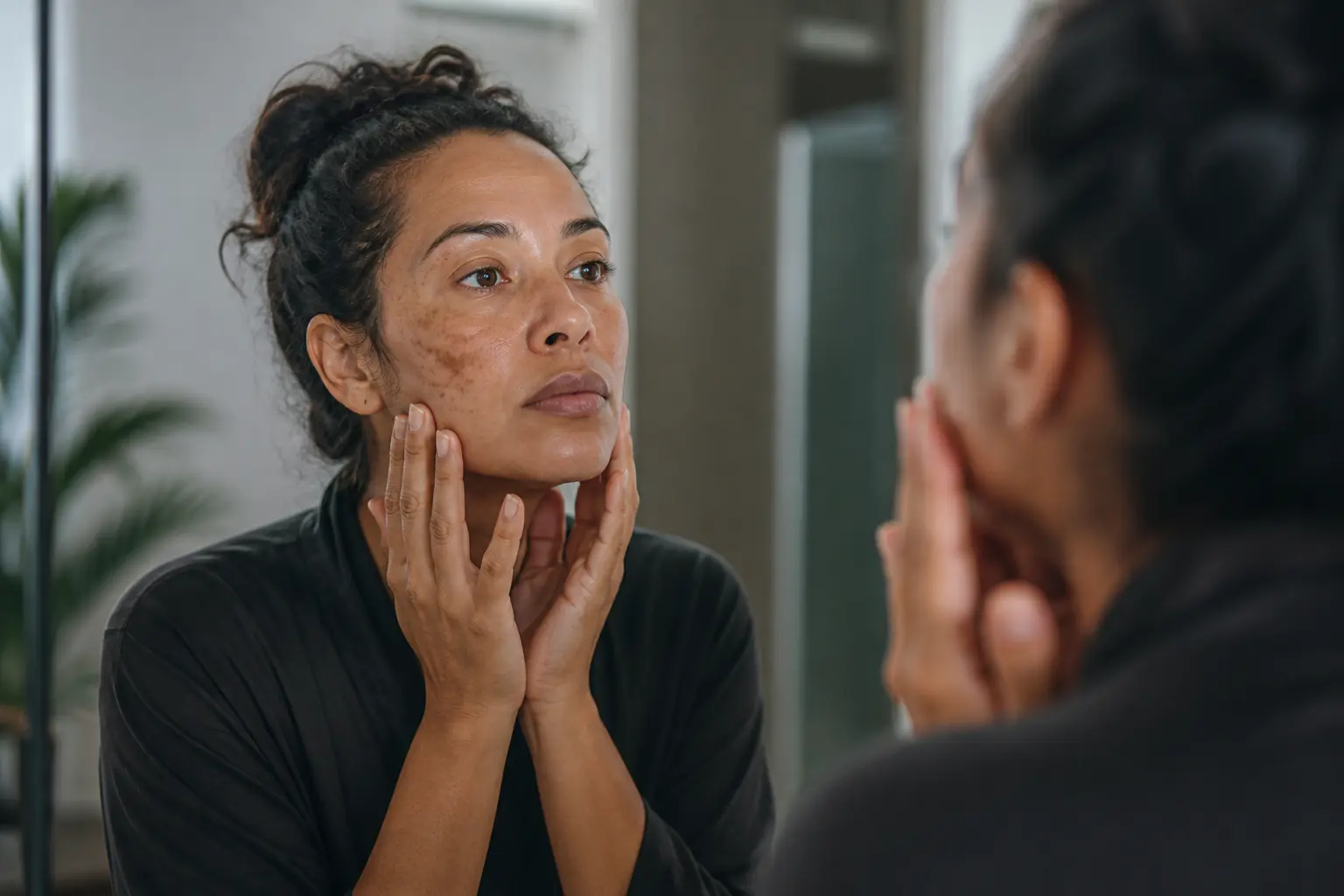
Those stubborn dark patches creeping across your face, neck, and hands aren’t just a cosmetic nuisance, they’re a sign your skin has been through decades of sun exposure and life, and you’re ready to treat hyperpigmentation without peels because you want real results without the downtime or risk.
Understanding hyperpigmentation in depth
Hyperpigmentation occurs when melanin, the pigment responsible for skin color, accumulates unevenly in certain areas. Think of melanin as your skin’s natural sunscreen, but sometimes it overproduces in patches, creating those dark spots and uneven tones many of us notice as we age. This happens because melanocytes, the cells that produce melanin, can become overactive due to sun exposure, hormonal shifts during menopause, or even minor skin injuries that trigger inflammation. For someone in their sixties or seventies, these spots often represent years of accumulated sun damage, sometimes dating back decades to when sunscreen wasn’t routinely used. Understanding this process helps explain why these spots don’t disappear overnight and why prevention matters just as much as treatment.
Research-backed treatment approaches
Scientific research has identified several ingredients that work by interrupting melanin production at different stages. Vitamin C, a powerful antioxidant, not only protects skin from further damage but also inhibits the enzyme tyrosinase, which is essential for melanin synthesis. Niacinamide, also called vitamin B3, reduces inflammation and helps regulate sebum production while gently suppressing melanin formation. Licorice extract contains glabridin, a compound that blocks tyrosinase activity without the irritation some people experience with stronger ingredients. Retinoids, derived from vitamin A, accelerate cell turnover, helping fade existing pigmentation by bringing fresh skin to the surface. Kojic acid and azelaic acid offer additional pathways to address hyperpigmentation. These ingredients work best when used consistently over weeks and months, not days, because skin cell turnover takes time.
Implementing a targeted skincare routine
Building an effective routine requires patience and consistency rather than complexity. Start each morning and evening with a gentle cleanser that removes dirt and oil without disrupting your skin barrier, which becomes more delicate with age. After cleansing, apply a vitamin C serum or niacinamide product to clean, slightly damp skin, allowing it to absorb for a minute before adding other products. Follow with a lightweight moisturizer suited to your skin type, as these active ingredients can sometimes cause mild dryness initially. The most critical step many people skip is daily sunscreen with broad-spectrum protection of at least SPF 30, applied generously and reapplied every two hours if you’re outdoors. Without sun protection, new pigmentation will continue forming, making all other efforts less effective. Consider this routine a long-term investment, expecting to see meaningful changes after eight to twelve weeks of consistent use.
- Choose a mild, pH-balanced cleanser that removes impurities without stripping natural oils from aging skin.
- Apply vitamin C or niacinamide serums to damp skin each morning and evening, waiting briefly before layering other products.
- Use a nourishing moisturizer appropriate for your skin type to support barrier function and reduce irritation from active ingredients.
- Apply broad-spectrum sunscreen with SPF 30 or higher every morning, and reapply every two hours during outdoor activities.
🔬 Science-backed benefits in 2 minuteschoose where to begin:
The role of topical treatments
Topical treatments work directly on the skin surface and upper layers where hyperpigmentation develops. Hydroquinone, a prescription-strength ingredient, remains one of the most studied depigmenting agents and works by decreasing melanin production and promoting melanin degradation. Kojic acid, derived from fungi, offers a gentler alternative for those with sensitive skin, though results may develop more slowly. Retinoids like tretinoin or adapalene increase cell turnover dramatically, revealing fresher skin beneath while also addressing fine lines and texture simultaneously. Azelaic acid provides dual benefits by reducing inflammation and inhibiting melanin production, making it particularly useful for those with rosacea or sensitive skin alongside hyperpigmentation. The key to success with these treatments is starting low and going slow, especially for mature skin that may be more reactive. Many people make the mistake of applying too much product too frequently, causing irritation that actually worsens pigmentation through post-inflammatory hyperpigmentation.
Supplementing with antioxidants
While topical treatments address hyperpigmentation directly, internal antioxidants support skin health from within by combating oxidative stress that accelerates aging and pigmentation. Berries, particularly blueberries and blackberries, contain anthocyanins that protect skin cells from free radical damage. Green tea, whether consumed as a beverage or applied topically, provides polyphenols with proven anti-inflammatory and antioxidant properties. Dark chocolate with at least 70 percent cocoa contains flavonoids that improve blood flow to skin and protect against UV damage. Leafy greens like spinach and kale offer lutein and zeaxanthin, compounds that filter harmful light wavelengths. Fatty fish rich in omega-3 fatty acids support skin barrier function, helping your skin retain moisture and resist irritation from active treatments. The synergy between internal nutrition and external skincare creates a more comprehensive approach, though it’s important to recognize that diet alone cannot reverse established hyperpigmentation.
Professional treatments for stubborn hyperpigmentation
When home care reaches its limits, dermatologists offer several evidence-based professional options. Laser therapy, particularly Q-switched lasers, targets melanin directly, breaking it down into smaller particles that the body can eliminate naturally. Microdermabrasion uses fine crystals or a diamond tip to gently abrade the skin surface, removing damaged outer layers and stimulating collagen production. Chemical peels, despite being excluded from your preferred approach, remain highly effective for some people when performed by qualified professionals. Intense pulsed light (IPL) therapy works similarly to lasers but covers larger areas, making it efficient for widespread pigmentation. Combination approaches, such as using a professional treatment followed by targeted home care with vitamin C and sunscreen, often yield the best results. A consultation with a board-certified dermatologist helps determine which option suits your specific type of hyperpigmentation, skin tone, and tolerance for downtime.
Managing hyperpigmentation in older skin requires understanding the biological mechanisms behind melanin overproduction and implementing a multi-layered approach. Research-backed ingredients like vitamin C, niacinamide, retinoids, and kojic acid address hyperpigmentation through different pathways when used consistently over time. A comprehensive routine combining targeted skincare, sun protection, antioxidant support, and professional interventions when needed offers the best chance of improvement. Success depends on realistic expectations, patience, and commitment to long-term care rather than quick fixes.
Are natural remedies effective for treating hyperpigmentation?
Natural ingredients like vitamin C, niacinamide, licorice extract, and kojic acid do show scientific evidence for reducing hyperpigmentation, but results develop gradually over months rather than weeks. Their effectiveness depends on concentration, formulation, and consistent use. Stronger prescription options like hydroquinone or professional treatments may produce faster results, but natural alternatives work well for maintenance and prevention when combined with sun protection.
Can hyperpigmentation be completely reversed?
Complete reversal of established hyperpigmentation is often unrealistic, particularly for deep or long-standing spots. However, significant lightening and improvement in skin tone evenness is achievable through consistent home care and professional treatments. Managing expectations helps maintain motivation, as even a 50 to 70 percent improvement in appearance can dramatically enhance skin confidence and appearance.
Others also read:
Disclaimer: This article is for informational purposes only and is not a substitute for professional medical advice. Always consult a healthcare professional for personal guidance.
This article has been prepared and reviewed by the GlobalHealthBeacon editorial team and is based on current medical research and published scientific literature available in 2026. It provides structured, evidence-based information to support informed health decisions.
← Back to the Main page on: treat hyperpigmentation without peels
