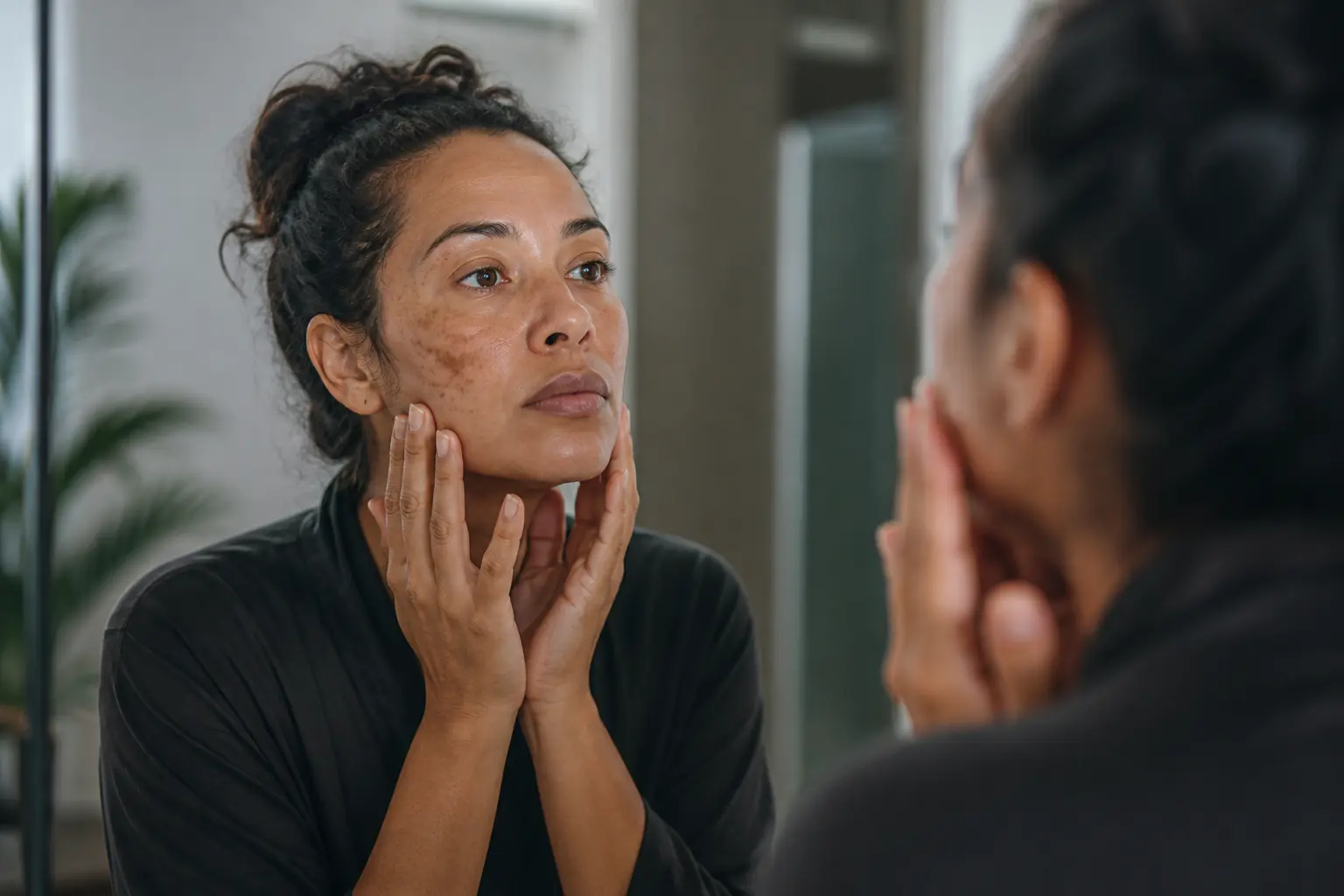
Dark spots creeping across your face, uneven tone that makes you look tired, and the fear that harsh chemical peels will damage your delicate mature skin – here’s how to treat hyperpigmentation without peels and actually feel confident in your own skin again.
Gentle exfoliation methods
Chemical peels sound intimidating, and honestly, your mature skin doesn’t need that level of aggression. Instead, think of gentle exfoliation as a daily ritual that respects what your skin has been through. A soft-bristled brush or a mild exfoliating scrub removes dead skin cells that accumulate on the surface, revealing fresher, brighter skin underneath without triggering irritation or sensitivity. Picture this: you’re in your bathroom, using a brush with the gentleness you’d use on your face after a sunburn. That’s the approach. Many seniors find that exfoliating just two to three times weekly, combined with hydrating products, gives them visible results within weeks. The key mistake people make is scrubbing too hard or too often, thinking more equals faster results. Your skin barrier is precious at this stage of life, and aggressive exfoliation can compromise it, leading to redness, dryness, and increased sensitivity. Start with once weekly, observe how your skin responds, then gradually increase frequency if needed. Pair your gentle exfoliation with a nourishing serum or cream immediately after to lock in moisture and maximize the brightening benefits.
- Exfoliate gently two to three times weekly with soft-bristled tools or mild scrubs
- Avoid aggressive scrubbing that disrupts the skin barrier and causes irritation
- Apply hydrating serums or creams immediately after exfoliation to seal in moisture
Brightening serums and creams
Once you’ve gently prepped your skin through exfoliation, brightening serums become your secret weapon against stubborn hyperpigmentation. Look for ingredients like vitamin C, which boosts collagen production and fades dark spots over time, niacinamide, which strengthens your skin barrier while evening out tone, or licorice extract, a gentle powerhouse that reduces inflammation and pigmentation simultaneously. Imagine applying a serum in the morning and evening as part of your routine, and after six to eight weeks, noticing that those age spots are noticeably lighter. This isn’t overnight magic, but it’s consistent, safe progress. Many seniors report that vitamin C serums, when applied to clean, dry skin before moisturizer, deliver the most visible results. The mistake many people make is expecting instant transformation or switching products every week because they don’t see immediate change. Skin cell turnover takes time, especially as we age. Commit to a brightening product for at least six weeks before evaluating results. Also, be cautious about combining too many active ingredients at once, which can overwhelm mature skin and cause irritation. Start with one brightening product, master it, then consider adding another if needed.
📘 Fix your day in under 2 minuteschoose where to begin:
Natural DIY face masks
You don’t need expensive treatments to nourish your skin and reduce pigmentation. Your kitchen likely contains ingredients that have been used for centuries to brighten and heal skin. A simple mask made from plain yogurt, raw honey, and a pinch of turmeric creates a gentle, anti-inflammatory treatment that you can apply once weekly. The yogurt provides lactic acid for mild exfoliation, honey soothes and hydrates, and turmeric reduces redness and pigmentation. Picture yourself on a Sunday afternoon, mixing these ingredients, applying the mask, and spending fifteen minutes relaxing while your skin absorbs the benefits. Oatmeal mixed with honey and a few drops of olive oil creates another nourishing option that’s especially soothing for sensitive, irritated skin. Many seniors find that these DIY masks feel luxurious, cost almost nothing, and deliver visible results without the risk of chemical burns or adverse reactions. The common pitfall is leaving masks on too long, thinking longer equals better results. Most natural masks should stay on for ten to fifteen minutes maximum. Also, always patch test new ingredients on a small area of your inner arm first, especially if you have sensitive skin or are prone to reactions. Store homemade masks in the refrigerator and use them within a few days.
Sun protection essentials
Here’s a hard truth: no brightening treatment, mask, or serum will work effectively if you’re not protecting your skin from the sun. UV rays are the primary driver of hyperpigmentation, age spots, and uneven skin tone in seniors. Without daily broad-spectrum sunscreen, you’re essentially fighting an uphill battle, undoing your brightening efforts every time you step outside. Think of sunscreen not as optional but as the foundation of your entire skincare strategy. Apply a broad-spectrum SPF 30 or higher every single day, even on cloudy days, because UV rays penetrate clouds. Reapply every two hours if you’re outdoors, or after swimming or sweating. Many seniors skip this step because they think they’re past the age where sun damage matters, but that’s exactly when it matters most. Your skin is already dealing with decades of sun exposure, so protecting it now prevents further darkening of existing pigmented areas and keeps new spots from forming. Choose a sunscreen formulated for mature, sensitive skin, as many older formulations can feel greasy or leave a white cast. Mineral sunscreens with zinc oxide or titanium dioxide tend to work well for mature skin and provide immediate protection without chemical absorption.
Hydrating and nourishing skincare
Mature skin loses moisture naturally over time, and dehydrated skin looks dull, accentuates fine lines, and makes hyperpigmentation appear more pronounced. Hydration isn’t a luxury, it’s a necessity. Rich moisturizers infused with hyaluronic acid, which holds up to one thousand times its weight in water, shea butter, a deeply nourishing fat that restores the skin barrier, or ceramides, which lock moisture in and prevent transepidermal water loss, transform your skin’s appearance and texture. Imagine applying a hydrating moisturizer to damp skin and feeling it absorb completely, leaving your skin plump, soft, and resilient. This is what happens when mature skin gets the hydration it craves. Many seniors find that switching to a richer moisturizer, especially in winter or dry climates, makes an enormous difference in how their skin looks and feels. The mistake people make is thinking that more product equals better results. A pea-sized amount of rich moisturizer, applied to damp skin, is often enough. Also, don’t skip hydration just because your skin feels oily in certain areas. Mature skin can be combination, with dry patches and oily zones, requiring a balanced approach. Consider using a lighter hydrating serum under your moisturizer for layered hydration without heaviness.
Treating hyperpigmentation without chemical peels is entirely possible when you combine gentle exfoliation, brightening serums, nourishing DIY masks, daily sun protection, and consistent hydration. These methods respect the delicate nature of mature skin while delivering real, visible results over time. Start with one or two approaches, master them, then gradually add others as your skin adapts. Consistency and patience are your greatest tools.
Are these alternatives suitable for sensitive skin?
Yes, these alternatives are designed to be gentle and work well for sensitive skin. Always perform a patch test on your inner arm or behind your ear before applying any new product or mask to your face. If you experience redness, burning, or itching, discontinue use and consult a dermatologist. Seniors with very sensitive skin should introduce one new product at a time, waiting at least one week between additions to monitor tolerance.
Can I combine these treatments for best results?
You can combine different alternatives, but introduce them gradually. Start with gentle exfoliation and sunscreen for two weeks, then add a brightening serum, then a hydrating moisturizer. This staged approach lets you identify which products your skin loves and which ones cause irritation. Avoid combining multiple active ingredients on the same day initially. Once your skin adapts, you can layer them safely.
Others also read:
Disclaimer: This article is for informational purposes only and is not a substitute for professional medical advice. Always consult a healthcare professional for personal guidance.
This guide has been prepared and reviewed by the GlobalHealthBeacon editorial team and reflects current medical research as of 2026. It provides structured, evidence-based information to support informed health decisions.
← Go to the treat hyperpigmentation without peels main guide
