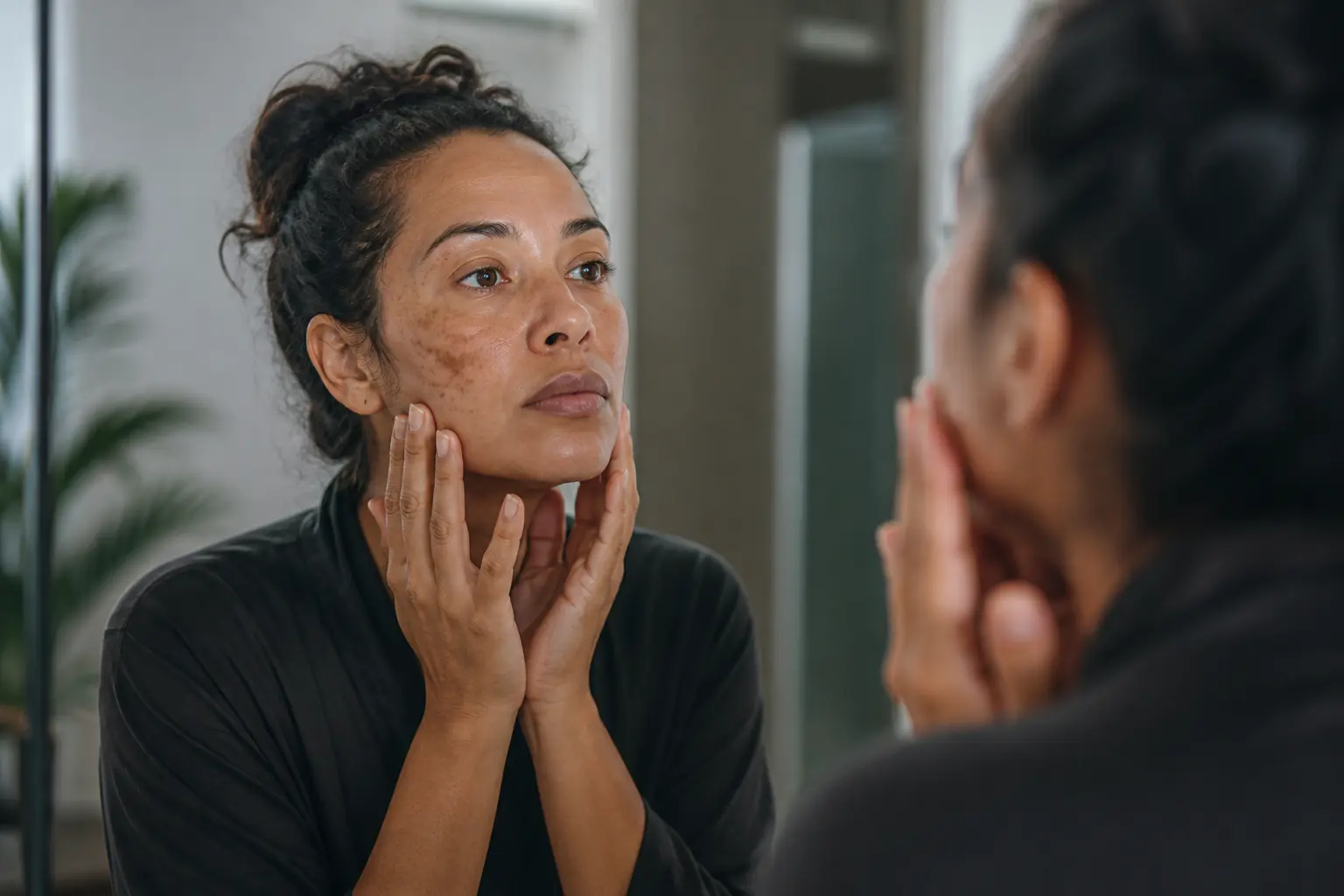
Dark patches taking over your face and you’re terrified of harsh chemical peels destroying your skin? You can treat hyperpigmentation without peels and actually see real results.
Understanding hyperpigmentation
Hyperpigmentation happens when your skin decides to produce way more melanin than it should, leaving you with patches that are noticeably darker than the surrounding area. The culprits are usually sun exposure (those beach days catch up with you), hormonal shifts (hello, birth control and pregnancy), or lingering marks from acne or injuries. Here’s the thing: understanding what triggered yours is actually the foundation for fixing it. If you’re dealing with sun damage, your approach will differ from someone whose hyperpigmentation came from a skin injury. A dermatologist can pinpoint exactly what you’re dealing with, whether it’s melasma, post-inflammatory hyperpigmentation, or simple sun spots. Once you know the root cause, you can stop guessing and start treating with intention. The biggest mistake young adults make is jumping into treatments without this crucial step, wasting time and money on solutions that won’t address their specific situation.
- Identify the trigger for your hyperpigmentation.
- Consult a dermatologist for a professional assessment.
- Sunscreen is your best friend – protect your skin from further damage.
Natural remedies for hyperpigmentation
Natural ingredients aren’t just trendy – they actually have science backing them up. Licorice extract contains glabridin, which inhibits melanin production and has been shown to reduce dark spots over consistent use. Vitamin C serums work by brightening skin and promoting collagen production, making discolored areas blend better with surrounding skin. Green tea is packed with antioxidants that protect against further damage while gently evening out tone. Picture this: a 24-year-old with sun damage from years of outdoor sports starts using a vitamin C serum in the morning and a licorice-based night cream. After eight weeks of consistent application, the spots haven’t vanished, but they’re noticeably lighter and less noticeable. Natural remedies work best when you’re patient and consistent. They won’t give you overnight results like some aggressive treatments, but they build gradually and support your skin’s natural healing process. The common mistake is expecting results in two weeks and abandoning the routine before it has time to work.
📘 Fix your day in under 2 minuteschoose where to begin:
Topical treatments and skincare products
Over-the-counter creams have come a long way, and many contain legitimate skin-lightening ingredients. Kojic acid works by reducing tyrosinase activity, the enzyme responsible for melanin production. Arbutin is a gentler alternative that gradually fades dark spots without the irritation some people experience with stronger actives. Retinoids accelerate cell turnover, helping new, evenly-pigmented skin surface faster. Consider a 25-year-old with post-acne marks who starts using a retinol cream three times weekly, gradually increasing frequency. Combined with a kojic acid day serum, they see meaningful fading within three to four months. The critical step most people skip is patch testing. Apply your new product to a small, inconspicuous area for three to five days before committing to your whole face. This prevents the frustration of a reaction derailing your entire routine. Also, these products work better when layered strategically: lighter textures first, heavier creams last. Consistency matters more than switching products every two weeks.
Advanced treatments: laser therapy
When topical treatments plateau, laser technology offers real firepower. IPL (intense pulsed light) targets melanin directly, breaking up pigmented cells without damaging surrounding tissue. Fractional lasers create tiny columns of controlled damage that trigger healing and collagen remodeling, effectively resurfacing the skin. Unlike chemical peels, these procedures don’t involve harsh acids stripping your skin. A 28-year-old with stubborn melasma might undergo four to six IPL sessions spaced three weeks apart, seeing progressive lightening without the downtime of traditional peels. Laser therapy typically requires multiple sessions because skin responds gradually, not dramatically. Expect mild redness and sensitivity for a few days post-treatment, but nothing that forces you to hide at home. The investment is higher than topical products, but results are often more dramatic and faster. A dermatologist can assess your skin type and pigmentation depth to determine if you’re a good candidate and which laser type suits you best. Darker skin tones require more cautious laser selection to avoid complications, making professional guidance essential.
Healthy lifestyle habits for brighter skin
Your skin reflects what’s happening inside your body, and young adults often underestimate how much lifestyle impacts hyperpigmentation. Hydration isn’t just a buzzword – dehydrated skin looks dull and makes dark spots more prominent. Aim for consistent water intake and use hydrating skincare to plump your skin and improve overall radiance. A diet rich in antioxidants (berries, leafy greens, nuts) supports your skin’s natural defense against further pigmentation damage. Sleep deprivation triggers inflammation and disrupts your skin’s repair cycle, actually worsening hyperpigmentation over time. Regular exercise improves blood circulation, delivering oxygen and nutrients to your skin and promoting that healthy glow that makes imperfections less noticeable. Think of a 26-year-old who combines a retinoid treatment with better sleep habits, increased water intake, and weekly antioxidant-rich meals. Within two months, their skin looks clearer, more radiant, and the hyperpigmentation is noticeably lighter. These habits aren’t glamorous, but they’re the unglamorous foundation that makes every other treatment work better. Consistency with lifestyle changes often produces results comparable to expensive treatments, and they cost nothing.
Treating hyperpigmentation without peels is entirely possible when you combine the right approach for your situation. Start by identifying your specific trigger with professional help, then layer natural remedies, topical treatments, and lifestyle changes based on your timeline and budget. For stubborn cases, laser therapy offers advanced results without harsh chemical peeling. The key is consistency and patience – most treatments require weeks to months to show meaningful results. Young adults often see the best outcomes by combining multiple approaches rather than relying on a single solution.
Are natural remedies effective for hyperpigmentation?
Natural remedies like licorice extract, vitamin C serums, and green tea can help reduce hyperpigmentation over time. While results may vary depending on individual skin type, these ingredients have antioxidant properties that benefit skin health.
How long does it take to see results from non-peel hyperpigmentation treatments?
Results from non-peel treatments for hyperpigmentation vary depending on the severity of the condition and the chosen approach. Generally, consistent use of products and treatments over several weeks to months is needed to observe visible improvements in skin tone and texture.
Others also read:
Disclaimer: This article is for informational purposes only and is not a substitute for professional medical advice. Always consult a healthcare professional for personal guidance.
This guide has been prepared and reviewed by the GlobalHealthBeacon editorial team and reflects current medical research as of 2026. It provides structured, evidence-based information to support informed health decisions.
← Go to the treat hyperpigmentation without peels main guide
