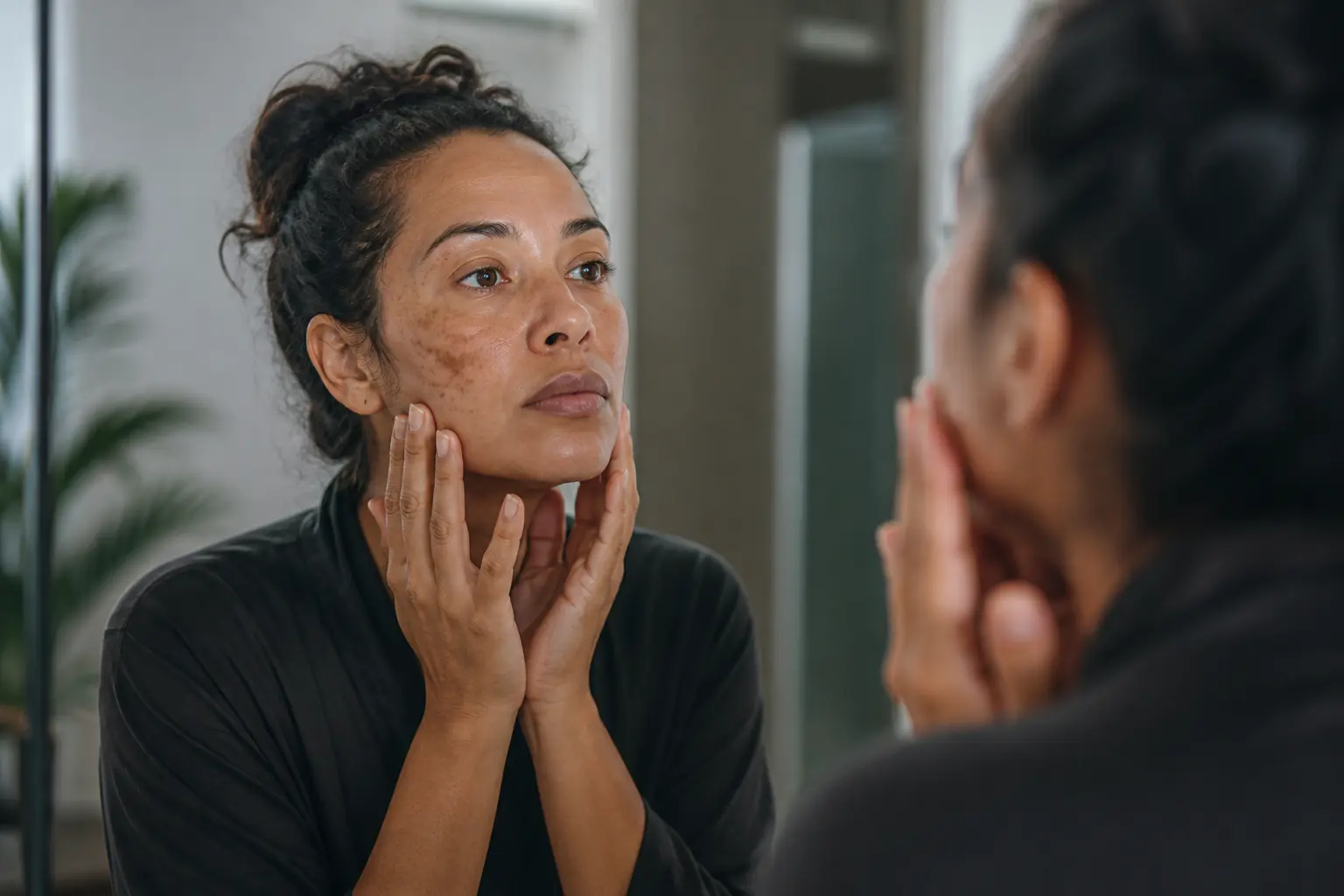
Those stubborn brown spots creeping across your face and hands feel like they appeared overnight, and you’re tired of feeling like you need to cover them up just to feel like yourself again, but here’s the real story: you can treat hyperpigmentation without peels and actually see real results.
Understanding hyperpigmentation
Hyperpigmentation happens when melanin, the pigment responsible for your skin’s color, gets overproduced in specific patches. Think of melanin as your skin’s natural sunscreen factory. When this factory goes into overdrive, you end up with those darker spots and uneven patches. The culprits are numerous: decades of sun exposure without proper protection, hormonal shifts that many seniors experience, inflammation from past acne or injuries, or even certain medications you might be taking. For example, a 68-year-old woman who spent summers at the beach in her twenties without sunscreen might notice sun spots appearing on her cheeks and forehead now. Similarly, post-inflammatory hyperpigmentation can linger for months after a minor skin injury heals. Understanding this process helps you see that hyperpigmentation isn’t a sign of poor skin care; it’s your skin responding to years of exposure and life changes. The good news is that knowing what triggers it puts you in control of preventing more.
Topical treatments
Dermatologists often recommend topical treatments as a first line of defense, and these aren’t your grandmother’s spot creams. Hydroquinone, a gold-standard ingredient, works by slowing down melanin production at the cellular level. Kojic acid, derived from fungi, gently inhibits the enzyme tyrosinase that melanin needs to form. Retinoids like tretinoin speed up cell turnover, essentially pushing out pigmented cells faster and revealing fresher skin underneath. Vitamin C serums brighten by both reducing melanin production and providing antioxidant protection. A typical scenario: Margaret, 72, started using a niacinamide-based serum combined with a retinoid cream three nights a week. Within eight weeks, she noticed her age spots looked noticeably lighter. The key is consistency and patience. These products work gradually, not overnight. Most dermatologists recommend giving any topical treatment at least 12 weeks before deciding if it’s effective. Starting with lower concentrations and building up helps your skin adjust without irritation.
Lifestyle modifications to consider
While topical treatments do the heavy lifting, your daily habits either support or sabotage the results. Sun protection is non-negotiable because UV rays trigger melanin production and can darken existing spots. A consistent skincare routine that includes antioxidant-rich foods helps your skin repair itself from within. Imagine Robert, 70, who added berries, leafy greens, and fatty fish to his diet while using sunscreen daily. His dermatologist noted that his skin’s overall texture improved alongside the fading of his spots. Hydration matters too because dehydrated skin shows pigmentation more prominently and heals more slowly. Stress management, whether through walking, meditation, or hobbies, reduces inflammation that can worsen hyperpigmentation. These aren’t quick fixes, but they create the foundation that makes topical treatments work better. Think of it as preparing your skin’s environment for healing rather than fighting against it.
- Apply sunscreen diligently with SPF 30 or higher daily, reapplying every two hours if outdoors.
- Consume a balanced diet with plenty of fruits, vegetables, and whole grains rich in antioxidants.
- Stay hydrated by drinking an adequate amount of water throughout the day, aiming for eight glasses minimum.
🔬 Science-backed benefits in 2 minuteschoose where to begin:
Professional treatments
When topical treatments reach their limits, professional procedures offer more aggressive options. Laser therapy targets melanin directly, heating and breaking apart pigmented cells without damaging surrounding tissue. Intense pulsed light (IPL) treatments work similarly but use broad-spectrum light instead of a single wavelength. Microdermabrasion physically exfoliates the top layers of skin, removing pigmented cells mechanically. Chemical peels, despite the article’s focus on non-peel options, remain effective for deeper pigmentation. However, many seniors prefer laser or IPL because they’re gentler and require less downtime. Consider James, 75, who tried topical treatments for six months with modest improvement. His dermatologist recommended IPL treatments, and after three sessions spaced four weeks apart, his sun spots faded by 70 percent. These procedures aren’t one-time fixes; maintenance treatments every 12 to 18 months help keep results optimal. The investment is real, but many seniors find the confidence boost worth it.
Maintaining long-term results
Getting results is one thing; keeping them is another. Hyperpigmentation loves to return if you slip back into old habits. After achieving improvement, maintaining a consistent skincare routine becomes your insurance policy. This means daily sunscreen without exception, continuing your topical treatments at least several times weekly, and staying vigilant about sun exposure. A 66-year-old woman who successfully treated her melasma found that skipping sunscreen for just two weeks during vacation caused noticeable darkening. She now treats sunscreen like medication: non-negotiable. Regular dermatology check-ins, ideally twice yearly, help catch any changes early. Your dermatologist can also adjust your treatment plan as your skin evolves. Some seniors benefit from periodic maintenance treatments, while others find that consistent topical care keeps spots at bay. The point is that hyperpigmentation management is ongoing, not a destination you reach and forget about.
Understanding the science behind hyperpigmentation
At the cellular level, hyperpigmentation involves melanocytes, specialized skin cells that produce melanin in response to various triggers. When UV rays hit your skin, they damage DNA and trigger inflammation, which signals melanocytes to produce more melanin as a protective response. Over decades, this accumulates into visible spots. Hormonal changes, common in seniors due to medications or age-related shifts, can also activate melanocytes. Inflammation from any source, whether sun damage, injury, or skin conditions, sends the same signal. This is why post-inflammatory hyperpigmentation can persist long after the original injury heals. The melanin gets trapped in the upper layers of skin, creating those stubborn spots. Understanding this process explains why prevention through sun protection matters so much and why treatments that either inhibit melanin production or accelerate cell turnover work. It’s not magic; it’s biology. Knowing this helps you make informed decisions about which treatments align with your skin’s needs and your lifestyle.
Hyperpigmentation can be effectively treated without peels through a combination of topical treatments, lifestyle modifications, and professional interventions when needed. Understanding the science behind this skin condition is crucial for selecting the most suitable treatment approach. Consistency and patience are your greatest allies, whether you’re using topical creams, adjusting your habits, or pursuing professional procedures. The journey to clearer, more even-toned skin is achievable at any age.
Are natural remedies effective for treating hyperpigmentation?
Natural ingredients like licorice extract, kojic acid from mushrooms, and niacinamide may provide modest improvement in hyperpigmentation over time. However, they work more slowly than medical-grade treatments prescribed by dermatologists. Many seniors find that combining natural ingredients with stronger topical treatments yields better results than relying on natural remedies alone.
Can hyperpigmentation be completely cured?
Complete eradication of hyperpigmentation can be challenging, especially if you have a genetic predisposition or ongoing sun exposure. However, significant improvement in skin discoloration is absolutely achievable with a tailored treatment plan, consistent skincare regimen, and sun protection. Most seniors see 50 to 80 percent improvement with proper treatment, which translates to noticeably clearer, more even-toned skin.
Others also read:
Disclaimer: This article is for informational purposes only and is not a substitute for professional medical advice. Always consult a healthcare professional for personal guidance.
This article has been prepared and reviewed by the GlobalHealthBeacon editorial team and is based on current medical research and published scientific literature available in 2026. It provides structured, evidence-based information to support informed health decisions.
← Back to the Main page on: treat hyperpigmentation without peels
