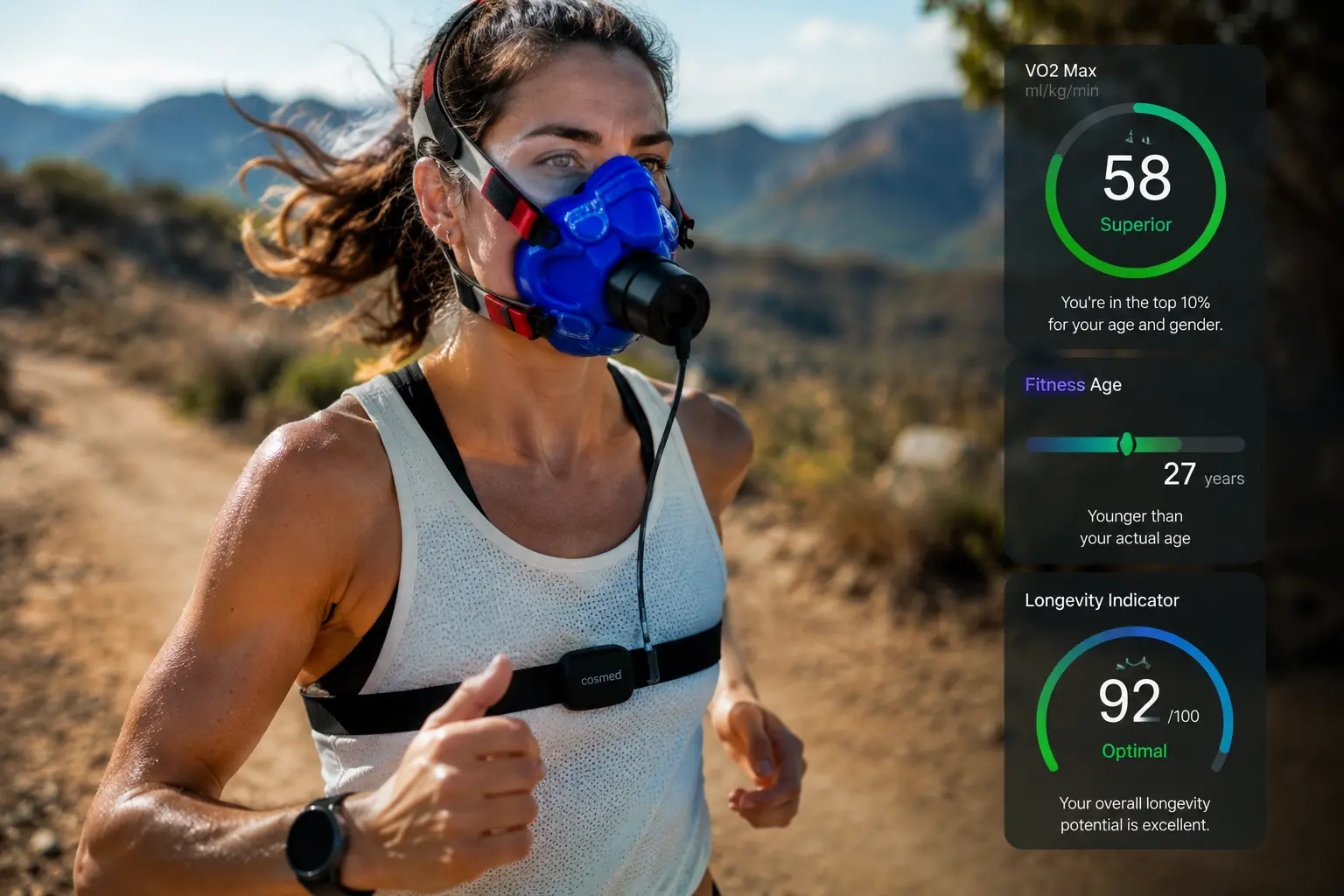
You feel tired climbing stairs, your energy crashes by afternoon, and you wonder if this is just what getting older looks like, but what if the real issue is that your vo2 max longevity marker is silently declining and nobody told you how to fix it?
What is VO2 max?
VO2 max, or maximal oxygen consumption, measures the maximum amount of oxygen your body can utilize during intense exercise, expressed in milliliters of oxygen per kilogram of body weight per minute. Think of it as your cardiovascular system’s efficiency rating. When you exercise hard, your lungs pull in oxygen, your heart pumps it through your bloodstream, and your muscles extract and use it for energy. The more oxygen your muscles can grab and burn, the higher your VO2 max. Women with higher VO2 max levels demonstrate superior aerobic endurance and cardiovascular resilience. A 45-year-old woman who can sustain a brisk run for 30 minutes likely has a higher VO2 max than someone who gets winded after five minutes of the same activity. This isn’t about being athletic or competitive; it’s about how efficiently your body converts oxygen into usable energy, which directly influences heart health, stamina, and overall longevity.
VO2 max and women’s health benefits
Research consistently shows that women with higher VO2 max levels face reduced risk of chronic diseases including heart disease, type 2 diabetes, and certain cancers. Beyond disease prevention, improved cardiovascular fitness from elevated VO2 max enhances mental clarity, supports healthy weight management, and strengthens emotional resilience. Consider a 55-year-old woman who started a consistent aerobic exercise routine and increased her VO2 max over two years. She reported better sleep quality, improved mood, and more energy for daily activities like playing with grandchildren or traveling. The cardiovascular system becomes more efficient at delivering oxygen-rich blood throughout the body, which means every organ, including the brain, receives better nourishment. This improved circulation also supports better blood sugar regulation, reduces inflammation, and enhances the body’s ability to recover from physical and emotional stress. Women often report feeling more confident and capable when they notice their fitness improving, creating a positive feedback loop that encourages continued healthy habits.
Factors influencing VO2 max in women
Your VO2 max is shaped by multiple interconnected factors. Genetics establish your baseline capacity, meaning some women naturally have higher potential than others, but this is not destiny. Age plays a significant role, with VO2 max naturally declining approximately 10 percent per decade after age 25 if you remain sedentary, though regular exercise can slow or even reverse this decline. A 60-year-old woman who trains consistently can maintain VO2 max levels comparable to a sedentary 40-year-old. Hormonal fluctuations throughout your menstrual cycle, perimenopause, and menopause also influence oxygen utilization and cardiovascular performance. Regular aerobic exercise like running, cycling, swimming, or rowing directly stimulates your cardiovascular system to adapt and improve. Interval training, which alternates intense effort with recovery periods, proves particularly effective at boosting VO2 max because it forces your heart and lungs to work harder than steady-state exercise alone. Lifestyle factors including sleep quality, stress management, nutrition, and body composition also contribute. A woman carrying excess weight requires her cardiovascular system to work harder to deliver oxygen, which can mask true aerobic capacity.
- Engage in regular aerobic exercise like running, cycling, or swimming at least 150 minutes per week at moderate intensity, or 75 minutes at vigorous intensity, to build a strong aerobic foundation.
- Incorporate interval training two to three times weekly by alternating short bursts of high-intensity effort with recovery periods, such as sprinting for 30 seconds followed by 90 seconds of easy pace.
- Consult a fitness professional or cardiologist for personalized exercise recommendations based on your current fitness level, health history, and any existing conditions to ensure safe and effective progression.
🔬 Science-backed benefits in 2 minuteschoose where to begin:
Measuring VO2 max
VO2 max is measured through specialized laboratory tests that provide objective data about your cardiovascular capacity. The gold standard involves exercising on a treadmill or stationary bike while wearing a mask connected to equipment that analyzes the oxygen and carbon dioxide in your breath. As intensity increases, the equipment calculates the maximum amount of oxygen your body consumed at peak effort. The test typically lasts 8 to 12 minutes and continues until you reach genuine exhaustion or the technician determines you’ve reached your maximum effort. This data reveals not just your VO2 max number but also your lactate threshold, the point where your body produces lactate faster than it can clear it, causing fatigue. Some clinics offer submaximal tests that estimate VO2 max without pushing to absolute maximum, useful for older adults or those with health concerns. The results help create tailored exercise programs and establish a baseline for tracking progress over months and years. Many women find this objective measurement motivating because it transforms vague feelings of fitness into concrete numbers they can work to improve.
Optimizing VO2 max for women
Improving VO2 max requires consistent, progressive training combined with lifestyle support. Start by establishing a regular aerobic exercise routine at least four days weekly, gradually increasing duration and intensity as your fitness improves. Incorporate variety to prevent boredom and overuse injury: alternate between running, cycling, swimming, rowing, and group fitness classes. Add interval training sessions where you push harder for short periods, which creates the greatest stimulus for cardiovascular adaptation. Maintain a healthy body weight through balanced nutrition, as excess weight reduces your VO2 max relative to your body size. Prioritize sleep because your cardiovascular system adapts and strengthens during rest, not during exercise itself. Manage stress through meditation, yoga, or time in nature, as chronic stress impairs cardiovascular function. Track your progress through periodic fitness tests or by noting improvements in how you feel during daily activities. Many women find that consistency matters more than intensity; moderate exercise done regularly outperforms sporadic intense workouts. Expect gradual improvements over weeks and months rather than dramatic overnight changes.
The future of women’s health and VO2 max
As medical research increasingly recognizes VO2 max as a critical longevity marker, personalized health approaches are emerging that focus specifically on optimizing this vital indicator for women at different life stages. Wearable technology now estimates VO2 max through heart rate data, making tracking more accessible outside laboratory settings. Healthcare providers are beginning to prescribe exercise as preventive medicine with the same precision they prescribe medications, using VO2 max as a measurable target. Women who understand their VO2 max and actively work to improve it gain agency over their health trajectory, moving from passive patients to informed participants in their own wellness. The conversation is shifting from whether exercise matters to how to make it sustainable and enjoyable for individual women. Future interventions may combine personalized genetic information, hormonal profiles, and VO2 max data to create truly customized fitness and nutrition plans. By prioritizing cardiovascular fitness now, women invest in decades of better health, independence, and vitality.
VO2 max serves as a crucial indicator of aerobic fitness and cardiovascular health in women, influencing their risk of chronic diseases and overall quality of life. By understanding the factors that influence VO2 max and optimizing it through targeted interventions, women can enhance their longevity and well-being.
Can VO2 max be improved through exercise?
Yes, regular aerobic exercise and interval training can significantly boost VO2 max levels in women, leading to improved cardiovascular fitness and overall health. Consistency matters more than intensity, and improvements typically appear within 4 to 8 weeks of regular training.
How is VO2 max measured?
VO2 max is typically measured through specialized lab tests that involve exercising on a treadmill or stationary bike while wearing a mask that analyzes oxygen consumption. Some fitness trackers and smartwatches also estimate VO2 max using heart rate data, though laboratory tests provide the most accurate measurements.
Others also read:
Disclaimer: This article is for informational purposes only and is not a substitute for professional medical advice. Always consult a healthcare professional for personal guidance.
This article has been prepared and reviewed by the GlobalHealthBeacon editorial team and is based on current medical research and published scientific literature available in 2026. It provides structured, evidence-based information to support informed health decisions.
