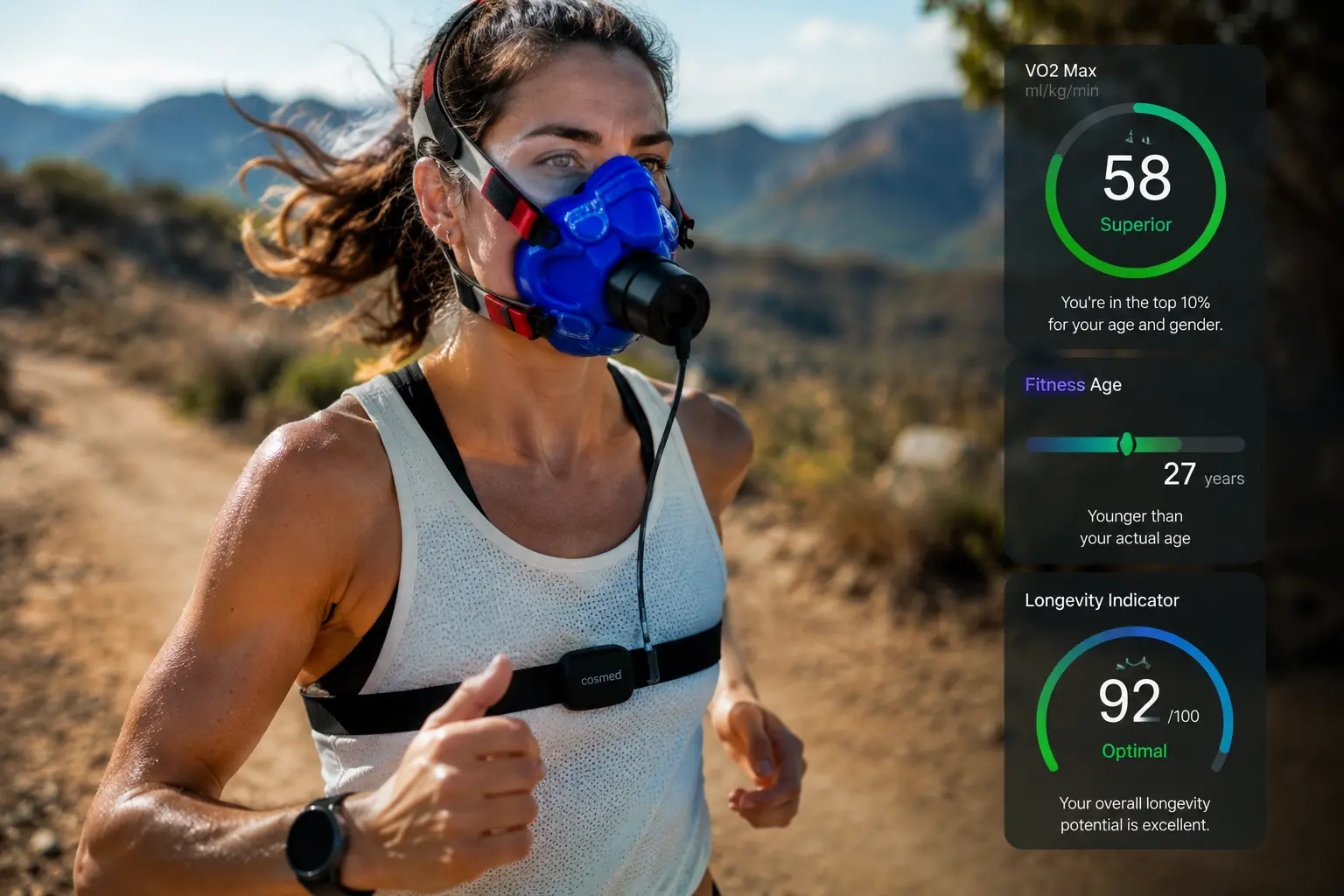
You’re climbing stairs and feeling winded, your afternoon energy crashes by 3pm, and you wonder why simple activities leave you exhausted when you used to breeze through them, but understanding your vo2 max longevity marker might be the missing piece that transforms how your body actually performs.
Understanding VO2 max: the key to endurance
VO2 max measures the maximum amount of oxygen your body can utilize during intense exercise, expressed as milliliters of oxygen per kilogram of body weight per minute. For women, this metric becomes increasingly relevant as we age, especially since hormonal shifts can impact cardiovascular efficiency. Think of it like your body’s oxygen delivery system: the better it works, the easier everything feels. When you’re climbing that flight of stairs without gasping, or keeping up with your kids without feeling depleted, that’s VO2 max at work. Many women don’t realize that improving this marker can mean the difference between feeling vibrant at 50 versus struggling through daily tasks. By targeting your aerobic capacity, you’re essentially upgrading your body’s engine for better fuel efficiency and sustained energy throughout your day.
- Boost oxygen delivery to muscles
- Enhance cardiovascular health
- Increase stamina and reduce fatigue
Effective strategies for improving VO2 max
High-intensity interval training, or HIIT, forces your cardiovascular system to adapt and become more efficient at oxygen utilization. Picture this: you do 30 seconds of all-out effort on a stationary bike, then recover for 90 seconds, repeating this cycle for 15 minutes. Your heart learns to pump more oxygen with each beat. Beyond HIIT, steady-state aerobic activities like running, cycling, or swimming build your aerobic base. Start with what feels manageable, maybe 20 to 30 minutes of moderate-intensity activity three times weekly, then gradually increase duration or intensity as your body adapts. Many women find that mixing both approaches works best: two to three HIIT sessions weekly combined with one or two longer, easier aerobic sessions. The key mistake most people make is jumping into intense training without building a foundation, which leads to burnout or injury. Your body needs time to adjust, so patience with progressive overload truly matters.
💬 Ready to feel better in 2 minutes?choose where to begin:
Nutrition and hydration tips for optimal performance
Your muscles need fuel to perform, and your cardiovascular system needs proper hydration to transport oxygen effectively. Imagine your blood as a delivery truck: without enough water, it can’t carry oxygen efficiently to your working muscles. Eat a balanced mix of lean proteins like chicken or fish, complex carbohydrates such as oats or sweet potatoes, and healthy fats from avocados or nuts. Before workouts, eat something light like a banana with almond butter 30 to 60 minutes prior. During intense sessions lasting over an hour, consider a sports drink with carbs and electrolytes. Hydration is equally critical: aim for half your body weight in ounces daily, increasing intake on training days. Many women underestimate how much water they need, especially if they’re also managing hormonal cycles that affect fluid retention. Pay attention to your urine color as a simple gauge; pale yellow indicates good hydration, while dark yellow signals you need more water.
The power of consistency and progress tracking
Improvement in VO2 max doesn’t happen overnight, and that’s exactly why tracking matters so much. When you measure your progress, you see proof that your effort is working, even on days when motivation feels low. Use a fitness watch or app to monitor your resting heart rate, which naturally decreases as your cardiovascular fitness improves, or track how your pace feels at the same perceived effort level. Maybe three months ago, a 5k run left you breathless, but now you finish feeling strong. That’s real progress worth celebrating. Many women find that setting small milestones, like running one extra minute each week or completing one more HIIT round, keeps them engaged. The common mistake is expecting dramatic changes in two weeks and giving up when results aren’t visible. Your body adapts gradually, but consistency compounds these adaptations over months. Keep a simple log, note how you feel, and revisit your goals every four to six weeks to adjust your training plan based on what’s actually working for your unique body.
Enhancing your VO2 max through targeted strategies like HIIT, aerobic exercises, and proper nutrition can significantly boost your endurance and overall fitness levels. Consistency, progress tracking, and a positive mindset are key to achieving lasting results.
How long does it take to see improvements in VO2 max?
Individual responses vary, but consistent training over several weeks to months can lead to noticeable enhancements in VO2 max levels.
Are there any risks associated with pushing my VO2 max limits?
While challenging yourself is important for progress, it’s crucial to listen to your body and avoid overexertion to prevent injury or burnout.
Others also read:
Disclaimer: This article is for informational purposes only and is not a substitute for professional medical advice. Always consult a healthcare professional for personal guidance.
This article presents an experience-based perspective and has been reviewed by the GlobalHealthBeacon editorial team in 2026. It provides structured, evidence-based information to support informed health decisions.
