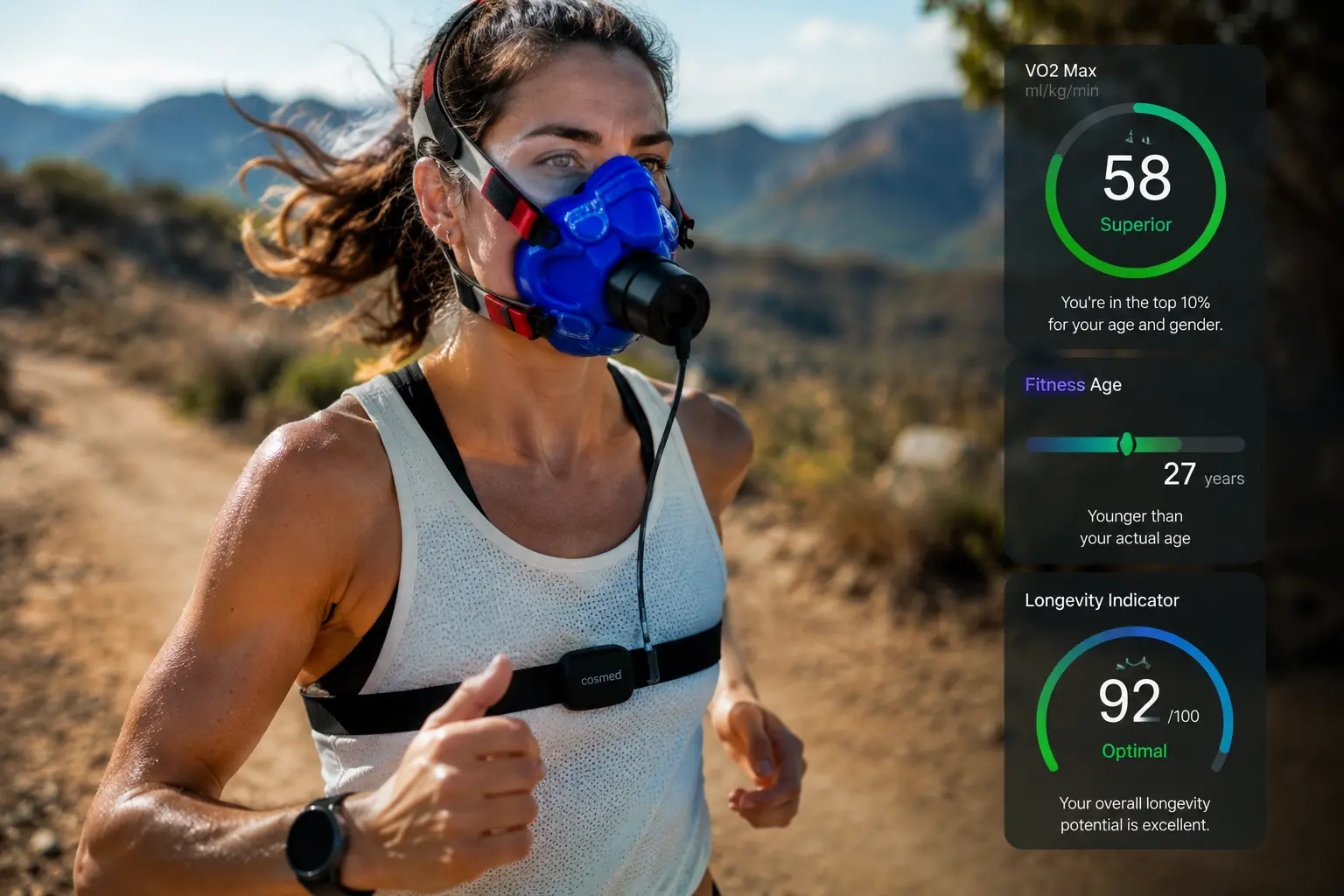
You’re gasping for air after climbing two flights of stairs while your friend barely breaks a sweat, and you’re starting to wonder if this constant fatigue is just your new normal or if something deeper is going on with your cardiovascular fitness, which is exactly why understanding vo2 max longevity marker science could be the wake-up call your body’s been sending.
Understanding VO2 max
VO2 max, or maximal oxygen consumption, measures the maximum amount of oxygen your body can utilize during intense exercise, typically expressed in milliliters of oxygen per kilogram of body weight per minute. Think of it as your aerobic engine’s horsepower. When you’re 25 and sprinting up a hill, your body is either efficiently converting oxygen into energy or struggling to keep up. Young adults are increasingly testing their VO2 max because they’re realizing that this single number can reveal whether their cardiovascular system is working optimally or if years of sedentary habits have quietly eroded their fitness baseline. It’s not just about athletic performance either. Research suggests that higher VO2 max levels correlate with better longevity outcomes, improved mental clarity, and reduced risk of chronic diseases. For many young adults, discovering their actual VO2 max becomes a moment of truth, a tangible metric that transforms vague fitness goals into measurable reality.
- VO2 max reflects how efficiently your body can use oxygen to produce energy.
- High VO2 max levels are associated with better cardiovascular health and improved athletic performance.
- VO2 max can be improved through regular cardiovascular exercise like running, cycling, or swimming.
Testing VO2 max
Getting your VO2 max tested typically involves a graded exercise test, often called a VO2 max test or cardiopulmonary exercise test. You’ll start on a treadmill or stationary bike at a comfortable pace, and every few minutes, the intensity ramps up while sensors measure your oxygen consumption and heart rate response. It’s intense and honestly a bit uncomfortable, but that’s the point. The test continues until you reach your maximum effort, which is why many young adults describe it as humbling. Some facilities use indirect calorimetry, analyzing your breath through a mask, while others use heart rate zones and standard formulas to estimate your VO2 max. The whole process usually takes 10 to 20 minutes, but it provides a baseline that’s invaluable for tracking progress over months and years. Many young adults are surprised by their results, whether pleasantly or not, and that’s where the real work begins.
💬 Ready to feel better in 2 minutes?choose where to begin:
Interpreting results
Your VO2 max score comes back as a number, say 45 ml/kg/min, but what does that actually mean for your life? Context matters enormously. A score of 45 is excellent for a 25-year-old woman but average for a trained male athlete. Age, gender, genetics, and training history all shape what’s considered good. Beyond the raw number, understanding your results means recognizing where you stand compared to your peers and, more importantly, where you want to go. Some young adults feel motivated seeing a strong baseline, while others feel a jolt of reality when their score is lower than expected. The key is interpreting your results without judgment but with clarity. A lower VO2 max isn’t a life sentence; it’s simply a starting point. Many young adults use their results to set specific training goals, like improving their VO2 max by 10 percent over six months, transforming abstract fitness aspirations into concrete targets.
Real-life impact
Knowing your VO2 max changes how you approach fitness because suddenly you’re not just exercising; you’re training with purpose. One young adult might discover their VO2 max is 38 ml/kg/min and realize they’ve been doing steady-state cardio when they actually need high-intensity interval training to make real progress. Another might find their score is 52 and feel validated in their commitment to running, discovering that their dedication has real physiological backing. The ripple effects extend beyond the gym. Better cardiovascular fitness often means more energy throughout the day, improved sleep quality, sharper mental focus, and a sense of control over your health that’s genuinely empowering. Young adults report that understanding their VO2 max transforms fitness from a vague obligation into a personal mission. It’s no longer about looking good; it’s about building a stronger, more resilient body that will serve you well into your 60s, 70s, and beyond. That shift in perspective is where the real transformation happens.
Testing your VO2 max as a young adult provides a concrete measurement of your cardiovascular fitness and serves as a powerful motivator for lasting lifestyle change. Understanding what your results mean and how they fit into your personal health goals can shift your entire approach to fitness, turning abstract aspirations into measurable progress and genuine empowerment.
Is a high VO2 max always better?
While a high VO2 max is generally associated with better cardiovascular health and fitness levels, it’s essential to consider individual factors like age, gender, and fitness goals when interpreting your results.
Can VO2 max be improved through training?
Yes, regular cardiovascular exercise can improve your VO2 max levels over time. Including activities like running, cycling, or swimming in your workout routine can help enhance your cardiovascular fitness.
Others also read:
Disclaimer: This article is for informational purposes only and is not a substitute for professional medical advice. Always consult a healthcare professional for personal guidance.
This article presents an experience-based perspective and has been reviewed by the GlobalHealthBeacon editorial team in 2026. It provides structured, evidence-based information to support informed health decisions.
