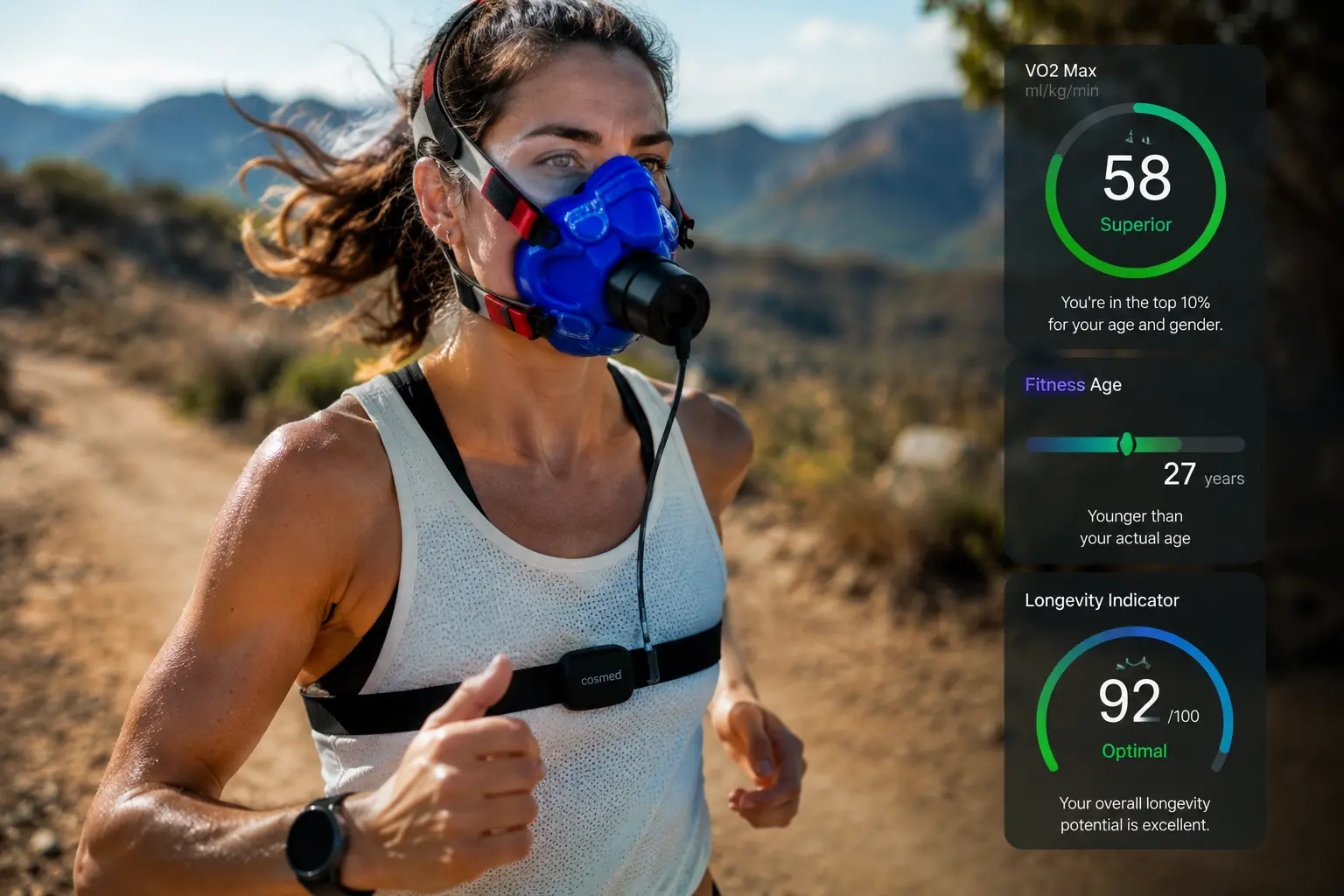
You’re grinding at the gym, crushing your workouts, but deep down you’re wondering if any of it actually matters for how long you’ll live, and that’s where understanding your vo2 max longevity marker becomes the game-changer you didn’t know you needed.
Understanding VO2 max
VO2 max, or maximal oxygen uptake, measures the maximum amount of oxygen your body can utilize during intense exercise, typically expressed in milliliters of oxygen per kilogram of body weight per minute. Think of it as your cardiovascular engine’s horsepower. When you push hard during a run or spin class, your lungs pull in oxygen, your heart pumps it through your bloodstream, and your muscles burn it for fuel. A higher VO2 max means your body is incredibly efficient at this process. For young adults, this metric matters because it reflects how well your cardiovascular system is functioning right now and suggests how resilient it might be decades down the line. Research consistently shows that people with higher VO2 max levels have significantly lower risks of heart disease, stroke, and metabolic disorders. Your VO2 max is influenced by genetics, age, sex, and training level, but the good news is that it’s not fixed. Unlike your eye color, you can actually improve it through smart training.
- VO2 max is influenced by factors like age, genetics, and training level.
- Regular aerobic exercise can improve VO2 max and enhance your longevity.
- VO2 max is a vital component of endurance sports performance.
Assessing longevity potential
Research from major cardiovascular studies has consistently found a strong correlation between VO2 max and longevity, though it’s not a crystal ball that predicts exactly how long you’ll live. Studies tracking thousands of people over decades show that individuals with higher VO2 max levels have significantly lower mortality rates from all causes, not just heart disease. Imagine two people of the same age and weight: one with a VO2 max of 35 ml/kg/min and another with 50 ml/kg/min. The person with the higher VO2 max typically has a substantially lower risk of premature death. However, VO2 max is just one piece of a much larger puzzle. Your genetics, diet, sleep quality, stress levels, smoking habits, and overall lifestyle choices all play equally important roles. Think of VO2 max as a strong signal of cardiovascular health rather than a definitive predictor. It’s like checking your credit score: it tells you something important about your financial health, but it doesn’t determine your entire future. Maintaining a healthy VO2 max is a practical way to invest in your long-term health and reduce your risk of chronic diseases.
📘 Fix your day in under 2 minuteschoose where to begin:
Optimizing your VO2 max
Improving your VO2 max requires consistent aerobic training that challenges your cardiovascular system. The most effective approach combines steady-state cardio with high-intensity interval training, or HIIT. For example, you might run at a comfortable pace for 20 minutes three times a week, then add one session of intervals: warm up for 10 minutes, then alternate between 3 minutes at a hard effort and 2 minutes of recovery, repeating this cycle five times. Activities like running, cycling, swimming, rowing, and even jump rope all work effectively. Young adults often see the fastest improvements because they’re starting with good baseline fitness and neurological adaptation happens quickly. A common mistake is doing only moderate-intensity work and never pushing your limits. Your body adapts to what you demand of it, so you need some sessions that feel genuinely challenging. Another trap is doing too much too soon, which leads to burnout or injury. Start with two to three aerobic sessions per week, gradually add intensity, and give yourself recovery days. Working with a fitness coach or trainer can accelerate your progress by ensuring proper form and appropriate progression.
Monitoring your progress
Tracking your VO2 max gives you concrete feedback on whether your training is actually working, which keeps you motivated and helps you adjust your approach. Modern fitness wearables like smartwatches estimate VO2 max using heart rate data and algorithms, providing a convenient way to monitor trends over weeks and months. Apps like Strava, Garmin Connect, and Apple Health display these estimates after runs or workouts. For more accurate measurements, consider a fitness assessment at a local gym or sports medicine clinic, where they use a treadmill or bike with a mask that measures your oxygen consumption directly. These tests typically cost between 50 and 200 dollars but give you a precise baseline. You might test yourself every three to six months to see if your training is paying off. A realistic improvement goal is a 5 to 10 percent increase in VO2 max over three to six months of consistent training. Track not just the number itself but how you feel during workouts: are you recovering faster, running longer distances comfortably, or feeling less winded during daily activities? These real-world improvements often matter more than the exact metric.
Embracing a healthy lifestyle
Your VO2 max doesn’t exist in isolation. It’s one component of a much larger health picture that includes sleep, nutrition, stress management, and avoiding harmful habits. Young adults often underestimate how much sleep affects cardiovascular fitness and recovery. Aim for seven to nine hours nightly, as poor sleep increases inflammation and impairs your body’s ability to adapt to training. Your diet directly fuels your workouts and recovery: prioritize whole foods like lean proteins, vegetables, fruits, whole grains, and healthy fats. Hydration matters too, especially if you’re training regularly. Stress management through meditation, yoga, time in nature, or simply talking with friends reduces cortisol levels and supports cardiovascular health. Smoking and excessive alcohol consumption actively damage your cardiovascular system and tank your VO2 max potential. Even moderate alcohol consumption can interfere with training adaptations. Sedentary behavior between workouts also matters: try to move throughout your day, take stairs, walk when possible, and avoid sitting for hours at a time. Think of these lifestyle factors as multipliers that either amplify or diminish the benefits of your training efforts.
VO2 max serves as a meaningful indicator of cardiovascular fitness and correlates strongly with longevity potential, though it’s not a definitive lifespan predictor. By engaging in regular aerobic exercise combined with interval training, monitoring your progress through fitness assessments, and supporting your efforts with quality sleep, balanced nutrition, and stress management, you can optimize your VO2 max and build a foundation for long-term health. The key is consistency, patience, and viewing VO2 max as one important signal among many that guide your journey toward a healthier, more active life.
Can VO2 max accurately predict lifespan?
While VO2 max is strongly linked to cardiovascular health and longevity, it is not a definitive predictor of lifespan. Other factors such as genetics, lifestyle choices, and overall health play crucial roles in determining longevity.
How can I improve my VO2 max?
To enhance your VO2 max, engage in regular aerobic activities, incorporate interval training, and maintain a healthy lifestyle. Consult with fitness professionals for personalized guidance and consider monitoring your progress through fitness assessments.
Others also read:
Disclaimer: This article is for informational purposes only and is not a substitute for professional medical advice. Always consult a healthcare professional for personal guidance.
This guide has been prepared and reviewed by the GlobalHealthBeacon editorial team and reflects current medical research as of 2026. It provides structured, evidence-based information to support informed health decisions.
