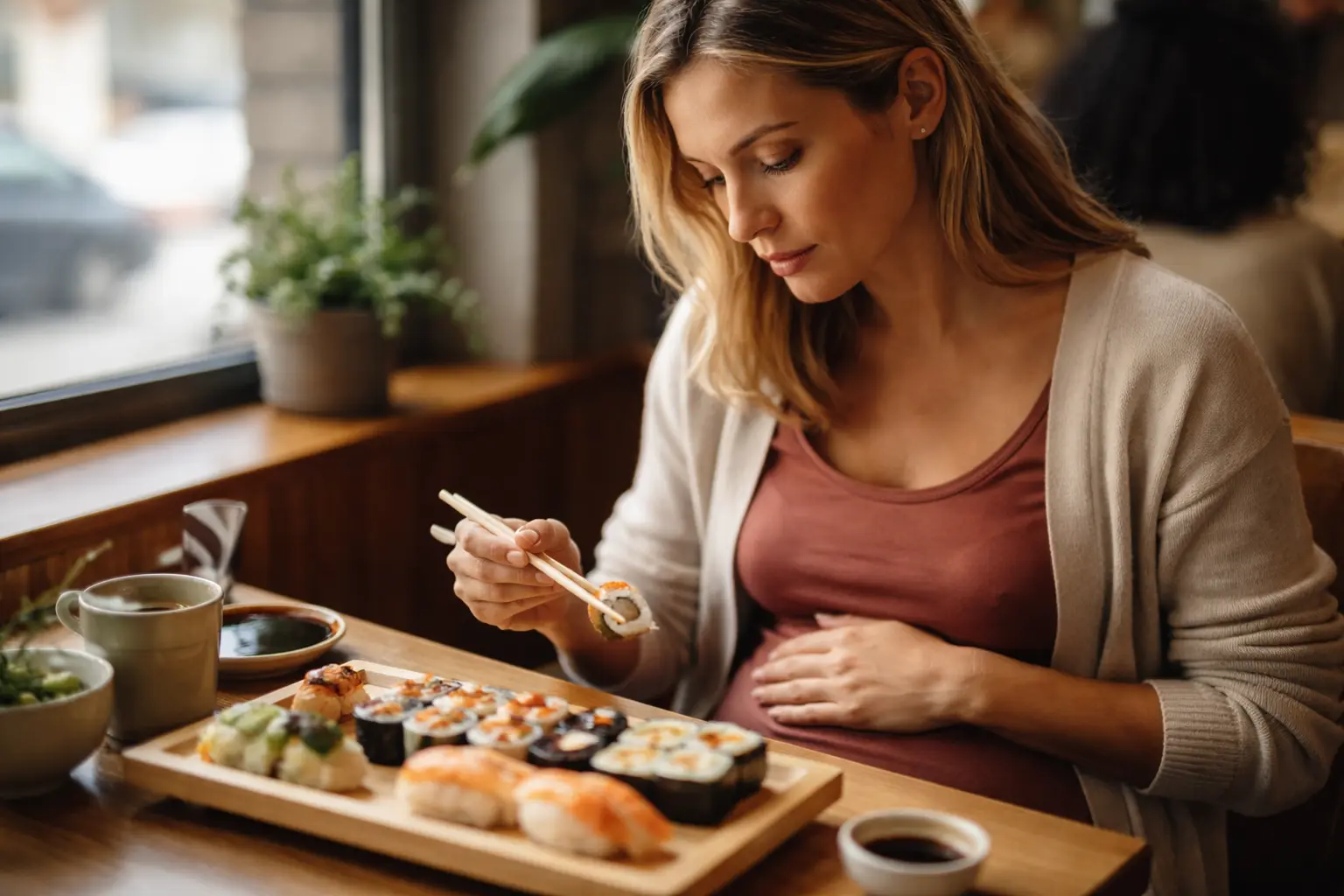
You’re craving sushi but terrified of harming your baby, scrolling through conflicting advice online at midnight, wondering which sushi to eat when pregnant without losing your mind to worry.
The basics of sushi and pregnancy
During pregnancy, understanding what happens in your body helps explain why certain foods require extra caution. Your immune system naturally shifts to protect the developing fetus, which means you become more vulnerable to foodborne pathogens that a non-pregnant person might fight off easily. Raw fish in sushi presents two primary concerns: potential bacterial contamination like Listeria monocytogenes, which can cross the placental barrier, and parasitic organisms that thrive in undercooked seafood. Mercury accumulation in certain fish species also becomes relevant during pregnancy because this heavy metal can affect fetal neurological development. Consider Sarah, a 32-year-old expectant mother who loved sushi before pregnancy. When she learned about these risks, she felt panicked until her healthcare provider explained the science behind the guidelines. The key isn’t avoiding sushi entirely but understanding which preparations minimize exposure to these specific hazards. Temperature control and proper handling matter tremendously because cooking kills most harmful bacteria and parasites that raw preparation cannot eliminate.
Safe sushi options for pregnant women
Cooked seafood sushi rolls offer a practical solution for pregnant women who don’t want to abandon their favorite cuisine. Shrimp tempura rolls, crab rolls made with pasteurized crab, and cooked eel (unagi) rolls all provide the sushi experience without raw fish exposure. These options retain the flavors and textures many people love about sushi while eliminating the primary food safety concern. Vegetarian alternatives deserve equal attention: avocado rolls, cucumber rolls, pickled vegetable rolls, and tofu-based options are not only safe but often nutrient-dense. Many restaurants now recognize this demand and offer creative cooked combinations that satisfy cravings. Think of Marcus’s wife, who discovered that a spicy cooked shrimp roll with avocado became her pregnancy favorite, providing protein and healthy fats without worry. Egg-based rolls like tamago also work well. The beauty of these options is that they’re widely available at most sushi establishments, making it easy to maintain this dietary choice throughout pregnancy without feeling restricted or isolated from family dining experiences.
Guidelines for choosing pregnancy-friendly sushi
Selecting safe sushi requires attention to three interconnected factors: restaurant standards, ingredient selection, and personal verification. Start by researching the establishment’s food safety practices. Reputable sushi restaurants maintain strict temperature controls, use fresh ingredients sourced from reliable suppliers, and follow proper cross-contamination protocols. Call ahead and ask directly about their pregnancy-safe options rather than guessing from the menu. When ordering, clearly communicate that you’re pregnant and need cooked options. Many chefs appreciate this transparency and will take extra care with preparation. Avoid any ambiguity about raw versus cooked ingredients. Watch for common mistakes: assuming California rolls are safe when some contain raw fish, or thinking that soy sauce or wasabi kills bacteria (they don’t). Verify that cooked items are actually cooked through, not just seared on the outside. Before your first visit to a new restaurant, check online reviews specifically mentioning food safety and pregnancy-friendly options. Some establishments have earned reputations for accommodating pregnant customers carefully. Keep a mental note of which restaurants you trust, and return to them consistently throughout your pregnancy.
- Select sushi rolls with cooked seafood options like shrimp tempura, crab, or cooked eel.
- Incorporate vegetarian sushi rolls with avocado, cucumber, tofu, or pickled vegetables into your choices.
- Verify the hygiene standards and food safety practices of the sushi restaurant before consuming.
- Call ahead to confirm pregnancy-safe preparation methods and ingredient sourcing.
- Communicate clearly with restaurant staff about your pregnancy and need for cooked options.
- Avoid raw fish, undercooked seafood, and high-mercury fish species during pregnancy.
🔬 Science-backed benefits in 2 minuteschoose where to begin:
Potential risks of raw sushi during pregnancy
Raw sushi consumption during pregnancy carries documented health risks that extend beyond simple food poisoning. Listeria monocytogenes, a bacterium found in raw and undercooked seafood, can cause listeriosis in pregnant women. This infection crosses the placental barrier and may lead to miscarriage, stillbirth, or serious infection in newborns. Parasitic infections from raw fish, though less common in developed countries with regulated seafood, still occur and can cause gastrointestinal complications that are particularly uncomfortable during pregnancy. Your immune system’s natural shift during pregnancy makes you approximately 20 times more susceptible to Listeria than non-pregnant individuals. Additionally, high-mercury fish like shark, swordfish, and king mackerel accumulate this neurotoxin over their lifespans, and consuming them during pregnancy poses risks to fetal brain development. Consider the case of Jennifer, whose raw sushi consumption led to a Listeria infection that required hospitalization and antibiotics during her second trimester. While her outcome was ultimately positive, the experience highlighted why these guidelines exist. The scientific evidence supporting caution around raw seafood during pregnancy comes from decades of epidemiological data and clinical observations, not from overly cautious thinking.
Balancing cravings and safety
Pregnancy cravings are real physiological phenomena driven by hormonal changes and nutritional needs, not just psychological desires. When you crave sushi specifically, your body might be signaling a need for protein, omega-3 fatty acids, or minerals like iodine found in seafood. Rather than suppressing these cravings, the goal is redirecting them toward safe preparations that satisfy both the craving and your nutritional needs. Many pregnant women find that cooked sushi options satisfy their cravings just as effectively as raw versions once they try them. The texture of cooked shrimp, the richness of cooked eel, and the freshness of vegetable rolls all provide sensory satisfaction. Think about Elena, who worried she’d have to give up sushi entirely during pregnancy. After experimenting with different cooked options at her favorite restaurant, she discovered she actually preferred the shrimp tempura roll to her previous raw fish choices. The key is reframing this not as deprivation but as adaptation. Enjoying sushi in moderation as part of a balanced diet that includes other protein sources, vegetables, and whole grains ensures you’re meeting nutritional needs while honoring your preferences. This balanced approach reduces the psychological stress that sometimes accompanies dietary restrictions during pregnancy.
Monitoring nutrient intake
Pregnancy increases nutritional demands significantly, and while sushi can contribute valuable nutrients, it shouldn’t become your primary source for any single nutrient. Cooked seafood in sushi provides high-quality protein essential for fetal development and maternal tissue expansion, plus selenium and iodine crucial for thyroid function. However, relying solely on sushi for these nutrients would be insufficient. A well-rounded pregnancy diet incorporates diverse protein sources: lean poultry, beef, legumes, eggs, and dairy products. Vegetables beyond those in sushi rolls provide folate, iron, and fiber. Whole grains offer B vitamins and sustained energy. Consider how David’s partner approached this during pregnancy: she enjoyed sushi twice monthly as part of a varied diet that included grilled chicken, roasted vegetables, whole grain pasta, and fortified cereals. This diversity ensured she met all nutritional requirements while still enjoying her favorite cuisine. Tracking intake of key nutrients like folate, iron, calcium, and omega-3 fatty acids helps ensure sushi consumption complements rather than replaces other important foods. Many healthcare providers offer nutritional counseling during pregnancy to help create personalized meal plans that honor cravings while meeting scientific nutritional guidelines.
Pregnant women can safely enjoy sushi by choosing cooked seafood options like shrimp, crab, or eel, or selecting vegetarian rolls with avocado, cucumber, and tofu. The critical factors are ensuring preparation in a hygienic establishment with proper food handling practices and avoiding raw fish entirely. Consulting with a healthcare provider before including sushi in your pregnancy diet helps align your food choices with your individual health needs and pregnancy nutrition plan. Understanding the science behind these guidelines transforms them from restrictive rules into informed choices that protect both maternal and fetal health.
Can pregnant women eat sushi?
Yes, pregnant women can safely enjoy sushi made with cooked seafood such as shrimp tempura, crab, or cooked eel, as well as vegetarian options featuring avocado, cucumber, and tofu. The essential requirement is avoiding raw fish and undercooked seafood, which can harbor harmful bacteria like Listeria monocytogenes or parasites that pose risks during pregnancy when immune function is naturally altered. Selecting restaurants with strong food safety practices and clearly communicating your pregnancy status to restaurant staff ensures proper preparation and handling.
What are the risks of eating raw sushi during pregnancy?
Consuming raw sushi during pregnancy exposes women to several documented health risks. Listeria monocytogenes, a bacterium present in raw and undercooked seafood, can cross the placental barrier and cause miscarriage, stillbirth, or serious infection in newborns. Parasitic infections from raw fish, though less common in regulated seafood markets, can cause gastrointestinal complications that are particularly uncomfortable during pregnancy. Additionally, certain fish species accumulate mercury, which affects fetal neurological development. Pregnant women are approximately 20 times more susceptible to Listeria than non-pregnant individuals due to natural immune system changes, making cooked sushi options the scientifically supported choice.
Others also read:
Disclaimer: This article is for informational purposes only and is not a substitute for professional medical advice. Always consult a healthcare professional for personal guidance.
This article has been prepared and reviewed by the GlobalHealthBeacon editorial team and is based on current medical research and published scientific literature available in 2026. It provides structured, evidence-based information to support informed health decisions.
← Back to the Main page on: which sushi to eat when pregnant
