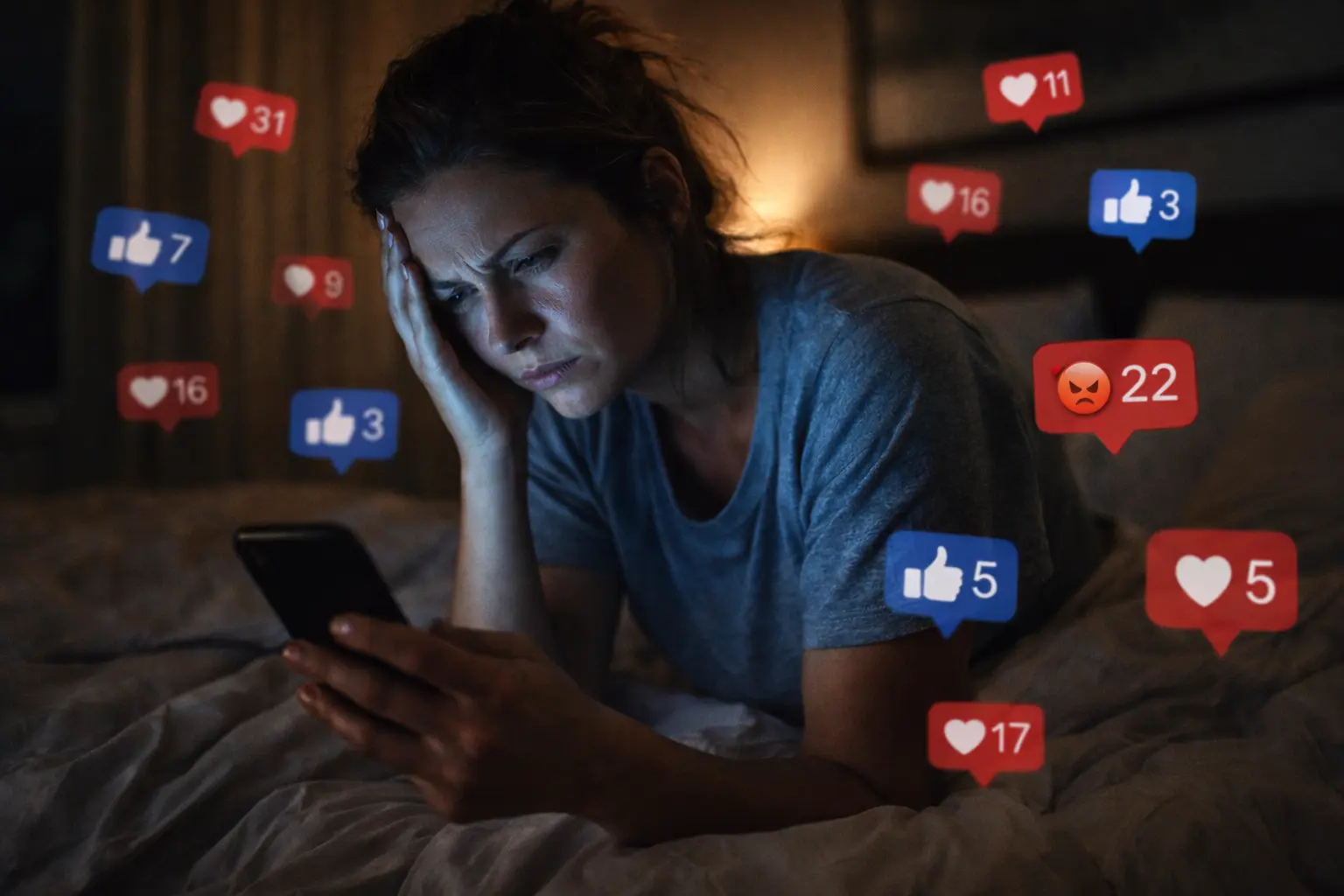
You’re scrolling at midnight again, comparing your life to highlight reels, feeling that familiar knot of anxiety tighten in your chest, and wondering why social media harms health so deeply when it’s supposed to keep you connected.
Understanding the influence of social media on mental health
Social media platforms create a unique psychological environment where women are constantly exposed to curated versions of other people’s lives. Consider Sarah, a 34-year-old professional who found herself spending three hours daily on Instagram, watching friends’ vacation photos and fitness transformations. Within weeks, she noticed persistent anxiety and a nagging sense of inadequacy. Research shows that this comparison trap triggers measurable changes in brain chemistry. The constant exposure to idealized images activates the brain’s reward centers while simultaneously activating areas associated with social pain. Women report heightened feelings of anxiety, depression, and diminished self-esteem after scrolling sessions. Cyberbullying comments, subtle exclusion from group posts, and the pressure to maintain a perfect online persona compound these effects. The psychological toll isn’t imaginary; it’s rooted in how social platforms are designed to maximize engagement through emotional triggers.
The biological effects of excessive social media use
When you’re absorbed in social media, your body responds as if facing a genuine threat. The stress of negative comments, comparison, or fear of missing out triggers your adrenal glands to release cortisol, the primary stress hormone. Imagine checking your phone first thing in the morning and immediately seeing critical comments on a photo you posted. Your cortisol spikes, setting a stressed tone for your entire day. Prolonged elevation of cortisol disrupts sleep architecture, weakens immune function, and even affects metabolism. Additionally, the blue light emitted by screens suppresses melatonin production, the hormone that signals your body it’s time to sleep. Women who use social media in the hour before bed often experience fragmented sleep and wake feeling unrested. This sleep deprivation cascades into cognitive impairment, mood disturbances, and reduced ability to regulate emotions. The biological mechanisms are well-documented; your body simply wasn’t designed for the constant low-level stress that social media creates.
Potential strategies to mitigate social media-induced health risks
Protecting yourself requires deliberate, consistent action rather than willpower alone. Start by establishing specific time boundaries. Instead of vague intentions like ‘use less social media,’ set concrete limits such as checking apps only between 6 PM and 7 PM. Use app timers that send notifications when you’re approaching your limit, creating friction that makes mindless scrolling harder. Next, create a structured digital detox routine. Many women find success designating phone-free hours, such as the first hour after waking or the final hour before bed. During these times, engage in activities that genuinely nourish you: reading physical books, journaling, stretching, or preparing a meal without screens nearby. Mindfulness practices like meditation or breathing exercises directly counteract the stress response triggered by social media. Even five minutes of focused breathing can lower cortisol levels. Consider also curating your feed intentionally by unfollowing accounts that trigger comparison or negative feelings, and following content creators who inspire rather than diminish you.
- Set specific daily time limits for social media use using built-in app timers.
- Create a digital detox schedule with phone-free hours, especially before bedtime.
- Engage in offline activities like reading, hobbies, or physical exercise during freed-up time.
- Practice mindfulness or breathing exercises to manage stress responses.
- Audit and curate your social media feed by unfollowing triggering accounts.
🔬 Science-backed benefits in 2 minuteschoose where to begin:
The relationship between social media and body image concerns
Body image disturbance represents one of the most documented harms of social media for women. Platforms like Instagram and TikTok showcase heavily filtered, edited, and carefully angled images that bear little resemblance to reality. A 28-year-old woman named Jessica spent months feeling inadequate about her appearance after following fitness influencers whose photos were digitally enhanced and taken under professional lighting. She didn’t realize that the ‘before and after’ transformations she admired were often exaggerated or achieved through unsustainable methods. The constant exposure to these unrealistic standards creates what researchers call ‘internalized beauty ideals.’ Women begin believing these standards are normal and achievable, leading to body dissatisfaction, restrictive eating patterns, and in severe cases, eating disorders. The pressure intensifies because social media rewards appearance-focused content with likes and comments, reinforcing the message that your worth is tied to how you look. Understanding that these images are carefully constructed fictions, not reflections of reality, is the first step toward reclaiming a healthier relationship with your body.
Cyberbullying and its impact on women’s mental health
Online harassment on social media platforms creates psychological wounds that can persist long after the comments disappear. Women face disproportionate rates of cyberbullying, including body shaming, slut shaming, and coordinated harassment campaigns. Consider the experience of many women who post a photo and receive cruel comments about their appearance, intelligence, or lifestyle choices. Unlike face-to-face criticism, cyberbullying is permanent, public, and often anonymous, which emboldens perpetrators. The psychological impact includes anxiety, depression, social withdrawal, and in severe cases, self-harm. Women report feeling unsafe online, constantly monitoring comments and deleting posts to avoid harassment. The unpredictability of attacks creates hypervigilance, a state of constant alertness that exhausts the nervous system. Some women develop social anxiety that extends offline, fearing judgment even in real-world interactions. The cumulative effect of repeated online attacks can fundamentally alter how women perceive themselves and their place in the world, making recovery a lengthy process requiring professional support.
Measurable steps towards healthier social media habits
Real change requires moving beyond awareness into concrete action. Start by tracking your current social media use for one week without judgment, noting when you reach for your phone, what triggers the urge, and how you feel afterward. This baseline data reveals patterns you might not consciously recognize. Next, implement one change at a time rather than overhauling everything simultaneously. If you typically check social media first thing in the morning, replace that habit with a five-minute stretching routine or journaling session. Once this new habit feels natural, add another change. Prioritize offline activities that genuinely engage you: joining a book club, taking a fitness class, learning a new skill, or spending uninterrupted time with friends without phones present. These activities rebuild your sense of identity beyond your online persona. Set boundaries with yourself and others by communicating your digital detox goals, which creates accountability. Track improvements in sleep quality, mood stability, and anxiety levels as motivation to maintain these healthier habits. Small, consistent changes compound into significant improvements in your overall well-being.
Excessive social media use creates measurable biological and psychological effects on women’s health, including elevated stress hormones, disrupted sleep, body image disturbance, and vulnerability to cyberbullying. The platforms are designed to maximize engagement through emotional triggers, making passive resistance ineffective. By implementing specific time boundaries, curating your feed intentionally, engaging in meaningful offline activities, and practicing stress-management techniques, women can reclaim agency over their digital lives. These changes aren’t about complete abstinence but rather building a healthier, more intentional relationship with social media that supports rather than undermines your well-being.
Can social media affect women’s mental health?
Yes, social media significantly affects women’s mental health through multiple mechanisms. Constant comparison with others triggers anxiety and depression, while the platform’s design maximizes engagement through emotional triggers. Cyberbullying, body image pressure, and the stress of maintaining a perfect online persona create measurable changes in brain chemistry and stress hormone levels. Women report increased anxiety, diminished self-esteem, and sleep disruption from social media use.
How can women protect their mental health from social media influence?
Women can protect their mental health by setting specific daily time limits using app timers, creating phone-free hours especially before bedtime, curating their feed by unfollowing triggering accounts, and engaging in offline activities that genuinely nourish them. Practicing mindfulness or breathing exercises helps manage stress responses. Recognizing that social media images are heavily edited fictions rather than reality is crucial. Seeking professional support if experiencing cyberbullying or severe body image concerns ensures you’re not navigating these challenges alone.
Others also read:
Disclaimer: This article is for informational purposes only and is not a substitute for professional medical advice. Always consult a healthcare professional for personal guidance.
This article has been prepared and reviewed by the GlobalHealthBeacon editorial team and is based on current medical research and published scientific literature available in 2026. It provides structured, evidence-based information to support informed health decisions.
