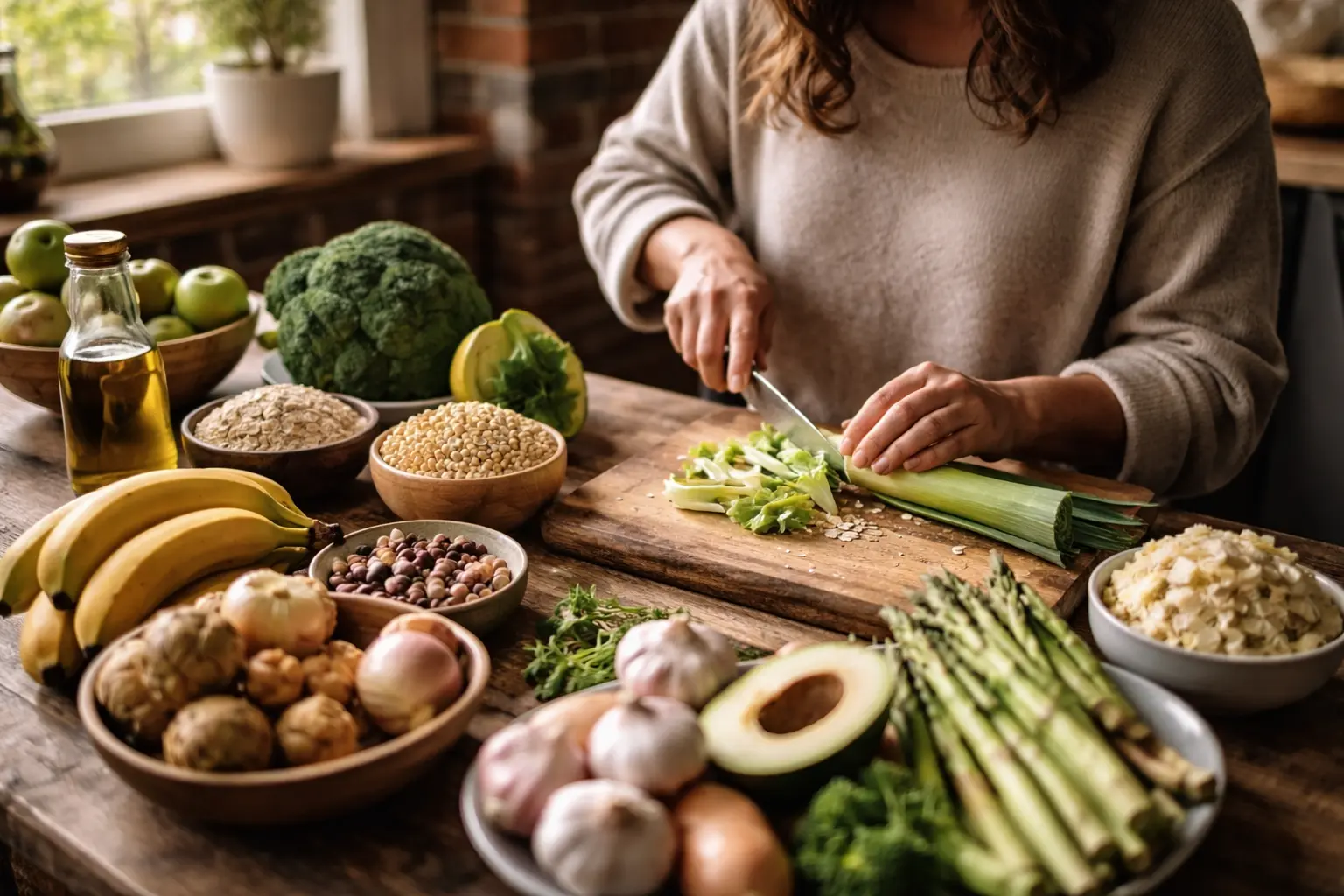
Bloating after meals, irregular digestion, and that heavy feeling in your gut that just won’t quit – if this sounds like you, your microbiome is probably screaming for help, and a solid prebiotics foods list is exactly what you need to turn things around.
Understanding prebiotics
Prebiotics are non-digestible fibers that act as fuel for the beneficial bacteria already living in your gut. Think of them as fertilizer for your microbiome. When you consume prebiotics, you’re essentially feeding the good guys and helping them multiply, which strengthens your digestive system from the inside out. This matters because these bacteria do far more than just help you digest food. They support your immune system, influence your mood through the gut-brain connection, and even help regulate your metabolism. For women specifically, a healthy gut microbiome can help manage hormonal fluctuations and reduce bloating during your cycle. The key difference between prebiotics and probiotics is important: probiotics are the actual beneficial bacteria, while prebiotics are what those bacteria eat. You can’t have a thriving microbiome without both working together.
- Bananas: Rich in inulin, a type of prebiotic fiber that supports gut health and becomes sweeter as they ripen, making them easy to add to smoothies or eat as a snack
- Onions: Contain fructans, another prebiotic fiber that feeds beneficial bacteria and adds flavor depth to soups, stir-fries, and roasted vegetable dishes
- Asparagus: Packed with oligosaccharides, a prebiotic that aids in digestion and works beautifully in salads, pasta dishes, or as a simple roasted side
Incorporating prebiotics into your diet
Adding prebiotics to your meals doesn’t require overhauling your entire diet or buying specialty products. Start by identifying which prebiotic-rich foods you already enjoy, then build from there. Garlic and leeks are flavor powerhouses that work in nearly any savory dish. Oats make an excellent breakfast base and can be prepared as overnight oats, warm porridge, or baked into muffins. A practical approach is to pick one meal per day to focus on first. For example, swap your regular breakfast cereal for steel-cut oats topped with sliced banana and ground flaxseed. At lunch, add sauteed onions and garlic to your salad or grain bowl. By dinner, roast asparagus as a side dish. This gradual approach prevents your digestive system from being overwhelmed while you establish new eating habits. Many women find that meal prepping on weekends makes it easier to maintain consistency throughout the week.
📘 Fix your day in under 2 minuteschoose where to begin:
Shopping for prebiotics
When you’re at the grocery store, skip the processed prebiotic supplements and focus on whole foods where the fiber content is naturally intact. Look for fresh bananas at varying stages of ripeness so you can use them throughout the week. Choose firm onions and garlic bulbs that feel heavy for their size, indicating they’re fresh and full of nutrients. Fresh asparagus should have tight tips and firm stalks without any soft spots. Legumes like lentils, chickpeas, and black beans are affordable prebiotic powerhouses that last for months in your pantry. Apples, pears, and berries are excellent prebiotic fruits that work as snacks or additions to meals. Flaxseeds and chia seeds provide concentrated prebiotic fiber and can be sprinkled on almost anything. Whenever possible, choose organic produce to minimize pesticide exposure, but don’t skip conventional options if organic isn’t available or affordable. The most important thing is that you actually eat the food, so choose what fits your budget and preferences.
Cooking tips for prebiotic-rich meals
The way you prepare prebiotic foods significantly impacts how much fiber you retain. Raw fruits and vegetables preserve all their prebiotic content, so eating a raw apple with the skin on or adding fresh spinach to a salad gives you maximum benefit. Light cooking methods like steaming, roasting at moderate temperatures, or quick stir-frying also preserve most of the fiber. Avoid boiling vegetables for extended periods, as this leaches fiber into the water. When you do cook, save that cooking water for soups or broths to capture lost nutrients. A practical strategy for busy women is to prep vegetables on Sunday and store them in containers so you can quickly add them to meals throughout the week. Roasted asparagus and onions can be reheated, added to grain bowls, or eaten cold in salads. Overnight oats made the night before mean you have a prebiotic-rich breakfast ready to grab. Keep it simple: the best meal is the one you’ll actually eat consistently.
Monitoring your gut health
Your body will tell you how it’s responding to increased prebiotic intake if you pay attention. Some women experience temporary bloating or gas when they first increase their fiber intake, which is completely normal as your gut bacteria adjust to having more food available. This typically subsides within one to two weeks. Start with smaller portions and gradually increase over time rather than making dramatic changes overnight. Keep a simple food journal for two weeks, noting what you ate and how you felt afterward. This helps you identify which prebiotic foods work best for your individual system. Some women find that certain vegetables cause more bloating than others, and that’s valuable information. If you have a diagnosed condition like IBS, SIBO, or inflammatory bowel disease, introduce prebiotics even more gradually and consider working with a registered dietitian who specializes in gut health. If bloating persists beyond two weeks or you experience severe discomfort, consult your healthcare provider to rule out underlying issues. Remember that everyone’s microbiome is unique, so what works perfectly for your friend might need adjustment for you.
Including prebiotic foods like bananas, onions, and asparagus in your diet supports the growth of beneficial gut bacteria and improves your overall digestive health. Shop for whole foods, cook meals with care to preserve fiber content, and monitor your body’s responses to maintain a healthy gut microbiome. Start small, be consistent, and adjust based on how you feel.
Are prebiotics safe for everyone?
While prebiotics are generally safe for most people, individuals with digestive disorders like irritable bowel syndrome (IBS) may need to limit certain prebiotic-rich foods to prevent discomfort. Those with FODMAP sensitivities should be cautious with onions, garlic, and wheat-based foods. Always start with small amounts and increase gradually. If you have a diagnosed digestive condition, work with a healthcare provider or dietitian to determine which prebiotic foods are right for you.
How long does it take to see the benefits of prebiotics?
The effects of prebiotics on gut health vary from person to person. Most women notice improvements in digestion, reduced bloating, and more regular bowel movements within two to four weeks of consistent consumption. Some experience changes within days, while others may take six to eight weeks. The key is consistency. Your gut bacteria need regular feeding to establish and maintain healthy populations, so daily prebiotic intake produces better results than sporadic consumption.
Others also read:
Disclaimer: This article is for informational purposes only and is not a substitute for professional medical advice. Always consult a healthcare professional for personal guidance.
This guide has been prepared and reviewed by the GlobalHealthBeacon editorial team and reflects current medical research as of 2026. It provides structured, evidence-based information to support informed health decisions.
