Your gut feels bloated, your energy crashes by afternoon, and you can’t figure out why nothing seems to work anymore – but what if the answer lies in understanding your prebiotics foods list and how these specific fibers actually feed the good bacteria living inside you?
Understanding prebiotics
Prebiotics are non-digestible fibers that function as selective food sources for beneficial bacteria already living in your digestive tract. Unlike probiotics, which introduce new bacteria, prebiotics work by nourishing the bacteria you already have, creating an environment where they can thrive and multiply. Think of your gut microbiome as a garden: prebiotics are the fertilizer that helps your good bacteria flourish. When you consume prebiotic-rich foods, these fibers pass through your stomach and small intestine largely unchanged, reaching your colon where they become fuel for bacteria like Bifidobacterium and Faecalibacterium. This process, called fermentation, produces short-chain fatty acids that support gut lining integrity and overall digestive function. For women specifically, a robust microbial community becomes increasingly important as hormonal fluctuations throughout your cycle can influence bacterial composition and diversity.
Top prebiotics foods list
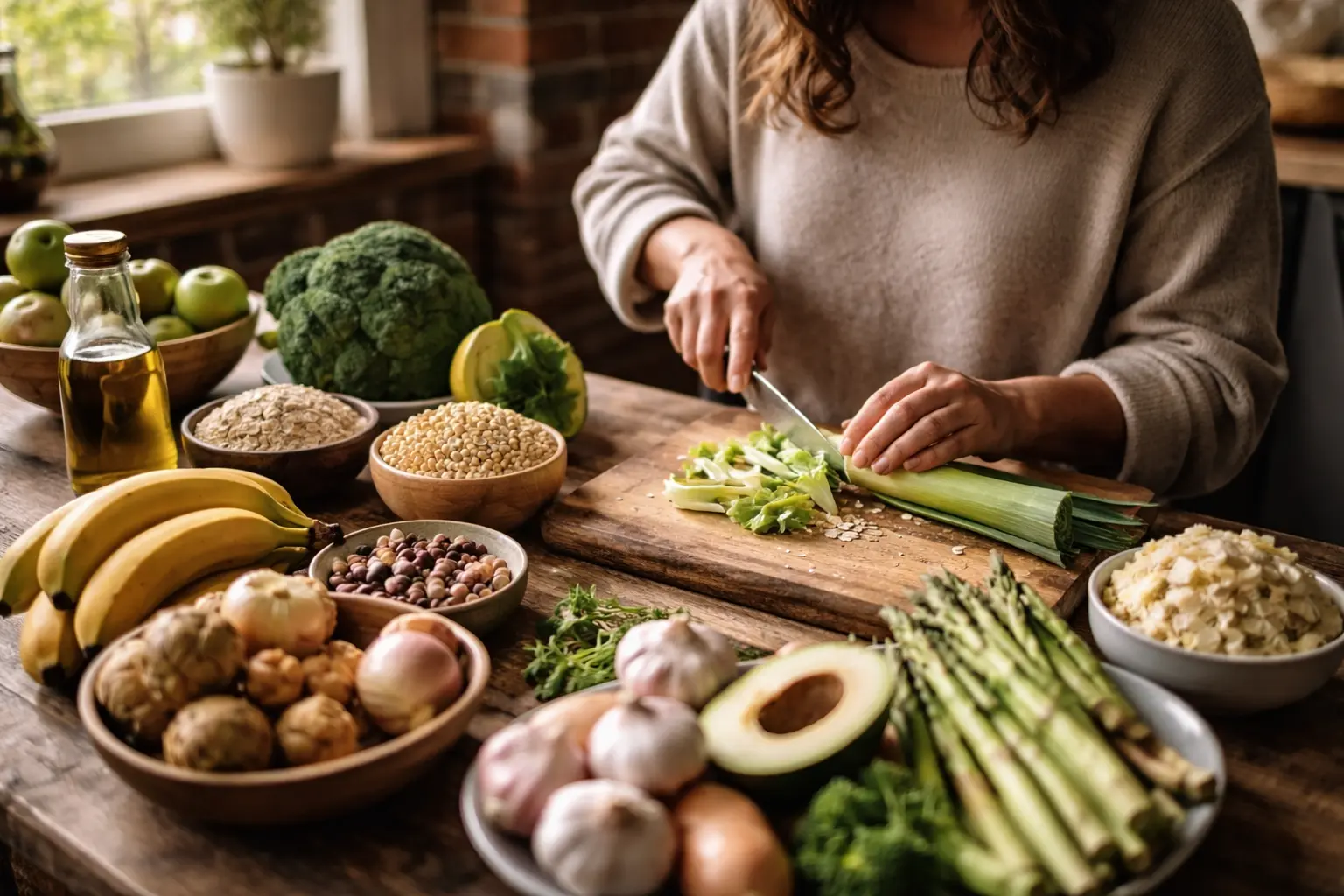
The most effective prebiotic sources include chicory root, which contains inulin and is one of the most potent options available, along with garlic, onions, leeks, and asparagus, all rich in fructooligosaccharides (FOS). Bananas, particularly when slightly underripe, provide resistant starch that acts as a prebiotic. Oats contain beta-glucans, another form of prebiotic fiber. A practical approach involves rotating these foods throughout your week: Monday might feature garlic and onions in a stir-fry, Wednesday could include asparagus as a side dish, and Friday might bring oatmeal with banana slices. Many women find that starting with one or two familiar foods makes the transition easier than overhauling their entire diet at once. Whole grains like barley and rye, along with legumes such as lentils and chickpeas, also provide substantial prebiotic content. The key is consistency and variety, as different prebiotic fibers feed different bacterial strains, promoting the microbial diversity that research increasingly shows is essential for optimal health.
The gut-brain connection
The gut-brain axis represents a bidirectional communication system between your digestive tract and central nervous system, mediated largely through your microbiome. When you consume prebiotics and strengthen your bacterial community, these microbes produce neurotransmitters like serotonin and GABA that influence mood, anxiety levels, and cognitive function. Research demonstrates that women with diverse, prebiotic-supported microbiomes report better emotional resilience during hormonal transitions and improved mental clarity. Consider Sarah, a 42-year-old woman who struggled with afternoon brain fog and mood swings. After gradually incorporating prebiotic foods over eight weeks, she noticed her afternoon energy dips lessened and her overall sense of calm improved. The mechanism involves bacterial metabolites crossing the blood-brain barrier and influencing neural inflammation and neurotransmitter production. This connection explains why digestive discomfort often accompanies anxiety and why supporting your microbiome through prebiotics may have cascading benefits beyond digestion alone.
- Incorporate prebiotic-rich foods into your daily meals by starting with one serving per day and gradually increasing over two to three weeks
- Ensure a diverse diet to provide a range of prebiotic fibers, rotating between chicory root, garlic, onions, asparagus, bananas, and oats throughout the week
- Consult with a healthcare provider before making significant dietary changes, especially if you have existing digestive conditions or take medications that interact with dietary fiber
🔬 Science-backed benefits in 2 minuteschoose where to begin:
The role of prebiotics in women’s health
Women’s hormonal cycles create a unique relationship with gut health that men don’t experience in the same way. Your estrogen levels fluctuate throughout your menstrual cycle, and research shows these hormonal shifts directly influence bacterial composition and diversity. A healthy, prebiotic-supported microbiome helps regulate estrogen metabolism through the estrobolome, a collection of bacterial genes that encode enzymes for estrogen processing. This connection affects everything from period regularity to skin clarity to fertility. Women who maintain consistent prebiotic intake often report more predictable cycles and fewer hormonal acne flare-ups. Additionally, a robust microbiome supports nutrient absorption, particularly iron and magnesium, minerals that become increasingly important during reproductive years. The gut barrier integrity maintained by prebiotic-nourished bacteria also reduces systemic inflammation, which has implications for fertility, pregnancy outcomes, and long-term metabolic health. Many women find that prioritizing prebiotics becomes an act of self-care that addresses multiple health concerns simultaneously.
Potential side effects of prebiotics
When first increasing prebiotic intake, many women experience temporary bloating, gas, or mild abdominal discomfort as their bacteria ferment these new food sources. This is actually a sign that your microbiome is responding, but it can feel discouraging. The solution lies in gradual introduction rather than elimination. Start with small portions, perhaps a quarter cup of oats or a single clove of garlic, and increase slowly over two to three weeks. This allows your bacterial population to adjust and your digestive system to adapt to increased fiber. Some women find that spacing prebiotic foods throughout the day rather than consuming large amounts at once minimizes symptoms. Staying well-hydrated becomes essential, as fiber requires adequate water to move through your system smoothly. If symptoms persist beyond three weeks or worsen, consult a healthcare provider, as this may indicate a need for a slower introduction or an underlying digestive condition requiring attention. Most women find that initial discomfort resolves completely once their system adapts.
The power of prebiotics for your gut
Including prebiotic foods in your diet represents a foundational shift in how you nourish your body from the inside out. Rather than viewing these foods as another health trend, think of them as essential maintenance for the trillions of organisms that influence your digestion, immunity, mood, and hormonal balance. The beauty of prebiotics lies in their simplicity: they work with your body’s existing systems rather than introducing foreign elements. By consistently choosing chicory root, garlic, onions, asparagus, bananas, and oats, you’re creating an environment where beneficial bacteria multiply and thrive. Over weeks and months, this microbial shift translates into tangible changes: improved digestion, clearer skin, better mood stability, and enhanced energy. The gut-brain axis strengthens, your immune function improves, and your body becomes more resilient to stress and illness. For women navigating the complexities of hormonal health, reproductive concerns, and metabolic changes, supporting your microbiome through prebiotics offers a practical, evidence-based approach to feeling genuinely better.
Prebiotics, such as chicory root, garlic, onions, and bananas, play a crucial role in nurturing the beneficial bacteria in your gut. By incorporating these foods into your diet, you can support a healthy gut microbiome and enhance your overall well-being.
Are there any risks associated with consuming prebiotic foods?
While prebiotics are generally safe, some individuals may experience digestive issues such as bloating or gas when first incorporating them into their diet. It’s advisable to start with small amounts and gradually increase intake.
Can men benefit from consuming prebiotic-rich foods as well?
Absolutely! The benefits of prebiotics extend to both men and women, supporting gut health, digestion, and overall wellness. Including prebiotic foods in your diet can be beneficial for anyone looking to enhance their gut microbiome.
Others also read:
Disclaimer: This article is for informational purposes only and is not a substitute for professional medical advice. Always consult a healthcare professional for personal guidance.
This article has been prepared and reviewed by the GlobalHealthBeacon editorial team and is based on current medical research and published scientific literature available in 2026. It provides structured, evidence-based information to support informed health decisions.
