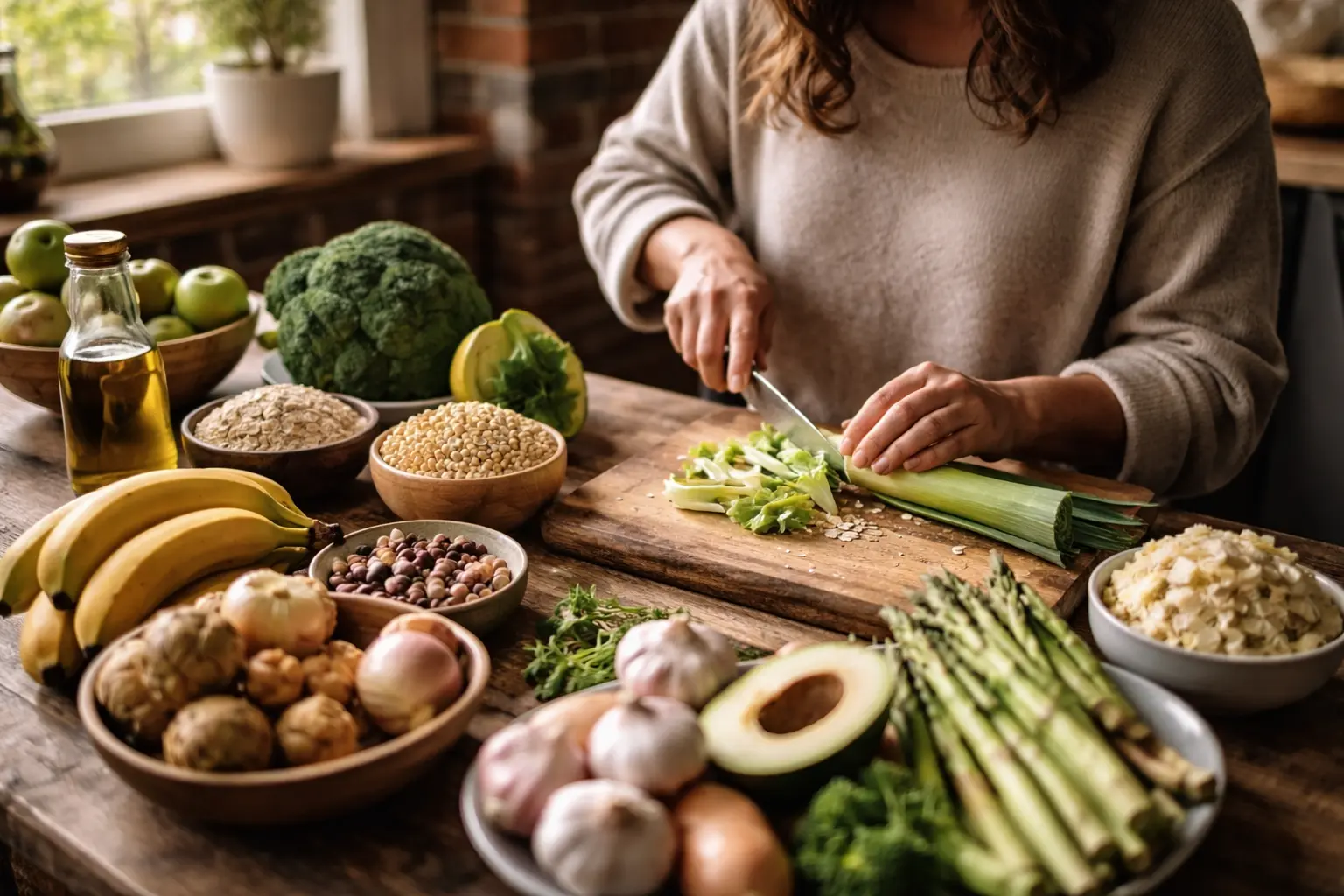
Your gut feels off, bloating hits after meals, and you are scrolling through endless wellness claims about prebiotics foods list wondering what actually works and what is just marketing noise.
Understanding prebiotics: the basics
Prebiotics are non-digestible fibers that your gut bacteria cannot break down on their own, but they use as fuel to thrive and multiply. Think of them as selective fertilizer for your microbiome. Unlike probiotics, which introduce new bacteria, prebiotics feed the beneficial bacteria already living in your digestive system. Common sources include bananas, onions, garlic, whole grains, and chicory root. When you eat a prebiotic food, it travels through your stomach and small intestine largely unchanged, then reaches your colon where your microbial community waits. Here is where the magic happens. Your good bacteria ferment these fibers, producing short-chain fatty acids that nourish your gut lining and influence everything from immune function to mood regulation. Young adults often overlook this process because they assume all fiber works the same way. It does not. Prebiotic fiber is specifically designed by nature to feed beneficial microbes, making it fundamentally different from regular dietary fiber that your body can partially digest.
Mechanisms of action
When you consume prebiotics, your beneficial bacteria like Bifidobacterium and Faecalibacterium prausnitzii ferment these fibers through a process called anaerobic fermentation. This fermentation produces short-chain fatty acids, particularly butyrate, which serves as the primary energy source for your colon cells. Butyrate strengthens your intestinal barrier, reducing something called leaky gut where harmful substances slip through. Additionally, prebiotic fermentation lowers your colon pH, creating an acidic environment where harmful bacteria struggle to survive while beneficial species flourish. This shift in bacterial composition reduces inflammation throughout your digestive tract and beyond. Research shows that increased prebiotic consumption correlates with reduced levels of inflammatory markers in your bloodstream. For young adults dealing with stress, irregular sleep, or processed food diets, this mechanism becomes especially valuable because these factors deplete beneficial bacteria populations. By feeding what remains of your good bacteria with prebiotics, you essentially give them a fighting chance to recover and rebalance your microbiome naturally.
Top prebiotic foods for young adults
Chicory root stands out as one of the most potent prebiotic sources, containing up to 65 percent inulin by weight. You can find chicory root powder at most health food stores and mix it into coffee or smoothies, though start with small amounts because rapid introduction can cause bloating. Garlic and onions, staples in most kitchens, deliver prebiotic benefits while adding flavor to meals. Raw garlic contains more prebiotic compounds than cooked garlic, so consider adding minced raw garlic to salads or dressings. Green bananas, which most people overlook, contain resistant starch that functions as a prebiotic. They taste less sweet than ripe bananas and work well in smoothies or sliced into oatmeal. Asparagus, leeks, and wheat bran also rank high on the prebiotic scale. A practical approach for young adults involves rotating these foods throughout your week rather than consuming the same source daily. This diversity feeds different bacterial strains, creating a more resilient microbiome. For example, Monday might feature garlic in pasta, Wednesday brings asparagus as a side dish, and Friday includes a green banana smoothie. This rotation prevents boredom while maximizing microbial diversity.
- Start by adding one prebiotic food to your current diet this week, choosing something you already enjoy eating so consistency becomes easier.
- Increase your water intake alongside prebiotic foods because fiber fermentation requires adequate hydration to prevent temporary bloating or discomfort.
- Track how your digestion responds over two to three weeks, noting energy levels, bloating patterns, and bowel regularity to understand your personal tolerance.
- Gradually introduce additional prebiotic sources every few days rather than all at once, allowing your microbiome to adapt without overwhelming your system.
- Consult a healthcare provider before making significant dietary changes, especially if you have irritable bowel syndrome, small intestinal bacterial overgrowth, or take medications affecting digestion.
🔬 Science-backed benefits in 2 minuteschoose where to begin:
Potential health benefits
Scientific literature increasingly documents connections between prebiotic consumption and improved nutrient absorption, particularly for calcium and magnesium. When your beneficial bacteria ferment prebiotics, they produce metabolites that enhance mineral bioavailability in your colon. Some research suggests regular prebiotic intake may reduce risk for metabolic syndrome, type 2 diabetes, and certain gastrointestinal cancers, though individual responses vary significantly based on genetics, baseline microbiome composition, and overall lifestyle. Your immune system depends heavily on gut barrier integrity and microbial diversity, both strengthened by prebiotic consumption. Studies show that people with robust prebiotic intake demonstrate stronger antibody responses to vaccines and lower rates of respiratory infections. Mental health connections also emerge from research linking gut dysbiosis to anxiety and depression, with prebiotics showing promise in supporting mood through the gut-brain axis. For young adults, these benefits accumulate over time rather than appearing overnight. Think of prebiotics as a long-term investment in your microbiome health rather than a quick fix. Consistency matters more than perfection, and individual responses depend on your unique microbial ecosystem.
Balancing prebiotics with probiotics
Prebiotics and probiotics work synergistically, which is why the term synbiotics describes their combined effect. Probiotics introduce beneficial bacteria species directly into your gut, while prebiotics feed the bacteria already present and the newly introduced strains. This partnership matters because probiotics alone often struggle to establish themselves without adequate prebiotic fuel. Young adults sometimes invest heavily in expensive probiotic supplements while neglecting prebiotic foods, missing the opportunity for synergy. A more effective approach combines prebiotic-rich foods like garlic, onions, and bananas with probiotic sources like yogurt, kefir, sauerkraut, or kimchi. For example, a meal combining sauerkraut with garlic-roasted vegetables delivers both probiotics and prebiotics simultaneously. Some people find that introducing probiotics before establishing a prebiotic-rich diet causes temporary digestive upset because the new bacteria lack adequate fuel. By prioritizing prebiotics first, you create a welcoming environment for beneficial bacteria to thrive. This sequencing matters more than most people realize when optimizing gut health.
Digestive health and beyond
Your gut microbiome influences far more than digestion alone. The bacterial communities in your colon produce neurotransmitters like serotonin and GABA, regulate your immune response, control inflammation throughout your body, and even influence your metabolism and weight regulation. Maintaining microbial diversity through prebiotic foods creates a resilient system better equipped to handle stress, poor sleep, and occasional dietary indulgences. Young adults with healthy, diverse microbiomes report better energy levels, clearer skin, improved mood stability, and more consistent digestion. The key lies in consistency and dietary diversity rather than perfection. You do not need to eat perfectly or eliminate entire food groups. Instead, focus on regularly including prebiotic foods alongside whole grains, lean proteins, and healthy fats. Think of your microbiome as a garden that requires ongoing care. Prebiotics are the nutrients that help your beneficial plants flourish. Over weeks and months, this investment compounds into noticeable improvements in how you feel physically and mentally.
Prebiotics represent a scientifically-grounded approach to gut health that separates from hype by focusing on how your body actually works. These non-digestible fibers feed beneficial bacteria, triggering fermentation processes that produce compounds nourishing your gut lining and influencing immunity, metabolism, and mental health. Top sources like chicory root, garlic, onions, and green bananas offer practical ways to support your microbiome naturally. By understanding the mechanisms, introducing prebiotics gradually, and combining them with probiotic foods, young adults can build a resilient digestive system that supports overall wellness.
Can I consume prebiotic supplements instead of foods?
While prebiotic supplements exist and contain concentrated inulin or other prebiotic fibers, whole food sources offer additional benefits including vitamins, minerals, and other phytonutrients your body needs. Supplements work best as additions to, not replacements for, prebiotic-rich foods. Whole foods also provide context clues that help your digestive system prepare appropriately for incoming fiber.
Are there any side effects of consuming prebiotic foods?
In some individuals, excessive prebiotic consumption may cause bloating, gas, or changes in bowel habits as bacteria ferment these fibers. These effects typically diminish within two to three weeks as your microbiome adapts. Introducing prebiotics gradually, starting with small amounts and increasing over days or weeks, helps your system adjust. If symptoms persist beyond three weeks or feel severe, consult a healthcare provider to rule out underlying conditions.
Others also read:
Disclaimer: This article is for informational purposes only and is not a substitute for professional medical advice. Always consult a healthcare professional for personal guidance.
This article has been prepared and reviewed by the GlobalHealthBeacon editorial team and is based on current medical research and published scientific literature available in 2026. It provides structured, evidence-based information to support informed health decisions.
