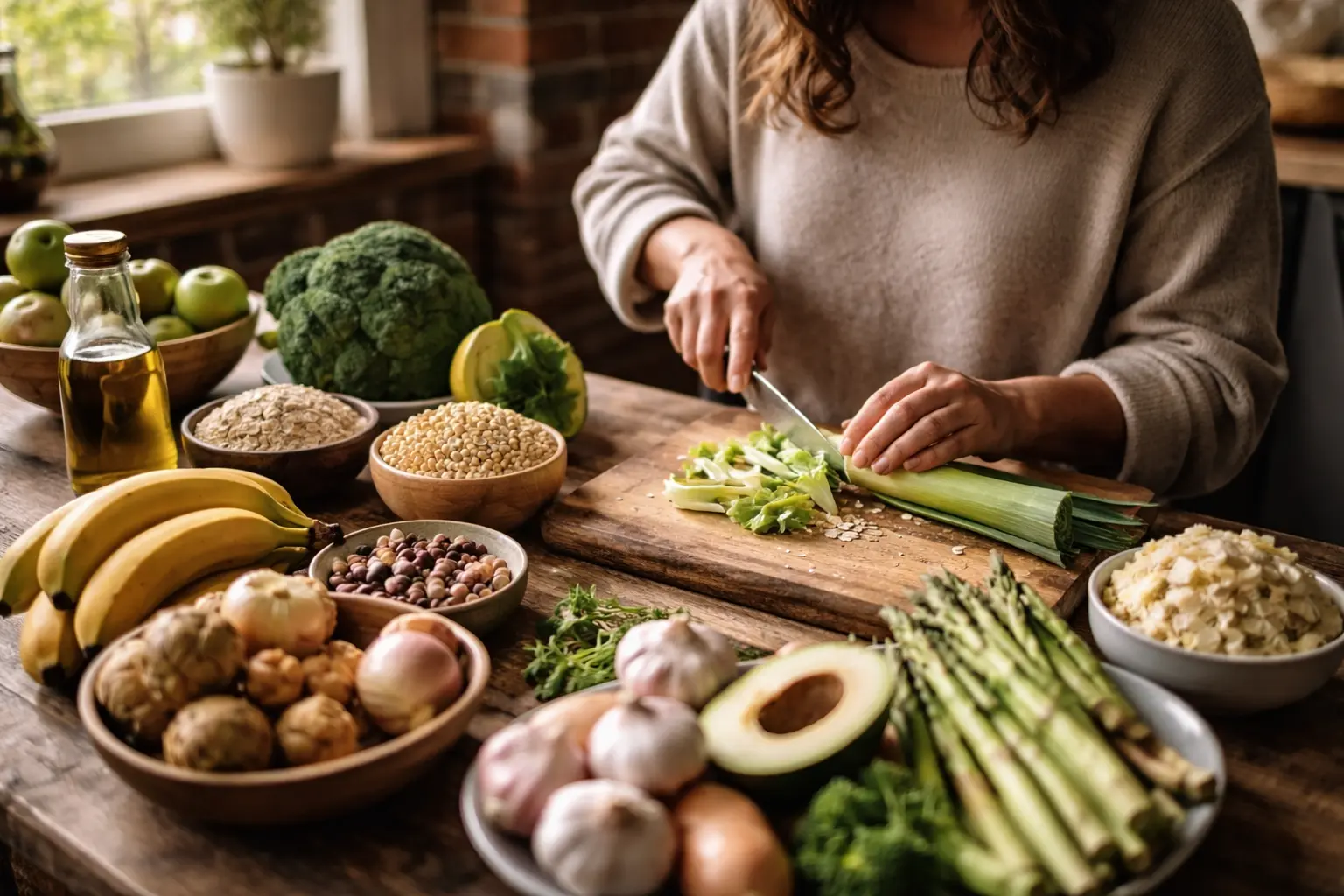
Your gut feels like a war zone, bloating hits out of nowhere, and energy crashes by 3 PM, so you start researching prebiotic foods list options because something has to change.
What are prebiotic foods?
Prebiotic foods contain specialized plant fibers that nourish the good bacteria living in your gut, and honestly, most young adults have no idea they’re eating them already. Think of prebiotics as fertilizer for your microbiome. These foods promote gut health by creating a thriving environment where beneficial microorganisms can multiply and do their job. When you eat an apple with the skin on or add garlic to your pasta, you’re feeding the bacteria that help with digestion, immunity, and even mood regulation. It sounds simple, but the impact is real. Your gut bacteria are basically tiny workers, and prebiotics are their fuel. Without enough of them, your digestive system struggles, inflammation creeps in, and you feel sluggish.
- Oats
- Garlic
- Onions
- Bananas
- Asparagus
How do prebiotic foods help?
By fueling the growth of healthy gut bacteria, prebiotic foods can enhance digestion, boost immunity, and even support mental well-being in ways you might not expect. Picture this: you’re 24, dealing with afternoon brain fog, and nothing seems to help until you realize your gut health might be the culprit. When your gut bacteria are thriving, they produce short-chain fatty acids that reduce inflammation throughout your entire body. You digest food more efficiently, absorb nutrients better, and your immune system gets stronger because about 70 percent of your immune system lives in your gut. Some young adults report clearer skin, better mood stability, and fewer energy crashes after consistently eating prebiotic-rich foods. Incorporating these foods into your diet can lead to a happier tummy and a healthier you, but the benefits extend far beyond just feeling less bloated.
💬 Ready to feel better in 2 minutes?choose where to begin:
Tips for including prebiotics in your diet
Start small by adding prebiotic-rich foods like onion or garlic to your meals, because jumping in too aggressively can backfire with bloating and gas that catches you off guard. A common mistake young adults make is eating a whole bowl of oats or raw garlic and wondering why they feel worse before they feel better. Your gut bacteria need time to adjust to the increased fiber intake. Begin with one prebiotic source per day, maybe adding half a banana to your breakfast or roasting some garlic with your dinner. After a week, gradually increase the amount or add a second prebiotic food. Experiment with various prebiotic sources like asparagus, leeks, or whole grain bread to find what works best for you. Keep a simple food journal noting how you feel after eating different prebiotics. Some people thrive on raw onions while others prefer them cooked. Pay attention to your body’s signals and adjust your approach accordingly.
Results you can expect
Many young adults report feeling lighter, more energetic, and less bloated after incorporating prebiotic foods into their diets, though the timeline varies more than you might think. One 26-year-old noticed improved digestion within two weeks of adding oats to her breakfast routine, while her friend didn’t feel significant changes until six weeks in. Individual results vary because everyone’s microbiome is different, shaped by genetics, stress levels, medications, and past diet choices. A balanced diet rich in prebiotics can significantly impact your overall well-being, but patience is key. Some people experience noticeable improvements in digestive comfort, mental clarity, and energy levels relatively quickly. Others need more time for their gut bacteria to rebalance and for their body to fully adapt. Don’t expect overnight transformation, but do expect gradual, sustainable improvements in how you feel from the inside out.
Incorporating prebiotic foods into your diet can positively influence your gut health, immunity, and overall vitality. From oats to bananas, these foods have the potential to transform how you feel from the inside out.
Are prebiotic foods suitable for everyone?
While generally safe for most people, those with digestive disorders may need to exercise caution with prebiotic foods. It’s advisable to consult a healthcare professional if you have concerns.
How long does it take to feel the effects of prebiotic foods?
The timeline for experiencing the benefits of prebiotic foods varies from person to person. Some individuals may notice improvements in digestive comfort within a few weeks, while others may require more time for significant changes to occur.
Others also read:
Disclaimer: This article is for informational purposes only and is not a substitute for professional medical advice. Always consult a healthcare professional for personal guidance.
This article presents an experience-based perspective and has been reviewed by the GlobalHealthBeacon editorial team in 2026. It provides structured, evidence-based information to support informed health decisions.
