Your digestion feels sluggish, your energy dips after meals, and you are tired of feeling bloated and uncomfortable – but nobody told you that a simple shift in what you eat could change everything, and that is exactly what a solid prebiotics foods list can do for you.
What are prebiotics and how do they work?
Prebiotics are non-digestible fibers that function as fuel for the beneficial bacteria already living in your gut. Think of them as fertilizer for your microbiome. When you consume prebiotic foods, these fibers travel through your digestive system largely unchanged until they reach your colon, where they become a feast for your good bacteria. This process, called fermentation, strengthens the population of helpful microorganisms that support everything from digestion to immune function. For seniors especially, this matters because gut bacteria naturally decline with age, making it harder to absorb nutrients and maintain digestive regularity. By regularly consuming prebiotic foods, you are essentially restocking your internal ecosystem with the resources it needs to function optimally. The result is improved nutrient absorption, better digestive comfort, and a stronger defense against common digestive complaints.
- Promotes the growth of beneficial bacteria in the gut
- Enhances digestion and nutrient absorption
- Supports a healthy immune system
Top prebiotic foods to add to your diet
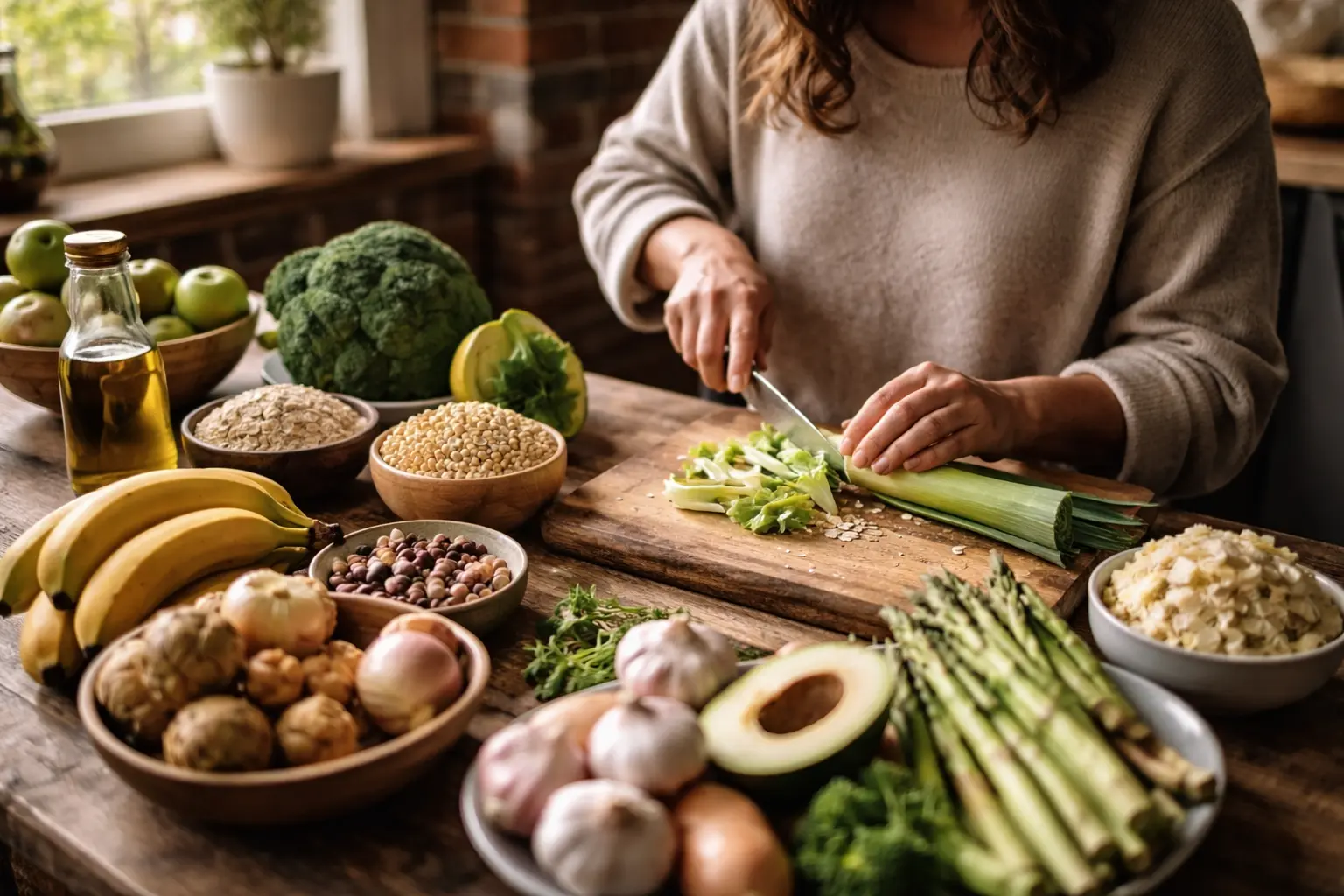
The good news is that prebiotic foods are not exotic or hard to find. Bananas, especially slightly underripe ones, are loaded with resistant starch and inulin. Onions and garlic add flavor to any meal while delivering significant prebiotic fiber. Leeks, asparagus, and whole grains like oats and barley are equally powerful. For seniors who prefer softer textures, cooked asparagus or onions in soups work beautifully. Chicory root and Jerusalem artichokes are also excellent sources, though less commonly known. A practical approach is to start with foods you already enjoy and simply increase portions. For example, if you eat oatmeal for breakfast, you are already getting prebiotics. If you cook with garlic and onions, you are building a prebiotic foundation. The key is consistency and variety, rotating different sources throughout the week to maximize the diversity of bacteria you are feeding.
📘 Fix your day in under 2 minuteschoose where to begin:
How to incorporate prebiotics into your meals
Integration is simpler than you might think. Start your day with oatmeal topped with sliced banana, which combines two prebiotic sources in one bowl. For lunch, add sauteed onions and garlic to soups, stews, or salads. Roasted asparagus makes an easy side dish that pairs with any protein. Whole grain bread at dinner replaces refined white bread without requiring any extra effort. A practical strategy is to pick one meal per day and intentionally add a prebiotic food to it, then gradually expand. Many seniors find that blending prebiotic foods into smoothies with yogurt creates a dual benefit, since yogurt contains probiotics that work synergistically with prebiotics. Mixing these two types of foods together amplifies gut health benefits because the prebiotics feed the live cultures in the yogurt, creating an ideal environment for them to thrive. Small, consistent additions work better than sudden dramatic changes, allowing your digestive system to adapt comfortably.
Potential benefits of prebiotic foods for seniors
For seniors, the benefits of prebiotic foods extend beyond basic digestion. Improved nutrient absorption means your body gets more value from every meal, which is crucial when metabolism naturally slows with age. Better digestive regularity reduces the discomfort and frustration of constipation, a common complaint among older adults. A stronger immune system matters more as you age, since immunity naturally weakens over time. Prebiotic foods help populate your gut with bacteria that produce short-chain fatty acids, which strengthen your intestinal barrier and reduce inflammation throughout your body. Many seniors report feeling less bloated, having more stable energy levels, and experiencing fewer digestive complaints within weeks of adding prebiotic foods to their routine. The cumulative effect is improved quality of life, better nutrient status, and reduced reliance on digestive aids or medications. Think of prebiotics as preventive maintenance for your digestive system, addressing issues before they become serious problems.
Considerations when adding prebiotics to your diet
While prebiotic foods are beneficial, introducing them too quickly can backfire. Your gut bacteria need time to adjust to increased fiber intake, and rushing this process often causes temporary gas, bloating, or mild cramping. The solution is gradual introduction. Start with small portions of one or two prebiotic foods, then slowly increase amounts over two to three weeks. This allows your digestive system to build tolerance and your bacteria to adapt. If you experience discomfort, simply slow down the pace. Drink plenty of water, since fiber works best when you are well hydrated. Some seniors find that spreading prebiotic foods throughout the day rather than consuming large amounts at once minimizes digestive upset. If you have existing digestive conditions like IBS or inflammatory bowel disease, consult your doctor before making significant dietary changes. Most people find that starting low and going slow eliminates problems entirely, making the transition smooth and sustainable.
Prebiotic foods, rich in non-digestible fibers, support the growth of beneficial gut bacteria, enhance digestion, and strengthen the immune system. Including prebiotic-rich foods in your diet can promote overall gut health and improve nutrient absorption.
Can I take prebiotic supplements instead of incorporating prebiotic foods into my diet?
While prebiotic supplements are available, it’s generally recommended to obtain prebiotics from natural food sources as part of a healthy diet.
Are there any side effects associated with consuming prebiotic foods?
Some individuals may experience mild digestive discomfort such as gas and bloating when first introducing prebiotic foods. Start with small amounts and gradually increase intake to minimize these symptoms.
Others also read:
Disclaimer: This article is for informational purposes only and is not a substitute for professional medical advice. Always consult a healthcare professional for personal guidance.
This guide has been prepared and reviewed by the GlobalHealthBeacon editorial team and reflects current medical research as of 2026. It provides structured, evidence-based information to support informed health decisions.
