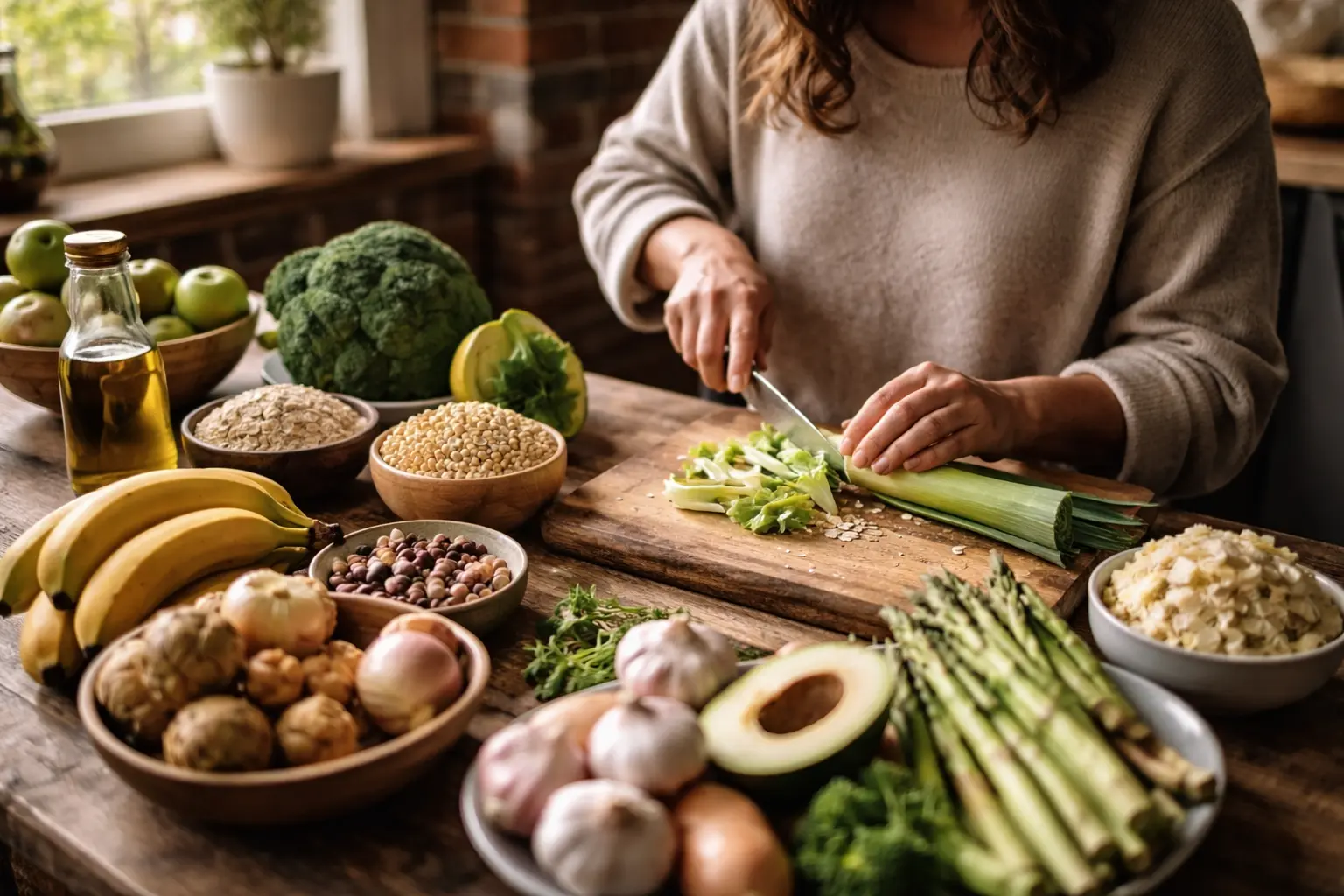
Your gut feels off, bloating hits randomly, and you’re tired of feeling sluggish while everyone online raves about prebiotics foods list like it’s a miracle cure, so let’s cut through the noise and figure out if this stuff actually works for you.
Understanding prebiotics and their benefits
Prebiotics are essentially food for your gut bacteria, not the bacteria themselves. Think of them as specialized fiber that your body cannot digest, but your beneficial gut bacteria absolutely thrive on. When you consume prebiotic foods, you’re feeding the good microorganisms in your digestive system, which then multiply and create a healthier gut environment. This process, called fermentation, produces short-chain fatty acids that strengthen your gut lining and reduce inflammation. For young adults especially, this matters because your gut health directly influences your energy levels, skin clarity, immune response, and even mood. Studies show that people with diverse gut bacteria tend to have better digestion, fewer bloating episodes, and more stable energy throughout the day. The key is understanding that prebiotics work slowly and cumulatively, not overnight. You won’t feel dramatically different after eating a banana, but consistent intake over weeks builds a stronger microbial community that supports your overall wellness.
- Prebiotics nourish the good bacteria in your gut, contributing to a balanced and diverse microbiome.
- They can help reduce inflammation in the body and enhance nutrient absorption.
- Focusing on prebiotic-rich foods like bananas, onions, garlic, and oats can positively impact your gut health.
Incorporating prebiotic foods into your diet
Adding prebiotics to your meals doesn’t require overhauling your entire diet. Start by identifying which prebiotic foods you already enjoy or can easily add to your routine. If you eat oatmeal for breakfast, you’re already getting inulin and beta-glucans. Add sliced banana or berries, and you’ve boosted your intake further. For lunch, swap regular pasta for whole grain versions or add chickpeas to your salad. Garlic and onions are flavor boosters that happen to be prebiotic powerhouses, so use them generously in stir-fries, soups, and grain bowls. A practical strategy is the 80/20 approach: keep 80 percent of your meals as they are now, and gradually introduce prebiotic-rich ingredients into that remaining 20 percent. Try adding cooked asparagus to your dinner, snacking on almonds, or blending chia seeds into your smoothies. The goal isn’t perfection but consistency. Young adults often succeed by meal prepping on weekends, cooking larger batches of vegetable-based dishes that naturally contain prebiotics, then portioning them for the week ahead.
📘 Fix your day in under 2 minuteschoose where to begin:
Potential risks and side effects
Here’s what nobody tells you about starting prebiotics: your gut might rebel before it improves. When you suddenly increase fiber intake, your gut bacteria work overtime fermenting all that new food, producing gas and bloating in the process. This is actually a sign that your bacteria are active and feeding, but it feels uncomfortable. Some young adults experience cramping, loose stools, or excessive gas within the first week of increasing prebiotics. The solution isn’t to quit, but to increase slowly. If you’re currently eating minimal fiber, jumping to high amounts of oats, beans, and vegetables will cause problems. Instead, add one prebiotic food at a time over several days, giving your system time to adapt. Drink plenty of water throughout this transition, as fiber works best when you’re well hydrated. Most people find that after two to three weeks of gradual increases, their digestive system stabilizes and the bloating disappears. If symptoms persist beyond that or worsen, you may have a sensitivity to specific foods, and that’s worth discussing with a healthcare provider.
Supplementing with prebiotics
If you travel frequently, have a limited food budget, or genuinely struggle to eat enough prebiotic foods daily, supplements offer a convenient alternative. Common prebiotic supplements include inulin powder, FOS (fructooligosaccharides), and partially hydrolyzed guar gum. You can mix these into coffee, smoothies, or yogurt without much taste change. However, supplements are not a replacement for whole foods. Real prebiotic foods come with additional nutrients, fiber, vitamins, and minerals that supplements don’t provide. A young adult who relies solely on supplements while eating processed foods won’t see the same benefits as someone eating a varied diet with whole grains, vegetables, and legumes. Before starting any supplement, check with your doctor or a registered dietitian, especially if you take medications or have digestive conditions like IBS or Crohn’s disease. Some people’s systems react differently to isolated prebiotic compounds than to the same compounds in food form. Quality matters too, so choose supplements from reputable brands that third-party test their products.
Making informed choices for your health
The prebiotic trend exists because the science is real, but it’s not a one-size-fits-all solution. Your genetics, current diet, stress levels, sleep quality, and exercise habits all influence whether prebiotics will noticeably improve your health. Some young adults see dramatic improvements in energy and digestion within weeks. Others see subtle shifts over months. A few people find that prebiotics don’t significantly change how they feel, and that’s completely valid. The only way to know if prebiotics work for you is to experiment thoughtfully. Keep a simple food and symptom journal for two weeks before starting, then add prebiotic foods gradually while continuing to track how you feel. Note energy levels, digestion quality, skin, mood, and any discomfort. After four to six weeks, review your notes and decide if the changes are worth maintaining. This personal data is far more valuable than any headline claiming prebiotics are a miracle. Your body is unique, and informed choices come from listening to your own signals, not following trends blindly.
Prebiotic foods like bananas, onions, and oats feed beneficial gut bacteria, supporting digestion and immunity through a process that takes weeks to show results. Start by gradually adding prebiotic-rich ingredients to meals you already enjoy, expect some initial bloating as your system adapts, and track your personal response over four to six weeks to determine if prebiotics genuinely improve your health and energy.
What are some common prebiotic foods?
Common prebiotic foods include bananas, onions, garlic, oats, apples, and legumes. These foods contain specific fibers that promote the growth of beneficial gut bacteria.
Are there any risks associated with consuming prebiotic foods?
While prebiotic foods offer various health benefits, they may cause bloating, gas, or stomach discomfort in some individuals, especially when consumed in large quantities. Start gradually and monitor your body’s responses.
Others also read:
Disclaimer: This article is for informational purposes only and is not a substitute for professional medical advice. Always consult a healthcare professional for personal guidance.
This guide has been prepared and reviewed by the GlobalHealthBeacon editorial team and reflects current medical research as of 2026. It provides structured, evidence-based information to support informed health decisions.
