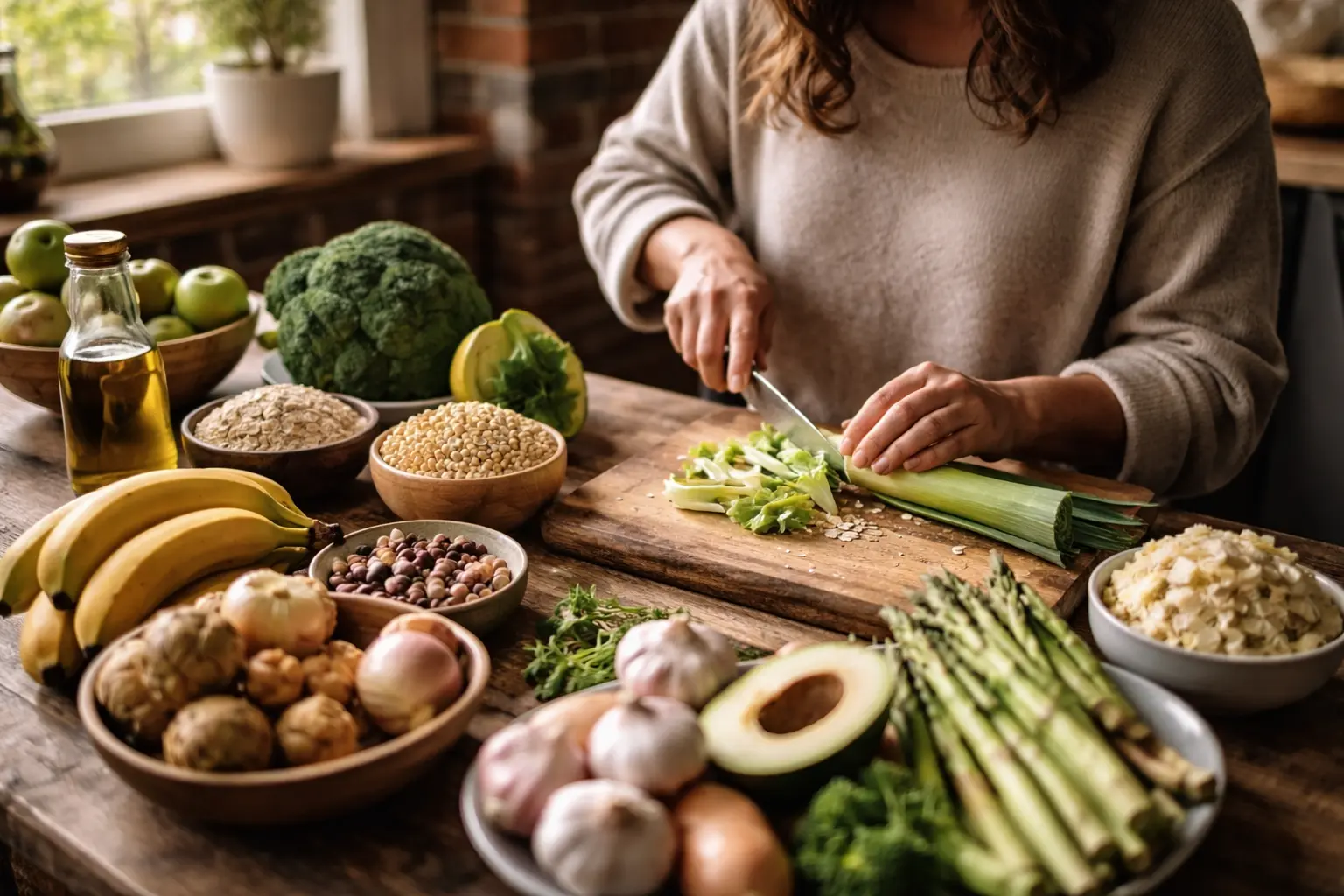
Your stomach feels bloated after meals, you’re making endless trips to the bathroom, and nothing seems to settle right anymore, so you start wondering if a prebiotics foods list might finally be the answer to years of digestive frustration.
Top prebiotic foods for seniors
Incorporating prebiotic foods into your diet can genuinely transform how your digestive system feels day to day. Picture this: you’re at the grocery store, staring at the produce section, and you realize garlic, onions, leeks, asparagus, and bananas are sitting right there waiting for you. These aren’t exotic superfoods that cost a fortune or require special preparation. Garlic brings that savory punch to your evening chicken dinner while quietly feeding your good gut bacteria. Onions slip into soups, salads, and roasted vegetable trays without fuss. Leeks offer a gentler, milder flavor that works beautifully in creamy soups or sauteed as a side dish. Asparagus provides that satisfying crunch and nutrient density seniors often crave. Bananas, perhaps the easiest of all, can be sliced into oatmeal, blended into a smoothie, or eaten plain as an afternoon snack. Each of these foods contains high amounts of prebiotic fiber that nourishes the beneficial bacteria already living in your digestive system, helping them thrive and multiply.
- Garlic: A flavor enhancer and prebiotic powerhouse
- Onions: Versatile and gut-friendly
- Leeks: Mild and easy to incorporate into various dishes
- Asparagus: Nutrient-rich and great for digestive health
- Bananas: A sweet and simple way to boost your gut health
Understanding prebiotics and gut health
Prebiotics are non-digestible fibers that work like fertilizer for the beneficial bacteria already living inside your gut. Think of your digestive system as a garden: prebiotics are the nutrients that help your good bacteria flourish and outcompete the less helpful microbes. When you eat these fibers, your body cannot break them down in the stomach or small intestine the way it does with regular food. Instead, they travel intact to your colon, where your beneficial bacteria feast on them and multiply. Seniors often report noticing changes within weeks of prioritizing prebiotic-rich foods. They describe improvements like fewer bloated afternoons, more predictable and comfortable bathroom visits, and an overall sense of lightness they hadn’t felt in years. Some notice their energy levels stabilize because better gut health means better nutrient absorption. Others find that the constant digestive discomfort that had become their normal finally quiets down, allowing them to enjoy meals without dread or anxiety.
💬 Ready to feel better in 2 minutes?choose where to begin:
Adding prebiotics to your meals
The beauty of prebiotic foods is that they fit seamlessly into meals you probably already enjoy making. Imagine Monday dinner: you’re roasting chicken with garlic cloves tucked underneath the skin and onions scattered around the pan. Tuesday lunch becomes a simple salad with sliced leeks, fresh greens, and a light dressing. Wednesday morning, you stir mashed banana into your oatmeal along with cinnamon and nuts. These aren’t complicated recipes requiring specialty ingredients or hours in the kitchen. You can roast asparagus spears with olive oil and salt as a side dish in under fifteen minutes. You can add minced garlic to ground beef for tacos or meatballs. You can caramelize onions slowly while you read the paper, filling your kitchen with that comforting aroma. The key is experimenting with different recipes and ingredients to discover what genuinely fits your taste preferences and digestive needs, rather than forcing yourself to eat things you dislike.
Balancing your gut with prebiotic foods
Maintaining a healthy gut becomes increasingly important as you age, especially if you’ve spent years dealing with digestive issues that made you feel isolated or embarrassed. Consistency matters more than perfection here. You don’t need to eat prebiotic foods at every single meal to see benefits. Rather, by regularly consuming these foods throughout your week and supporting your gut microbiome with patience and intention, you can experience a genuine shift in how your body feels. Many seniors report improved digestion that means less time worrying about bathroom emergencies. They notice reduced bloating that allows them to wear clothes comfortably again without that tight, uncomfortable feeling. Enhanced nutrient absorption means your body can actually use the vitamins and minerals from the food you eat, rather than them passing through unused. Think of it as rebuilding trust with your own digestive system after years of conflict. Start slowly, give your body time to adjust, and pay attention to how you feel week by week.
Exploring the vast world of prebiotic foods can lead seniors to improved gut health and overall well-being. By incorporating foods like garlic, onions, leeks, asparagus, and bananas into their daily meals, seniors can support their gut microbiome and enjoy better digestion, reduced bloating, and increased nutrient absorption.
Are there any side effects of consuming prebiotic foods?
While prebiotic foods are generally safe for most people, some individuals may experience mild digestive discomfort initially as their gut microbiome adjusts. It’s best to introduce these foods gradually and monitor how your body responds.
Can I take prebiotic supplements instead of eating prebiotic foods?
Although supplements can be an option, it’s recommended to focus on obtaining prebiotics from natural food sources whenever possible. Whole foods provide a variety of nutrients that support overall health in addition to prebiotic benefits.
Others also read:
Disclaimer: This article is for informational purposes only and is not a substitute for professional medical advice. Always consult a healthcare professional for personal guidance.
This article presents an experience-based perspective and has been reviewed by the GlobalHealthBeacon editorial team in 2026. It provides structured, evidence-based information to support informed health decisions.
