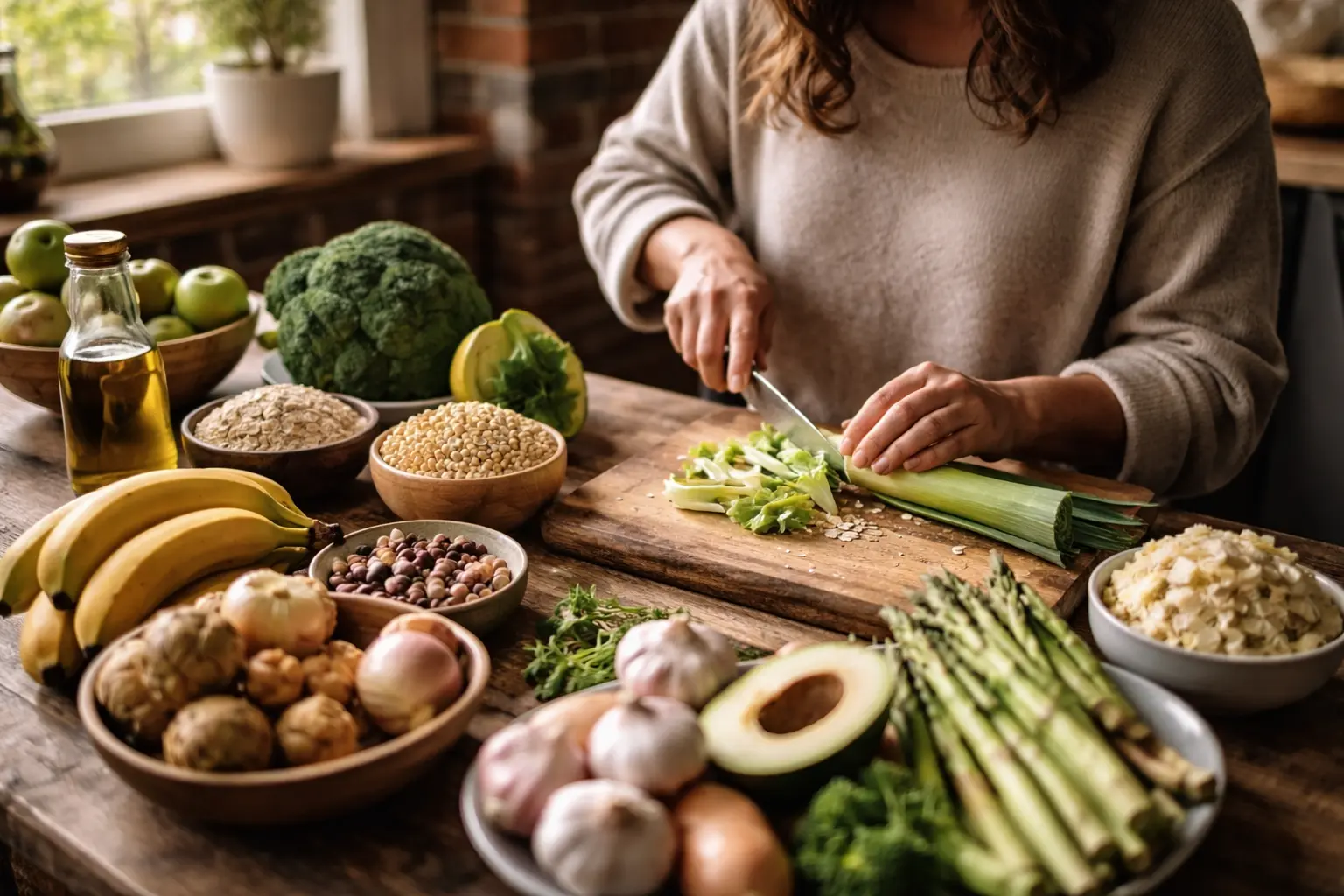
Your gut is screaming for help, your energy is tanking, and you have no idea why, but here’s the thing: you’re probably missing prebiotics foods list in your diet, and that’s the missing piece that could change everything.
Understanding prebiotics
Prebiotics are non-digestible fibers that act as fuel for the beneficial bacteria already living in your gut. Think of them as fertilizer for your microbiome. When you consume prebiotic-rich foods, you’re essentially feeding the good guys and helping them multiply, which strengthens your digestive system from the inside out. Foods like bananas, onions, garlic, asparagus, and whole grains are packed with these fibers. The science is straightforward: your gut bacteria break down these fibers and produce short-chain fatty acids that nourish your colon cells, improve nutrient absorption, and support your immune function. For young adults juggling work, school, and social life, understanding this connection means you can make smarter food choices without overthinking it. You’re not just eating a banana for breakfast; you’re actively building a stronger digestive system.
- Prebiotics aid in digestion by stimulating the growth of beneficial bacteria in your gut.
- Including prebiotics in your diet can improve gut health and overall well-being.
- Consuming a variety of prebiotic-rich foods ensures a diverse gut microbiome.
Incorporating prebiotics into your diet
Start small and build from there. Your first move is breakfast: swap your usual cereal for a bowl of oats topped with sliced banana and a drizzle of honey. This single meal delivers multiple prebiotic sources and keeps you full until lunch. For lunch, add garlic and onions to your sandwich, salad, or grain bowl. These aromatics aren’t just flavor boosters; they’re prebiotic powerhouses. Snack on raw asparagus spears with hummus, or grab an apple with almond butter in the afternoon. Dinner is where you can really experiment: roast a mix of vegetables including asparagus and onions, or use garlic as the base for a stir-fry. The key is consistency, not perfection. If you eat prebiotic foods three or four times a week, you’re already ahead of most young adults. Don’t aim for overnight transformation; aim for sustainable habits that fit your lifestyle.
📘 Fix your day in under 2 minuteschoose where to begin:
Shopping for prebiotic foods
When you’re at the grocery store, head straight to the produce section and look for fresh bananas, onions, garlic, asparagus, and leafy greens. These are your foundation. Then move to the grain aisle and grab oats, barley, and whole wheat bread. Don’t overlook the frozen section either; frozen asparagus and onions are just as nutritious and often cheaper than fresh. Create a simple shopping list before you go so you don’t impulse-buy processed snacks instead. Aim for variety: if you only buy bananas, you’ll get bored. Mix in leeks, chicory root, and Jerusalem artichokes if your store carries them. These are less common but incredibly prebiotic-rich. Spend a few extra minutes reading labels on packaged foods; whole grain products often have higher fiber content. Budget-conscious? Buy seasonal produce and frozen options. Your gut doesn’t care if the asparagus was picked last week or last month.
Prebiotics cooking tips
Cooking with prebiotics is simpler than you think. Start by making garlic and onions your cooking foundation. When you’re making pasta, soup, or rice, sauté minced garlic and diced onions in olive oil for two to three minutes before adding other ingredients. This builds flavor and locks in the prebiotic benefits. Roasting is your friend: toss asparagus spears with olive oil, salt, and pepper, then roast at 400 degrees for twelve to fifteen minutes until they’re crispy on the edges. You can batch-cook these and eat them throughout the week. For bananas, blend them into smoothies with oats and yogurt, or slice them into overnight oats. Experiment with recipes that naturally include these foods: minestrone soup, stir-fries, grain bowls, and salads. Don’t overcook your vegetables; the longer they sit on heat, the more fiber breaks down. Keep it simple at first. Master three or four recipes you actually enjoy, then expand from there. Cooking doesn’t need to be complicated to be effective.
Making prebiotics a habit
Habits stick when they’re easy and rewarding. Start by picking one meal where you’ll consistently add prebiotics: maybe it’s always adding banana to breakfast, or always including garlic in dinner. Once that feels automatic, add a second meal. This stacking approach works better than trying to overhaul your entire diet at once. Create a simple meal plan for the week: write down five dinners that include prebiotic foods, then buy what you need. Meal planning takes thirty minutes but saves you from decision fatigue and impulse eating. Track how you feel after two weeks of consistent prebiotic intake. Most young adults notice improved digestion, more stable energy, and better mood within fourteen to twenty-one days. That positive feedback loop is what keeps habits alive. Set a phone reminder if you need to, or pair your prebiotic intake with something you already do daily. The goal isn’t perfection; it’s progress. Missing a day doesn’t erase your work. What matters is showing up most of the time.
Prebiotics, such as bananas, onions, garlic, and asparagus, are essential for nourishing the beneficial bacteria in your gut, promoting digestive health and boosting your immune system. By incorporating a diverse range of prebiotic-rich foods into your diet daily, you can support a healthy gut microbiome and enhance your overall well-being.
What are the benefits of prebiotics foods?
Prebiotic foods feed the good bacteria in your gut, promoting digestion, enhancing immune function, and supporting overall gut health. Incorporating prebiotics into your diet can lead to a diverse gut microbiome and improved well-being.
How can I increase my intake of prebiotic foods?
To boost your intake of prebiotic foods, include items like bananas, onions, garlic, and asparagus in your meals. Shop for fresh produce and whole grains, experiment with new recipes, and make prebiotic-rich foods a regular part of your diet.
Others also read:
Disclaimer: This article is for informational purposes only and is not a substitute for professional medical advice. Always consult a healthcare professional for personal guidance.
This guide has been prepared and reviewed by the GlobalHealthBeacon editorial team and reflects current medical research as of 2026. It provides structured, evidence-based information to support informed health decisions.
