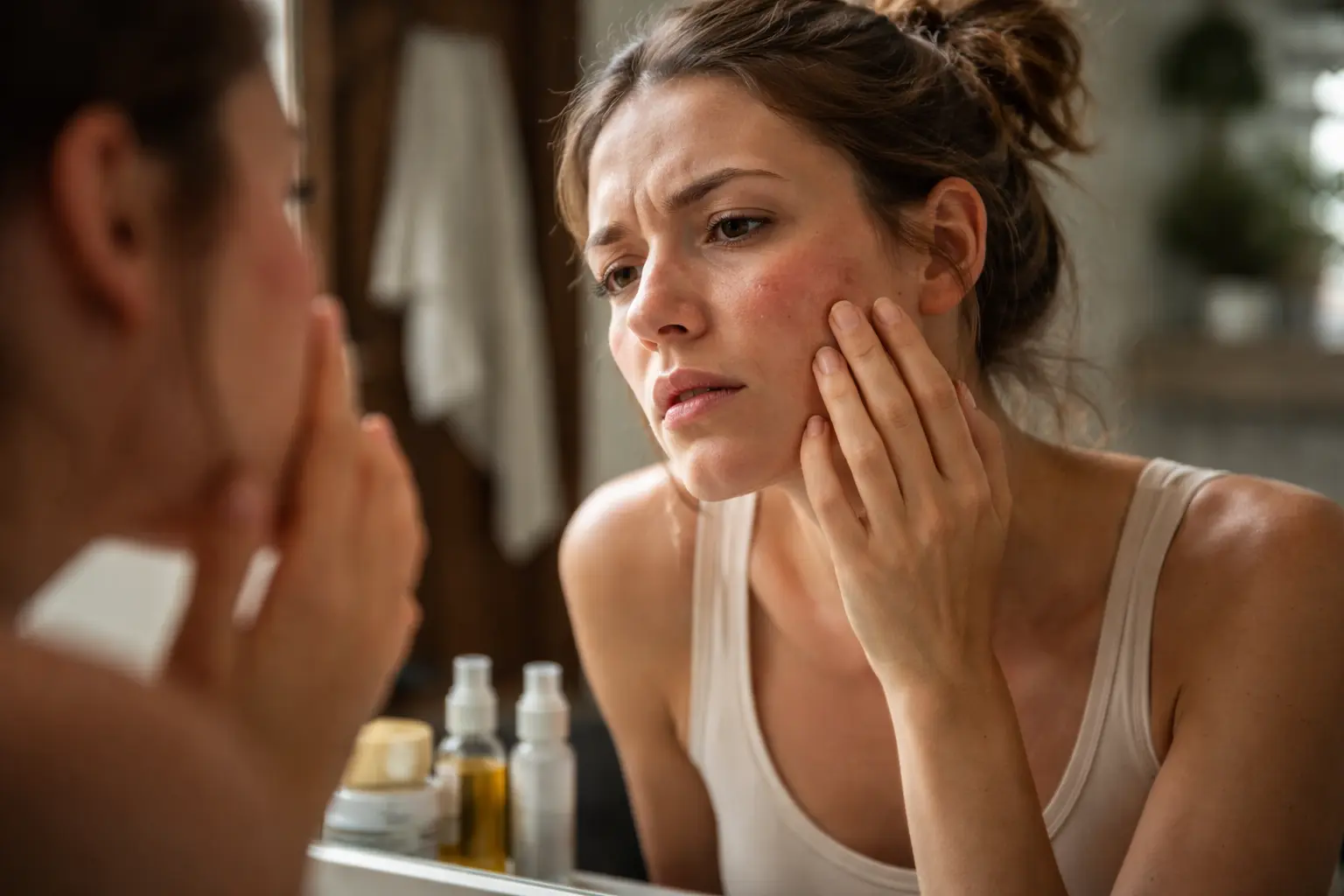
Your skin is burning, flaking, and looking worse than before you started, and you are wondering if retinol side effects mean you should quit altogether.
Understanding retinol side effects
When you first introduce retinol into your skincare routine, your skin enters an adjustment period that can feel uncomfortable. Common retinol side effects include dryness that makes your skin feel tight, redness that can last several hours after application, and flakiness that appears in patches across your face. These reactions happen because retinol accelerates cell turnover, essentially telling your skin to shed old cells faster than usual. Imagine your skin as a factory that suddenly speeds up production. The temporary irritation is actually a sign the ingredient is working. Most women experience these effects within the first one to two weeks of use. The key is understanding that this is not a sign of damage but rather your skin’s natural response to a powerful active ingredient. Starting with a low concentration, such as 0.25 percent, gives your skin time to build tolerance without overwhelming it.
- Begin with the lowest concentration available and use retinol just two to three times per week initially to allow your skin barrier to adapt gradually.
- Apply retinol to completely dry skin and wait several minutes before adding other products, as moisture can increase penetration and irritation.
- Pair retinol with a nourishing moisturizer containing ceramides or peptides to reinforce your skin barrier and reduce flakiness and discomfort.
Managing retinol side effects for women
Managing retinol side effects effectively requires a strategic approach to your entire skincare routine. After applying retinol, wait about 20 minutes, then layer a hydrating serum containing hyaluronic acid to plump your skin and minimize visible dryness. Follow with a rich moisturizer that includes niacinamide, which calms inflammation and strengthens your skin barrier. Consider this a buffer system between the retinol and your skin. Many women find that using a gentle, fragrance-free cleanser before retinol prevents additional irritation. If you experience persistent redness, you can apply a thin layer of moisturizer before retinol, a technique called the sandwich method, which reduces irritation while maintaining effectiveness. On days when your skin feels particularly sensitive, skip retinol entirely and focus on hydration and barrier repair. This flexible approach prevents the frustration of abandoning retinol altogether when side effects feel overwhelming.
📘 Fix your day in under 2 minuteschoose where to begin:
Long-term benefits of retinol
While the initial weeks of retinol use can feel discouraging, the long-term transformation justifies the temporary discomfort. After your skin acclimates, typically within four to eight weeks, you will notice improvements in skin texture that feel noticeably smoother to the touch. Fine lines around your eyes and mouth begin to soften as retinol stimulates collagen production, the protein responsible for skin firmness and elasticity. Many women report that their skin tone becomes more even, with dark spots and hyperpigmentation fading gradually. Pores appear smaller as your skin becomes more resilient and plump. The cumulative effect is a more youthful, radiant appearance that continues to improve with consistent use over months and years. Think of retinol as an investment in your skin’s future rather than a quick fix. Women who push through the adjustment period and maintain consistent use often describe it as one of the most effective anti-aging additions to their routine.
Choosing the right retinol product
Selecting the right retinol product depends on your skin type, sensitivity level, and specific concerns. If you have sensitive or reactive skin, start with a gentler retinol ester like retinyl palmitate or retinaldehyde, which convert to retinoic acid more slowly in your skin. For normal to resilient skin, retinol itself offers a good balance of effectiveness and tolerability. If you have persistent acne or significant aging concerns and your skin tolerates retinol well, consider retinoid prescription options like tretinoin after consulting a dermatologist. Product formulation matters as much as the active ingredient itself. Look for retinol products housed in opaque, airtight packaging because retinol degrades when exposed to light and air. A good retinol serum or cream should feel lightweight and absorb without leaving a greasy residue. Start with a concentration between 0.25 and 0.5 percent, then gradually increase to 1 percent or higher as your skin builds tolerance over several months.
Consulting a dermatologist
If you experience retinol side effects that feel severe, persistent beyond four weeks, or include signs of allergic reaction such as swelling or hives, consulting a dermatologist is essential. A dermatologist can assess your skin type, identify any underlying conditions that might make retinol unsuitable, and recommend a customized approach tailored to your specific needs. They can prescribe prescription-strength retinoids if over-the-counter retinol proves ineffective or poorly tolerated. A dermatologist can also rule out other causes of irritation, such as a compromised skin barrier or sensitivity to other ingredients in your product. Many women find that a single consultation provides clarity and confidence to move forward with retinol use safely. Your dermatologist might suggest combining retinol with other treatments or adjusting your application frequency based on your skin’s response. This professional guidance transforms retinol from a frustrating experiment into a structured, personalized skincare strategy.
Retinol side effects like dryness and redness are common but temporary, typically subsiding within a few weeks as your skin adapts. By starting with a low concentration, following a careful application routine, and using hydrating support products, women can manage these effects effectively and unlock the powerful long-term benefits retinol offers for skin texture, fine lines, and overall radiance. Consulting a dermatologist when needed ensures you are using retinol safely and optimally for your unique skin.
How long do retinol side effects typically last?
Retinol side effects such as dryness and redness usually subside within two to four weeks as your skin adjusts to the ingredient. The timeline depends on your starting concentration, application frequency, and individual skin sensitivity. Some women experience improvement within one week, while others need four to six weeks for complete adaptation. Consistent use during this period, combined with supportive hydrating products, speeds up the adjustment process. If side effects persist beyond six weeks or worsen over time, reduce your application frequency or concentration and consult a dermatologist.
Can retinol be used during pregnancy?
Retinol and stronger retinoids are generally not recommended during pregnancy due to potential risks to fetal development, particularly in the first trimester. Prescription retinoids like tretinoin carry higher risk and should be avoided entirely during pregnancy and breastfeeding. Over-the-counter retinol has lower risk but is still considered a precaution by most healthcare providers. If you are pregnant or planning to become pregnant, discontinue retinol use and consult your obstetrician or dermatologist before using any retinoid products. Many women resume retinol safely after pregnancy and breastfeeding.
Others also read:
Disclaimer: This article is for informational purposes only and is not a substitute for professional medical advice. Always consult a healthcare professional for personal guidance.
This guide has been prepared and reviewed by the GlobalHealthBeacon editorial team and reflects current medical research as of 2026. It provides structured, evidence-based information to support informed health decisions.
