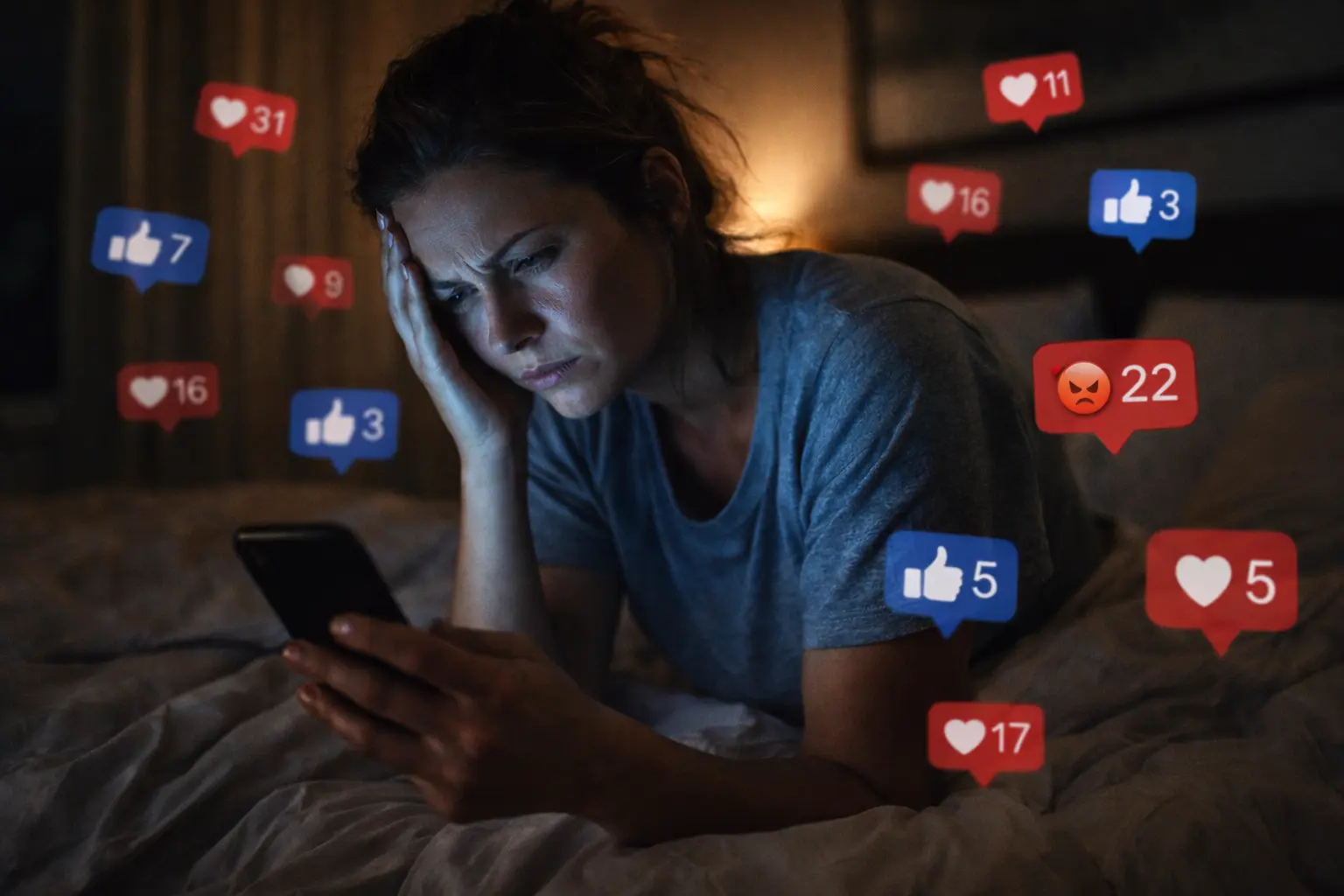
You’re scrolling at 2 AM again, comparing your life to highlight reels, feeling that familiar knot of anxiety in your chest, and wondering why social media harms health so deeply when it’s supposed to keep you connected.
The science behind social media and health
The research is clear and unsettling: prolonged social media use correlates with rising rates of anxiety, depression, and loneliness among young adults. When you spend hours consuming curated content, your brain is constantly processing unrealistic body standards, filtered versions of other people’s lives, and an endless stream of comparison. Consider Sarah, a 24-year-old who noticed her mood tanking after an hour of Instagram scrolling. She wasn’t aware that each like-seeking post triggered a small dopamine hit, creating a cycle of seeking validation through comments and follows. The algorithm learns what keeps you engaged, often amplifying content that triggers negative emotions because outrage and anxiety drive engagement. Your sleep suffers too: the blue light from screens suppresses melatonin production, and the mental stimulation keeps your brain wired when it should be winding down. Studies show that young adults who use social media for more than two hours daily report significantly higher rates of sleep disruption, which then cascades into poor concentration, weakened immunity, and mood instability the next day.
- Comparison culture on social media can trigger feelings of inadequacy and low self-esteem, especially when you measure your behind-the-scenes reality against someone else’s highlight reel.
- Excessive screen time can disrupt your sleep patterns, leading to fatigue and decreased cognitive function, making it harder to focus at work or school.
- Engagement with negative or triggering content can exacerbate stress levels and affect your overall mood, particularly if you’re already dealing with anxiety or depression.
Setting boundaries for a healthier digital life
Boundaries aren’t punishment; they’re protection. Start by tracking your actual usage for three days without judgment. Most young adults underestimate their screen time by 50 percent. Once you know the truth, set a specific daily limit. Not vague like ‘less scrolling,’ but concrete: 45 minutes total, or no social media before 9 AM. Use app timers that actually lock you out, not just remind you. Next, designate phone-free zones: your bedroom, the dinner table, the first hour after waking. This sounds simple but it’s transformative. When you wake up without immediately checking notifications, your cortisol levels stay lower and you start the day from a calmer baseline. Create a replacement ritual: if you habitually scroll before bed, swap it for ten minutes of reading or journaling instead. The key is making the new behavior easier than the old one. Keep your phone in another room during these times so the friction is real. Many young adults find that after two weeks of consistent boundaries, the urge to check diminishes significantly because the habit loop is broken.
📘 Fix your day in under 2 minuteschoose where to begin:
Building a supportive online community
Your feed is a choice, not a destiny. Audit who and what you follow right now. Unfollow accounts that make you feel worse about yourself, even if they’re friends. Follow creators who discuss mental health openly, share realistic content, and promote body diversity. Look for accounts that educate rather than just entertain, that normalize struggles rather than hide them. Join communities around your actual interests: hobby groups, book clubs, fitness communities built on progress not perfection. The difference is striking. When 22-year-old Marcus switched from following fitness influencers with impossible physiques to following strength coaches who celebrated all body types and emphasized health over aesthetics, his relationship with exercise transformed. He stopped comparing and started enjoying. Engage thoughtfully: comment with genuine interest, share your own authentic moments occasionally, and support others. This shifts social media from a passive consumption experience to an active community experience, which is psychologically healthier. Mute keywords that trigger you: diet culture terms, triggering body-related language, or anything that historically makes you spiral. You’ll still see posts from people you follow, but not the algorithm-amplified content designed to upset you.
Mindful engagement and digital detox strategies
Mindfulness on social media means pausing before you scroll. Ask yourself: am I opening this app because I want to, or because I’m bored, anxious, or avoiding something? That moment of awareness changes everything. When you notice you’re using social media to escape uncomfortable feelings, you’ve already won half the battle because you can choose a different coping strategy. Try a weekly digital detox: pick one full day where you don’t open any social apps. Not your phone entirely, just social media. Use that time to notice what you actually want to do when you’re not defaulted into scrolling. Many young adults discover they want to move their bodies, call a friend, create something, or just sit quietly. These are the activities that actually build well-being. Start with one day a month if a full day feels impossible. Longer detoxes, like a week quarterly, reset your dopamine sensitivity so regular use feels less compulsive afterward. During detox, expect withdrawal-like symptoms: boredom, FOMO, restlessness. That’s normal and temporary. By day three, most people report feeling calmer and more present. Keep a journal during these breaks to notice what shifts in your mood, sleep, and energy. The data you collect becomes powerful motivation to maintain boundaries long-term.
Seeking professional help and resources
If social media use is genuinely affecting your mental health, therapy is a legitimate and effective option. A therapist can help you understand the underlying needs driving compulsive use: are you seeking connection, validation, distraction from anxiety, or escape from depression? They can teach you specific skills to manage the urge to check your phone and address any underlying mental health conditions that social media might be worsening. Many therapists now specialize in technology and mental health. Your college or university likely offers free counseling services. If cost is a barrier, apps like BetterHelp or Talkspace offer affordable therapy, and many communities have sliding-scale mental health clinics. Support groups, both online and in-person, connect you with others navigating the same struggles. Organizations like the National Alliance on Mental Illness (NAMI) and Crisis Text Line provide free resources and crisis support. If you’re experiencing suicidal thoughts or severe depression triggered by social media, reach out immediately: call 988 (Suicide and Crisis Lifeline) or text HOME to 741741. You don’t have to figure this out alone, and seeking help is a sign of strength and self-awareness, not weakness.
Social media’s impact on young adult mental health is real, measurable, and addressable. You’re not broken for struggling with it; the platforms are designed to be addictive. Understanding how they affect you is the first step. From there, practical strategies work: set boundaries, curate your feed intentionally, practice mindful engagement, take regular detoxes, and reach out for professional support if you need it. Small changes compound. Start with one boundary this week. Notice what shifts. Build from there.
Can social media usage lead to anxiety and depression?
Yes, research consistently shows that prolonged social media use is linked to increased anxiety, depression, and loneliness, particularly among young adults. The comparison culture, unrealistic standards, sleep disruption from late-night scrolling, and algorithmic amplification of negative content all contribute. However, the relationship isn’t entirely one-directional: people already struggling with anxiety or depression may also use social media more heavily as a coping mechanism, creating a feedback loop. The good news is that reducing usage and implementing boundaries shows measurable improvements in mood and sleep within two to three weeks.
How can I protect my mental health while using social media?
Set specific daily time limits and use app timers to enforce them. Curate your feed by unfollowing accounts that trigger comparison and following creators who promote authenticity and mental health awareness. Practice mindfulness by pausing before you scroll and noticing your emotional state. Take regular digital detoxes, starting with one day per week. Turn off notifications so you’re not constantly pulled back in. Avoid using social media first thing in the morning or right before bed. If you’re struggling significantly, talk to a therapist who specializes in technology and mental health, or reach out to free resources like Crisis Text Line or your local mental health clinic.
Others also read:
Disclaimer: This article is for informational purposes only and is not a substitute for professional medical advice. Always consult a healthcare professional for personal guidance.
This guide has been prepared and reviewed by the GlobalHealthBeacon editorial team and reflects current medical research as of 2026. It provides structured, evidence-based information to support informed health decisions.
