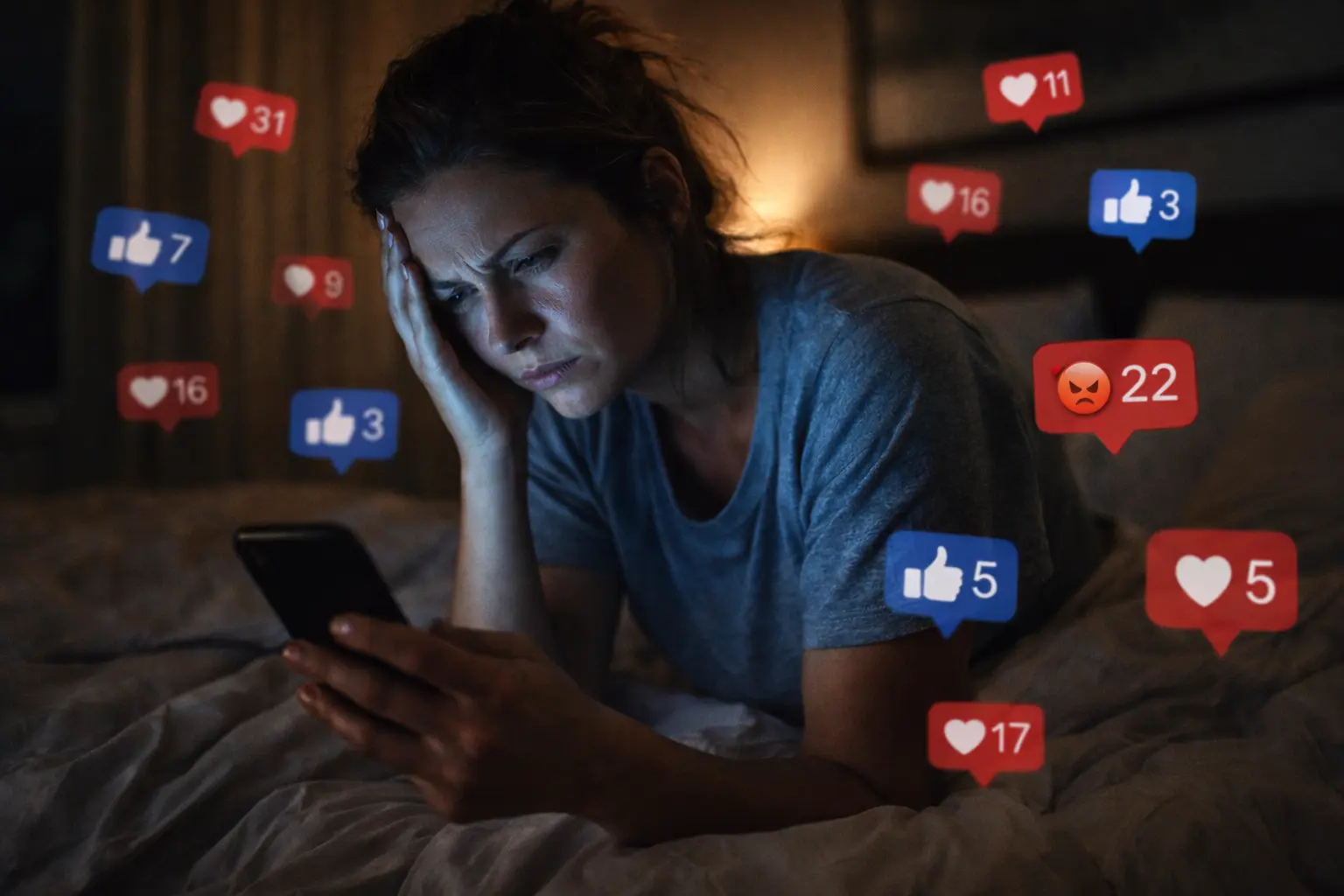
You scroll through your feed for five minutes and suddenly an hour has vanished, your mood has tanked, and you feel worse about yourself than when you started, which is exactly why social media harms health and why you need to stop letting it control your life.
Understanding the social media health connection
Social media creates a constant stream of comparison that quietly erodes your confidence. You see filtered photos, highlight reels, and carefully curated versions of other women’s lives, then measure your own reality against those impossible standards. This isn’t just about feeling bad for a moment. Research shows that regular exposure to unrealistic beauty standards, cyberbullying comments, and the addictive design of these platforms triggers real physiological stress responses in your body. Your cortisol levels spike. Your sleep suffers. Anxiety creeps in. Consider Sarah, a 32-year-old who spent two hours daily on Instagram. She noticed her mood plummeted after scrolling, her skin broke out from stress, and she stopped going to the gym because she felt inadequate compared to fitness influencers. The moment she recognized these patterns, she understood that social media wasn’t just entertainment, it was actively harming her mental and physical health. Recognizing these negative influences is genuinely the first step toward taking back control.
- Limit screen time and set boundaries for social media use
- Follow accounts that promote body positivity and mental wellness
- Practice digital detoxes regularly to recharge and refocus
Building healthy digital habits
Healthy digital habits don’t mean quitting social media entirely. Instead, they mean being intentional about how you use it. Start by auditing your feed. Unfollow accounts that make you feel inadequate, anxious, or triggered. Mute keywords that trigger negative thoughts. Set specific times for checking social media rather than mindlessly scrolling throughout the day. One practical strategy is the 30-minute rule: limit social media to 30 minutes daily, broken into two 15-minute sessions. Another is the phone-free hour before bed and after waking, which protects your sleep and mental clarity. Cultivate mindfulness by pausing before you open an app and asking yourself why you’re reaching for your phone. Are you bored, anxious, or genuinely wanting to connect? Engage in offline activities that bring real joy, whether that’s reading, cooking, walking, or spending time with friends face-to-face. Prioritize real-life connections where you can be fully present without the pressure of documenting everything. These habits create a balanced lifestyle where social media serves you rather than controls you.
📘 Fix your day in under 2 minuteschoose where to begin:
Embracing self-care practices
Self-care is your antidote to the stress and anxiety that social media triggers. This isn’t about expensive spa days or wellness trends you see online. Real self-care is simple and consistent. Meditation, even 10 minutes daily, calms your nervous system and reduces the anxiety that scrolling creates. Exercise releases endorphins that counteract the mood-dampening effects of social comparison. Adequate sleep, typically 7 to 9 hours nightly, is non-negotiable because sleep deprivation amplifies anxiety and makes you more vulnerable to negative self-talk. Healthy eating habits stabilize your blood sugar and mood. Consider a woman named Jennifer who felt overwhelmed by social media pressure around fitness and nutrition. She started a simple routine: 20 minutes of yoga each morning, a consistent bedtime of 10 p.m., and cooking one nourishing meal daily. Within three weeks, her anxiety decreased noticeably, her skin improved, and she felt more grounded. Self-care practices work because they remind your body and mind that you matter and deserve attention beyond what any screen can offer.
Seeking professional support
Sometimes the impact of social media goes deeper than you can handle alone, and that’s completely normal. If you find yourself experiencing persistent anxiety, depression, body image issues, or obsessive social media checking that interferes with your daily life, speaking with a licensed therapist or counselor is a wise decision. These professionals can help you understand the root causes of your struggles, whether social media is triggering past trauma or feeding into existing mental health challenges. They provide evidence-based strategies like cognitive behavioral therapy to reframe negative thoughts and reduce compulsive behaviors. Many therapists now specialize in digital wellness and social media-related anxiety. You can find someone through your insurance provider, your doctor’s referral, or platforms like Psychology Today. Teletherapy options make it accessible even if you’re busy or live in an area with limited mental health services. Seeking help isn’t weakness. It’s recognizing that your mental health deserves professional care just like your physical health would. A therapist can guide you through the specific challenges you face and provide tools tailored to your situation.
Joining supportive communities
Isolation amplifies the negative effects of social media. When you struggle alone, you assume your feelings are unique or your struggles are your fault. Connecting with like-minded women in supportive communities combats this isolation and reminds you that you’re not alone. These communities can be online groups focused on digital wellness, body positivity, or mental health, or offline groups like book clubs, fitness classes, or support groups. Online communities dedicated to reducing social media use or recovering from social comparison offer real stories from women facing identical challenges. Offline communities provide genuine human connection without the performance aspect of social media. When you surround yourself with people who prioritize authenticity over appearance, who celebrate real bodies and real lives, your perspective shifts. You stop measuring yourself against filtered images and start measuring yourself against your own values and goals. These supportive relationships enhance your emotional resilience, provide accountability, and remind you that your worth isn’t determined by likes or comments. Whether you join a local women’s health group or an online community of women reclaiming their lives from social media, connection is healing.
Understanding why social media harms health is the foundation for taking control of your well-being. By implementing healthy digital habits like limiting screen time and curating your feed, practicing self-care routines that nourish your body and mind, seeking professional support when needed, and engaging with supportive communities that celebrate authenticity, you can reclaim your health and prioritize your mental and physical well-being. The goal isn’t perfection or complete avoidance, but intentional, mindful use that serves your health rather than undermining it.
Can social media really impact my health?
Yes, social media has measurable impacts on health. It promotes unrealistic beauty standards that fuel body dissatisfaction, fosters cyberbullying and social comparison that trigger anxiety and depression, and uses addictive design features that disrupt sleep and focus. Studies show that heavy social media use correlates with increased rates of anxiety, depression, and low self-esteem, particularly in women.
How can I protect my health while using social media?
To protect your health, limit daily social media use to 30 minutes or less, unfollow accounts that trigger negative feelings, follow accounts promoting body positivity and mental wellness, practice digital detoxes of at least one day weekly, prioritize self-care activities like exercise and meditation, maintain phone-free hours before bed, seek professional support if social media negatively impacts your mental health, and engage with supportive communities that celebrate authenticity over perfection.
Others also read:
Disclaimer: This article is for informational purposes only and is not a substitute for professional medical advice. Always consult a healthcare professional for personal guidance.
This guide has been prepared and reviewed by the GlobalHealthBeacon editorial team and reflects current medical research as of 2026. It provides structured, evidence-based information to support informed health decisions.
