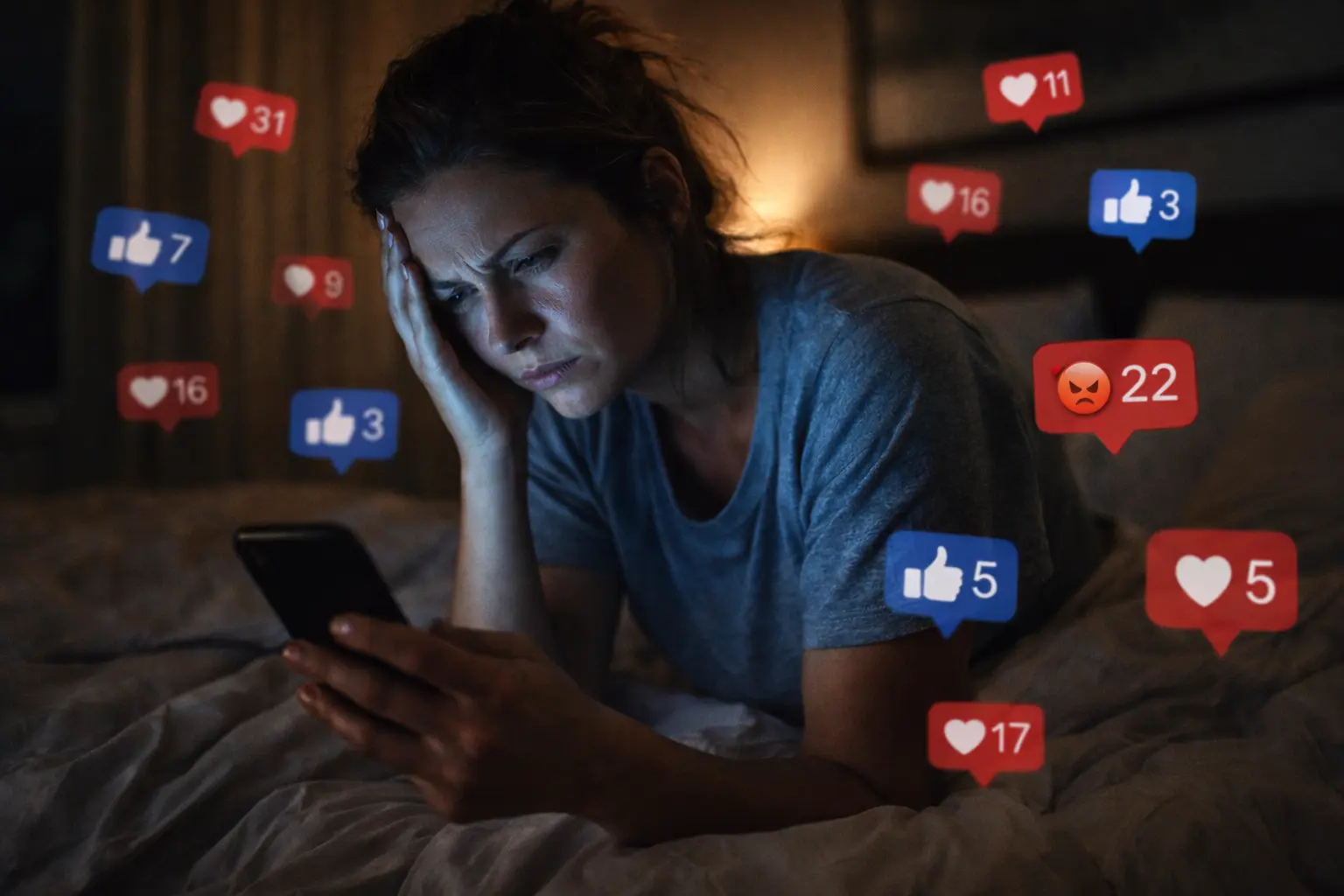
You’re scrolling at 2 AM again, heart racing as you compare your life to someone’s highlight reel, and suddenly you feel empty, anxious, and like you’re failing at everything – this is why social media harms health, and it’s time to take back control.
Understanding social media’s impact
Social media creates a perfect storm for mental health struggles. When you spend hours watching curated versions of other people’s lives, your brain starts keeping score. You see someone’s vacation photos and feel inadequate about your own life. You read a comment thread and worry people are judging you too. The algorithm is designed to keep you engaged, which means it shows you content that triggers emotions – especially comparison and envy. Research shows that young adults who spend more than three hours daily on social media report higher rates of anxiety and depression. A typical scenario: you post a photo, then check back obsessively for likes and comments, your mood rising and falling based on engagement numbers. Cyberbullying adds another layer of harm. Unlike offline bullying that ends when you leave school, online harassment follows you home, into your bedroom, into your bed. The constant exposure to unrealistic beauty standards, filtered images, and manufactured success stories warps your sense of what normal actually looks like.
- Comparison and envy from seeing others’ curated lives
- Exposure to cyberbullying or negative comments
- Feelings of inadequacy based on unrealistic standards
Taking control of your screen time
Screen time limits aren’t punishment – they’re protection. Start by tracking how much time you actually spend on social media. Most phones have built-in screen time tools that show you the real numbers, and the truth often shocks people. Once you see the data, set a realistic daily limit. If you’re currently spending four hours daily, jumping to 30 minutes will fail. Instead, reduce by 30 minutes each week. Turn off all notifications except direct messages from close friends – those red badges are designed to pull you back in. Use app timers that actually lock you out after your limit expires. A practical example: if you typically scroll during meals, commutes, and before bed, replace those moments with something else. Listen to a podcast during your commute. Read a book before sleep. Eat without your phone visible. These aren’t small changes – they’re boundary-setting that protects your mental space. Some young adults find success using grayscale mode on their phones, which makes apps visually less appealing. Others delete apps from their home screen so accessing them requires extra steps, creating friction that breaks the automatic habit.
📘 Fix your day in under 2 minuteschoose where to begin:
Building a supportive online community
Your feed is a reflection of your mental health. If you follow accounts that make you feel worse about yourself, you’re essentially choosing daily doses of poison. Start an audit: go through your follows and honestly assess how each account makes you feel. Does this fitness influencer inspire you or make you feel inadequate? Does this lifestyle account motivate you or trigger envy? Unfollow without guilt. Then actively seek out accounts that add value. Follow mental health educators who normalize struggles. Follow body-positive creators who show real bodies. Follow people doing things you genuinely care about, not things you think you should care about. Join communities around your actual interests – whether that’s gaming, art, activism, or niche hobbies. A real scenario: instead of following 200 random accounts, one young adult reduced to 50 carefully chosen accounts and reported feeling significantly better within two weeks. The quality of your community matters more than quantity. Engage authentically with posts that resonate with you. Comment thoughtfully. Share resources that helped you. Build connections based on genuine interest rather than follower counts. This transforms social media from a comparison machine into an actual community.
Practicing mindful consumption
Mindful consumption means pausing before you scroll and asking yourself why. Are you bored? Anxious? Avoiding something? Once you understand the trigger, you can address the actual need instead of numbing it with social media. Before opening an app, set an intention. Maybe you want to check messages from friends or look at one specific account. Then stick to that intention and close the app when you’re done. Notice which content drains you. Does watching mukbang videos make you feel bad about your eating habits? Does doom-scrolling through news make you anxious? Does comparing bodies make you hate yours? These are signals to unfollow, mute, or block that content. Many young adults keep a small list of accounts that genuinely make them feel good and return to those when they need a lift. Another practical tool: use the mute function liberally. You don’t have to unfollow your cousin if her constant baby photos stress you out – just mute her for 30 days. Avoid accounts that promote unhealthy behaviors, extreme diets, or unrealistic body standards. The algorithm learns from what you engage with, so if you stop liking and commenting on comparison-triggering content, you’ll see less of it. This isn’t about perfection – it’s about protecting your peace.
Nurturing real-life connections
The antidote to social media harm is real connection. When you spend two hours scrolling, you’re not spending two hours with people who actually know and care about you. Start small: have one phone-free meal with someone you care about each week. Notice how the conversation deepens when you’re both actually present. Plan offline activities that don’t involve documenting for social media. Go for a walk with a friend where you talk instead of taking photos. Play a sport. Create art. Cook together. These activities build genuine confidence because they’re based on real experiences, not digital validation. A common mistake young adults make is posting about activities instead of experiencing them. You’re at a concert but spending the whole time getting the perfect video for your story. You’re at dinner but arranging the food for the photo before eating. This splits your attention and reduces your actual enjoyment. Try experiencing something fully first, then deciding if you want to share it. Seek out communities offline too – clubs, classes, volunteer groups, sports teams. These connections provide support that likes and comments can never replace. When you’re struggling, a text from a real friend who knows your actual story matters infinitely more than encouraging comments from strangers. Real relationships require vulnerability and presence, which is harder than social media but infinitely more rewarding for your mental health.
Social media can have detrimental effects on your mental health due to comparison, cyberbullying, and unrealistic standards. Take charge of your screen time, curate a positive online community, practice mindful consumption, and nurture real-life connections to protect your well-being.
How can social media impact my mental health?
Social media can contribute to increased stress, anxiety, depression, and low self-esteem through constant comparison, cyberbullying, and exposure to unrealistic standards.
What can I do to protect my mental health from social media harm?
To safeguard your mental health, limit screen time, curate a positive online environment, practice mindful consumption, and prioritize real-life connections and activities.
Others also read:
Disclaimer: This article is for informational purposes only and is not a substitute for professional medical advice. Always consult a healthcare professional for personal guidance.
This guide has been prepared and reviewed by the GlobalHealthBeacon editorial team and reflects current medical research as of 2026. It provides structured, evidence-based information to support informed health decisions.
