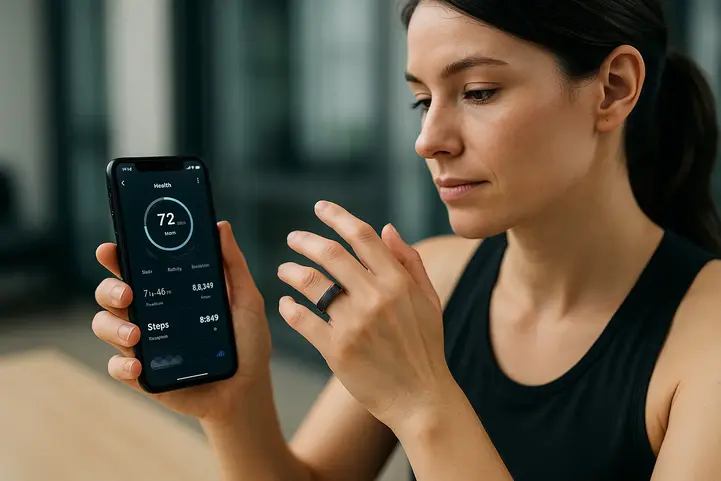
Your smart ring keeps telling you one thing while you feel completely different, and you’re starting to wonder if smart rings ppg accuracy is actually real or just marketing hype.
Calibrating your smart ring
Think of calibration as teaching your smart ring to speak your body’s language. When you first set up your device, the manufacturer provides specific calibration steps that act like a baseline for all future readings. Start by following the exact guidelines in your manual, not just skimming them. Many women skip this step and then wonder why their heart rate data seems off. Calibration typically involves wearing the ring for a set period while the device learns your unique skin conductivity and pulse patterns. Some rings require you to sync with a blood pressure monitor or pulse oximeter during setup to establish accuracy benchmarks. After calibration, your readings become personalized to your body rather than generic estimates. The process usually takes 15 to 30 minutes but pays dividends in data reliability. Don’t assume one calibration lasts forever. As your body changes with hormonal cycles, fitness levels, or seasonal variations, recalibrating every few months helps maintain precision. Software updates often improve calibration algorithms, so checking for updates monthly ensures you benefit from manufacturer improvements and bug fixes.
- Follow the calibration guidelines provided by the smart ring’s manual without skipping steps.
- Wear the ring correctly on your finger to guarantee accurate readings during the calibration process.
- Regularly update the software of your smart ring to maintain optimal performance and access improved algorithms.
Utilizing proper fit and placement
Your smart ring’s placement matters far more than most women realize. The ring should sit snugly on your finger, typically on your index, middle, or ring finger, with the sensor flush against your skin. If it’s too loose, the optical sensors can’t get a clear reading of your blood flow. If it’s too tight, it restricts circulation and creates false data. The sweet spot feels secure but allows you to slide a single finger underneath. Many women find their ring fit changes throughout the month due to hormonal water retention or temperature fluctuations. During your period, you might need to move the ring slightly higher or lower on your finger to maintain consistent contact. Pay attention to which finger works best for you, as some women get more accurate readings on their index finger while others prefer their ring finger. The sensor should make full contact with the inner surface of your finger, away from knuckles and bone. If you wear your ring while exercising, the increased blood flow and perspiration can affect readings, so consider removing it during intense workouts and waiting 10 minutes before putting it back on for post-exercise measurements.
📘 Fix your day in under 2 minuteschoose where to begin:
Optimizing skin contact and hydration
Clean, hydrated skin is your smart ring’s best friend. The optical sensors work by detecting light reflecting off your blood vessels, so any barrier between the sensor and your skin reduces accuracy. Start by gently cleaning your ring weekly with a soft cloth and mild soap, then dry it completely before wearing. Your skin also needs attention. Dry, flaky skin or calluses can scatter light signals, making readings less reliable. If you have very dry skin, apply a light moisturizer to your fingers before wearing your ring, but avoid heavy creams that create a barrier. Hydration works from the inside too. When you’re dehydrated, your blood vessels constrict, making them harder for the optical sensors to detect. Drinking adequate water throughout the day, especially before measuring important metrics, improves signal quality. Some women notice their ring readings improve dramatically once they start drinking more water consistently. Environmental factors matter as well. Cold temperatures cause blood vessels to constrict, while heat causes them to dilate. If you come inside from the cold, wait a few minutes before taking measurements. Similarly, avoid measuring immediately after hot showers or while your hands are still warm from washing.
Comparing results with traditional devices
Your smart ring gives you trends and patterns, but it’s not a clinical device. Cross-checking with validated medical equipment helps you understand your ring’s accuracy baseline. Get your blood pressure measured at your doctor’s office or a pharmacy, then compare it to your ring’s reading taken at the same time. You might find your ring reads consistently 5 to 10 beats per minute higher or lower than a medical device, which is normal variation. Once you identify your ring’s pattern, you can mentally adjust future readings accordingly. Use a pulse oximeter to verify your oxygen saturation levels, or check your heart rate manually by counting your pulse for 60 seconds and comparing it to your ring’s real-time reading. Many women discover their ring is actually quite accurate once they’ve done these comparisons and understand its quirks. Keep a simple log for a week, noting your ring’s readings alongside traditional device measurements. This data helps you see whether discrepancies happen at certain times of day, during specific activities, or under particular conditions. If your ring consistently shows wildly inaccurate numbers compared to medical devices, it might indicate a calibration issue or a need for a device replacement. However, most smart rings fall within acceptable accuracy ranges once properly calibrated and used correctly.
Interpreting and analyzing data
Raw numbers from your smart ring mean nothing without context. Instead of obsessing over individual readings, zoom out and look for patterns over days and weeks. Notice when your resting heart rate tends to be lower, which often indicates good recovery and stress management. Track how your heart rate variability changes with your menstrual cycle, as many women see clear patterns tied to hormonal fluctuations. A sudden spike in resting heart rate might signal illness, stress, or inadequate sleep rather than a ring malfunction. Use your ring’s app to view weekly and monthly trends rather than checking daily numbers obsessively. Unusual deviations matter only if they’re consistent or accompanied by physical symptoms. One high reading after a stressful meeting doesn’t mean anything, but consistently elevated readings during your luteal phase might prompt you to adjust your workout intensity or stress management during that time. Look for correlations between your ring data and other factors you track, like sleep quality, exercise, menstrual cycle, or caffeine intake. Many women find their ring data becomes genuinely useful once they stop chasing perfection and start using it as a conversation starter with their doctor. Bring your data to appointments and ask your healthcare provider to help you interpret what the trends mean for your individual health.
Optimize your smart ring’s accuracy by calibrating the device properly, ensuring snug fit and correct placement on your finger, maintaining clean and hydrated skin, comparing results with validated medical devices to understand your ring’s baseline, and analyzing data for meaningful patterns rather than obsessing over individual readings.
How often should I calibrate my smart ring?
Calibrate your smart ring according to the manufacturer’s recommendations, typically during initial setup. Recalibrate every 2 to 3 months or whenever you notice readings seem off. After software updates, recalibration can help your ring benefit from improved algorithms.
Can my smart ring replace medical devices for health monitoring?
Smart rings provide valuable daily insights and trend data, but they are not medical devices and should not replace clinical equipment for diagnosis or treatment decisions. Use them as complementary tools to track your wellness and share data with your healthcare provider during appointments.
Others also read:
Disclaimer: This article is for informational purposes only and is not a substitute for professional medical advice. Always consult a healthcare professional for personal guidance.
This guide has been prepared and reviewed by the GlobalHealthBeacon editorial team and reflects current medical research as of 2026. It provides structured, evidence-based information to support informed health decisions.
