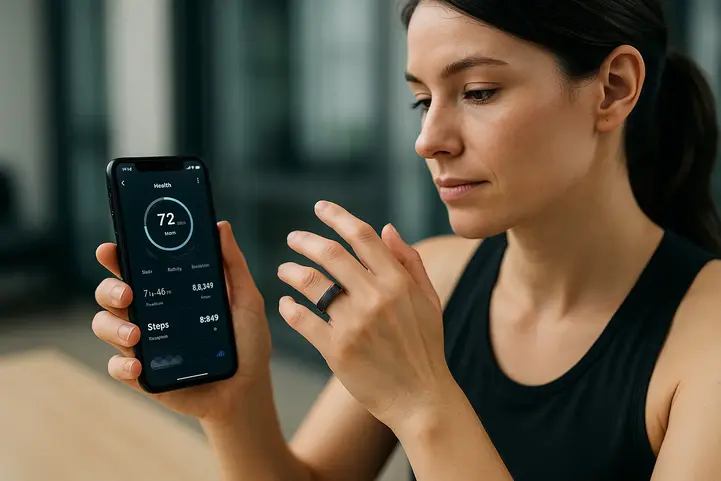
Your smart ring keeps giving you wildly different heart rate readings throughout the day, and you have no idea if the data you are trusting is actually reliable, which is exactly why understanding smart rings ppg accuracy matters more than you think.
Understanding PPG technology
PPG technology works by shining light through your skin and measuring how blood flow absorbs and reflects that light. Your smart ring uses tiny LED sensors positioned against your finger to detect these subtle changes in light patterns. Think of it like this: when your heart pumps, blood rushes through your veins, and the sensors pick up on those micro-changes in light intensity. The challenge is that several factors can interfere with these readings. Skin tone affects how light penetrates and reflects, which is why some users experience less accurate data than others. Ambient light from your surroundings can confuse the sensors, especially if you are reading in bright sunlight or under harsh fluorescent lights. Motion during readings introduces noise into the data, making it harder for the algorithm to isolate your actual heart rate from random movements. Understanding these factors helps you recognize when your readings might be less reliable and when conditions are optimal for accurate data collection.
- Keep your smart ring snug for optimal light contact.
- Avoid excessive movement during readings for stable results.
- Take readings in well-lit environments for better accuracy.
Choosing the right fit
The fit of your smart ring is genuinely one of the most overlooked factors in PPG accuracy. A ring that is too loose allows light to leak around the sides, creating gaps where ambient light interferes with the sensors. A ring that is too tight cuts off circulation and creates discomfort, which can actually trigger stress responses that skew your heart rate data. The sweet spot is a fit that feels snug without leaving marks on your skin after you remove it. Think of it like wearing a watch: you should be able to slide one finger underneath comfortably, but not two. Different fingers also matter. Your ring finger typically provides the most stable readings because it has consistent blood flow and minimal movement during daily activities. Your pinky or index finger might give less reliable data because they move more frequently. When you first get your ring, spend a few days testing it on different fingers at different tightness levels. Pay attention to which configuration gives you consistent readings that match your perceived activity level. This baseline testing takes maybe 20 minutes but saves you weeks of unreliable data.
📘 Fix your day in under 2 minuteschoose where to begin:
Maintaining skin contact
Clean, dry skin is the foundation of accurate PPG readings, yet many people overlook this simple step. Sweat, lotion, dirt, and dead skin cells all create barriers between your skin and the sensors. Imagine trying to see through a foggy window versus a clean one. The same principle applies to your ring’s light sensors. Before taking a reading, wash your finger with soap and water, then dry it completely. If you use hand lotion or sunscreen regularly, make sure it is fully absorbed or washed off before wearing your ring. Some users find that taking readings first thing in the morning, before applying any products, yields the most consistent data. During the day, if you notice your readings seem off, remove your ring, clean your finger, and try again. You will often see a noticeable difference. Also consider the environment: humidity and sweat from exercise can temporarily affect readings, so wait 10 to 15 minutes after intense activity before expecting accurate data. This is not a flaw in the technology, just a realistic constraint of how light sensors interact with skin.
Optimizing data collection
Calibration and software updates are your ring’s way of staying accurate over time. Most smart ring manufacturers release periodic software updates that improve the algorithms used to interpret PPG data. Skipping these updates is like refusing to sharpen a knife and then wondering why it does not cut well anymore. Check your ring’s companion app monthly for available updates and install them promptly. Calibration typically involves taking a few baseline readings under controlled conditions, which the app then uses as reference points. Some rings calibrate automatically, while others ask you to manually input readings taken with a medical-grade heart rate monitor for comparison. If your ring offers manual calibration, do it once every three months or whenever you notice readings drifting from your expected values. Syncing with your smartphone should happen automatically via Bluetooth, but occasionally your ring and phone can get out of sync, causing data gaps or duplicates. If you notice missing data, try unpairing and re-pairing your ring with the app. Keep your ring charged above 20 percent battery, as low battery can cause the sensors to function suboptimally. These maintenance steps take minimal time but compound into significantly more reliable data over weeks and months.
Interpreting and monitoring results
Raw PPG numbers mean nothing without context. A resting heart rate of 65 bpm is normal for one person and concerning for another depending on fitness level, age, and baseline health. Start by establishing your personal normal range by taking readings over two weeks under consistent conditions: same time of day, same activity level, same environment. This gives you a realistic baseline specific to your body. Then monitor trends rather than obsessing over individual readings. If your resting heart rate is typically 60 to 65 bpm and suddenly spikes to 90 bpm consistently, that is a signal worth investigating. It might indicate stress, illness, poor sleep, or overtraining. Conversely, if your resting heart rate gradually decreases over months, that often reflects improving cardiovascular fitness. Use your ring’s trend analysis features to spot patterns. Many apps show weekly and monthly averages, which smooth out daily noise and reveal the bigger picture. If you are training for a specific goal like a 5K run or marathon, tracking how your heart rate responds to training intensity helps you optimize your workouts. Remember that your ring is a tool for self-awareness, not a medical device. If you have health concerns, discuss your ring data with your doctor rather than making decisions based solely on the numbers.
Enhance the accuracy of PPG readings in your smart ring by understanding the technology, choosing the right fit, maintaining skin contact, optimizing data collection, and interpreting results effectively.
How can I improve the accuracy of my smart ring’s PPG readings?
You can enhance accuracy by ensuring a snug fit, maintaining clean skin contact, regularly calibrating the device, and understanding normal PPG value ranges.
What factors can affect the reliability of PPG data in smart rings?
Skin tone, ambient light levels, motion during readings, and proper fit of the device can influence the accuracy of PPG measurements in smart rings.
Others also read:
Disclaimer: This article is for informational purposes only and is not a substitute for professional medical advice. Always consult a healthcare professional for personal guidance.
This guide has been prepared and reviewed by the GlobalHealthBeacon editorial team and reflects current medical research as of 2026. It provides structured, evidence-based information to support informed health decisions.
