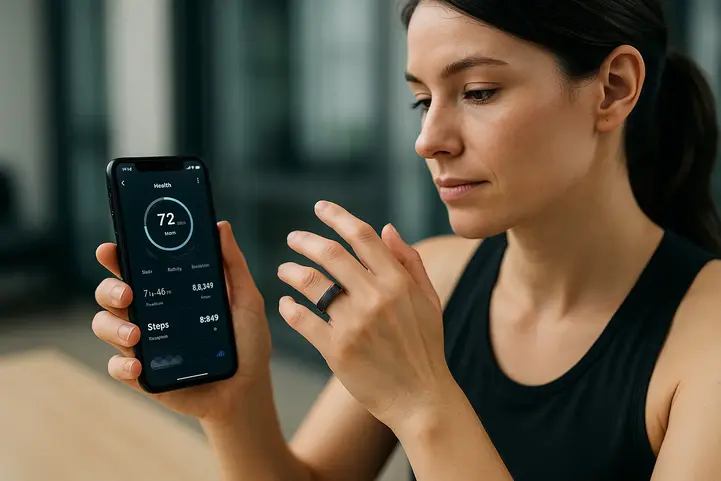
You wake up wondering if that smart ring on your finger is actually telling you the truth about your heart, or if you’re just wearing an expensive piece of jewelry that’s feeding you garbage data, and smart rings ppg accuracy is exactly what you need to understand before trusting your health to it.
Understanding smart rings for health monitoring
Smart rings equipped with photoplethysmography, or PPG technology, have quietly become one of the most accessible ways for seniors to keep tabs on their health without the bulk of traditional devices. Imagine slipping on a ring each morning and having continuous insight into what your body is doing throughout the day. These sleek devices use light-based sensors, typically infrared or red light, to monitor blood flow patterns beneath your skin. When light passes through tissue, it gets absorbed or reflected differently depending on blood volume changes. By measuring these subtle shifts in light reflection as your heart pumps blood, the ring calculates your heart rate, oxygen saturation levels, and even sleep patterns. For someone managing multiple health concerns or simply wanting to stay informed, this passive monitoring means you get valuable data without thinking about it. Unlike a fitness watch that requires conscious interaction, a ring sits quietly on your finger, collecting information continuously. The technology has matured significantly over the past decade, making it genuinely useful for tracking trends and spotting irregularities that might warrant a conversation with your doctor.
The science behind PPG accuracy
Understanding how PPG actually works helps explain why accuracy matters and where limitations come from. The technology relies on a principle called photoplethysmography, which sounds complicated but is fundamentally straightforward. Your blood absorbs light differently than surrounding tissue does. When the ring emits light into your skin, some bounces back to sensors on the device. As your heart beats, blood volume in your finger increases and decreases rhythmically. These changes in blood volume alter how much light gets reflected back to the sensor. By analyzing the frequency and pattern of these reflections, the device calculates your heart rate and other metrics. However, several factors influence accuracy. Skin tone affects how light penetrates and reflects, which is why early PPG devices showed inconsistencies across different populations. Movement artifacts, where the ring shifts on your finger during activity, can introduce errors. Ambient light, tattoos, and even nail polish can interfere with readings. Modern smart rings have made significant strides by using multiple wavelengths of light and sophisticated algorithms that filter out noise. Some devices now include accelerometers to detect and compensate for movement. The result is that contemporary PPG rings can achieve accuracy comparable to medical-grade devices for heart rate measurement, though they remain less precise than clinical equipment for oxygen saturation readings.
Evaluating PPG ring accuracy
Before investing in a smart ring, you’ll want to understand how to assess whether a particular device will give you reliable data. Start by examining the device specifications closely. Look for details about sensor quality, the number of light wavelengths used, and whether the manufacturer has published validation studies comparing their device to clinical standards. A ring using multiple wavelengths typically performs better than single-wavelength designs. Next, pay attention to fit and positioning. A ring that’s too loose will shift on your finger, creating movement artifacts that corrupt your data. A ring that’s too tight restricts blood flow and gives false readings. The ideal fit should be snug but comfortable, allowing you to slide a fingernail underneath. Wear it on your index or middle finger for best results, as these fingers have the most stable blood flow. Once you start using your ring, validate the data yourself. Compare readings from your smart ring to traditional methods like a pulse oximeter or blood pressure cuff during the same time period. Keep a simple log for a week or two. If your ring consistently reads five to ten beats per minute off from a clinical device, that’s within acceptable range for consumer wearables. If discrepancies are larger or inconsistent, the device may not be suitable for your needs. Remember that PPG rings excel at tracking trends over time rather than providing perfectly accurate single readings.
- Check the device specifications for PPG sensor quality and validation studies.
- Ensure proper fit and positioning of the ring on your index or middle finger.
- Regularly compare PPG data with traditional health monitoring methods for validation.
🔬 Science-backed benefits in 2 minuteschoose where to begin:
Benefits of PPG rings for seniors
For seniors, the appeal of smart rings goes beyond simple curiosity about numbers. Consider Margaret, a 72-year-old managing atrial fibrillation. Her cardiologist asked her to monitor for irregular heartbeats, but wearing a chest monitor felt cumbersome and made her self-conscious at her book club. With a smart ring, she gets continuous heart rate data without anyone knowing she’s monitoring herself. The ring flagged an unusual rhythm pattern one afternoon while she was gardening, prompting her to contact her doctor before symptoms became serious. That early intervention prevented a potential complication. Beyond detecting irregularities, smart rings offer convenience that matters as we age. You don’t need to remember to take readings at specific times. The device works passively, collecting data while you live your life. For seniors tracking recovery after surgery or managing chronic conditions, this continuous insight helps identify patterns. You might notice your heart rate spikes consistently after certain activities or foods, giving you concrete information to discuss with your healthcare provider. Sleep tracking through PPG rings helps identify whether poor sleep quality correlates with other health changes. The ability to share this data with doctors transforms a vague complaint of feeling tired into objective evidence that can guide treatment decisions.
Limitations and considerations
Smart rings with PPG technology are genuinely useful tools, but they’re not replacements for medical devices or professional diagnosis. This distinction matters. A ring might show that your heart rate is elevated, but only a doctor can determine whether that elevation signals a problem or is simply your body responding normally to activity or stress. PPG rings measure what they measure well, typically heart rate and basic oxygen levels, but they cannot diagnose conditions. They cannot replace an electrocardiogram for detecting arrhythmias, though they can flag when something seems unusual. Accuracy limitations also vary by individual. People with darker skin tones may experience different accuracy profiles than those with lighter skin, though this gap has narrowed with newer devices. Certain medical conditions, like severe anemia or poor circulation, can affect readings. Some medications influence heart rate patterns in ways that might confuse interpretation. Additionally, relying too heavily on data can create unnecessary anxiety. Seeing a slightly elevated heart rate reading might trigger worry when the elevation is completely benign. The psychological impact of constant health monitoring deserves consideration. Some seniors find the data reassuring and motivating, while others become overly focused on minor fluctuations. Work with your healthcare provider to establish what data matters for your specific situation and what you can safely ignore.
Future of PPG technology
PPG technology continues evolving rapidly, and the smart rings of tomorrow will likely offer capabilities that seem like science fiction today. Researchers are working on expanding PPG beyond heart rate and oxygen levels. Early studies suggest PPG sensors might eventually detect blood pressure, blood glucose levels, and even stress hormones through skin measurements. Imagine a ring that alerts you to rising blood sugar before you feel symptoms, or detects stress levels before they manifest as physical tension. Accuracy improvements are ongoing as well. Machine learning algorithms are becoming better at filtering out noise and compensating for individual variations. Future rings might automatically adjust for your specific skin tone, movement patterns, and physiology. Integration with artificial intelligence could mean your ring doesn’t just report data but actually interprets patterns and provides personalized insights. For seniors specifically, this evolution promises more relevant health monitoring tailored to age-related concerns. A ring might prioritize fall risk detection or cognitive health markers alongside traditional vital signs. The combination of improved accuracy, expanded measurements, and smarter interpretation could genuinely transform how seniors manage their health, moving from reactive treatment to truly proactive wellness.
Smart rings equipped with PPG technology provide a non-invasive way for seniors to monitor heart rate and oxygen levels through light-based sensors. While these devices offer real-time insights and convenient tracking, they work best as complementary tools alongside traditional medical care rather than replacements for clinical devices. Understanding how PPG technology works, validating accuracy through comparison with established methods, and recognizing both benefits and limitations helps seniors make informed decisions about whether smart rings fit their health management approach.
Are PPG rings suitable for all age groups?
PPG rings can be used by people of all ages, but seniors often find them particularly valuable for continuous health monitoring without the inconvenience of traditional devices. However, individual factors like skin tone, circulation, and specific medical conditions can influence how well a ring works for any person, regardless of age.
How accurate are PPG readings compared to traditional health monitoring methods?
Modern PPG rings have achieved accuracy comparable to clinical devices for heart rate measurement, typically within five to ten beats per minute of medical-grade equipment. However, they remain less precise than clinical devices for oxygen saturation readings. Accuracy varies by individual and device model, which is why validating your specific ring against traditional methods is worthwhile.
Others also read:
Disclaimer: This article is for informational purposes only and is not a substitute for professional medical advice. Always consult a healthcare professional for personal guidance.
This article has been prepared and reviewed by the GlobalHealthBeacon editorial team and is based on current medical research and published scientific literature available in 2026. It provides structured, evidence-based information to support informed health decisions.
