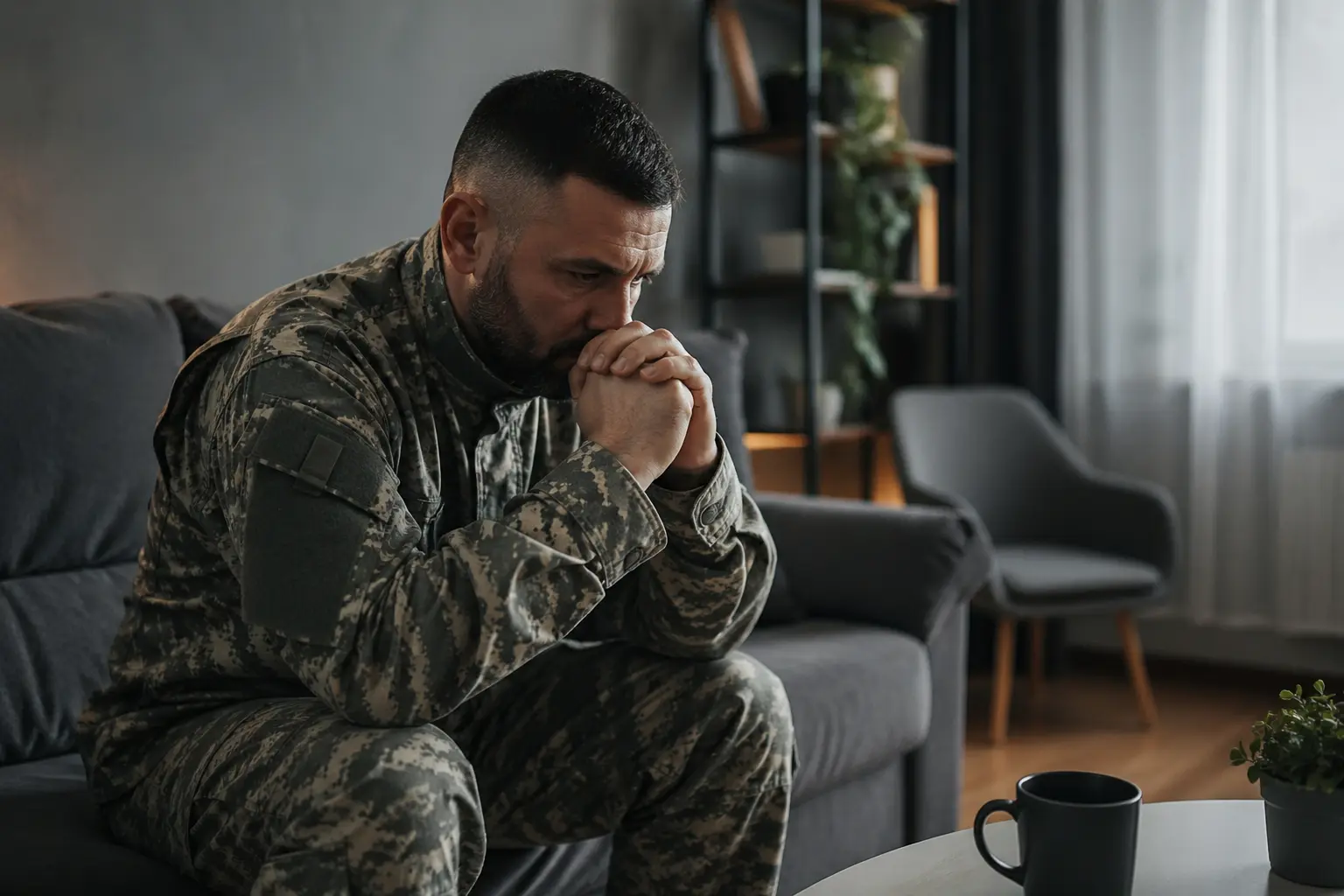
Waking up in a cold sweat from a nightmare you thought you’d buried decades ago, your heart pounding like you’re back in a war zone, feeling trapped in your own mind – the psychological effects war trauma leaves behind don’t just fade with time, especially for seniors who lived through it.
Understanding the psychological effects of war trauma
War trauma creates a lasting imprint on the mind that extends far beyond the immediate experience of conflict. Seniors who witnessed or endured combat often carry a complex constellation of psychological effects that shape how they process emotions, form memories, and respond to stress. Post-traumatic stress disorder, or PTSD, represents one of the most recognized outcomes, but the reality is more nuanced. Many seniors experience anxiety that surfaces unexpectedly during ordinary moments – a car backfiring, a crowded space, even certain smells can trigger intense emotional reactions. Depression frequently accompanies these conditions, creating a fog that makes daily activities feel exhausting. Sleep disturbances plague many, with nightmares replaying traumatic scenes or flashbacks that feel startlingly real. A senior might find themselves suddenly transported back to a battlefield, their body reacting as though danger is present right now, even though they sit safely in their living room. Understanding these effects requires recognizing that the brain doesn’t simply store war memories like files in a cabinet – it encodes them with emotional intensity that can resurface throughout life.
The neurobiology behind war trauma
When the brain encounters extreme threat or violence, it undergoes measurable changes that persist long after safety returns. Three brain regions play central roles in this process. The amygdala, your brain’s alarm system, becomes hyperactive in people with war trauma, constantly scanning for danger even in safe environments. This explains why a senior might startle easily or feel perpetually on edge. The hippocampus, responsible for forming and retrieving memories, actually shrinks in size when exposed to chronic trauma. This physical change can impair the ability to distinguish between past and present, making old memories feel immediate and real. The prefrontal cortex, which handles rational thinking and emotional regulation, shows reduced activity in trauma survivors. Imagine this region as the brain’s executive control center – when it’s underactive, emotional responses become harder to manage, and the amygdala’s alarm signals go unchecked. These neurobiological changes aren’t character flaws or signs of weakness. They’re documented physical alterations that occur in response to overwhelming stress. Researchers using brain imaging have shown these patterns consistently across trauma survivors, confirming that war trauma leaves measurable traces in brain structure and function.
Healing strategies for seniors with war trauma
Recovery from war trauma isn’t about forgetting or moving on quickly – it’s about gradually retraining the brain to process these experiences differently. Professional therapy with mental health specialists trained in trauma work provides a structured environment where seniors can safely explore their experiences. A therapist might use specific techniques to help the brain reorganize traumatic memories so they lose their emotional charge. Support groups create something equally powerful: connection with others who truly understand. When a senior sits in a room with fellow veterans or war survivors, they often experience profound relief simply from being heard without judgment. These groups normalize the struggles that can feel isolating when experienced alone. Mindfulness practices offer another avenue, teaching the nervous system to recognize the difference between past threat and present safety. Simple techniques like focused breathing or body awareness can interrupt the automatic stress response that trauma survivors experience. Many seniors find that combining these approaches works better than any single strategy alone. One might attend weekly therapy while also practicing daily meditation and meeting monthly with a support group. The key is consistency and patience – healing unfolds gradually as the brain learns new patterns.
- Attend regular therapy sessions with a trauma-informed mental health professional to address war trauma systematically.
- Join support groups specifically for war survivors or veterans to connect with others who share similar experiences.
- Practice mindfulness techniques such as deep breathing or body scans to help regulate stress responses and manage anxiety.
🔬 Science-backed benefits in 2 minuteschoose where to begin:
Biological impact of long-term war trauma
The stress that war trauma creates doesn’t remain confined to the mind – it reverberates through the entire body in measurable ways. Chronic activation of the stress response system, designed for short-term survival threats, causes wear and tear on physical systems when sustained over decades. The cardiovascular system bears particular burden. Seniors with unprocessed war trauma show higher rates of hypertension, heart disease, and stroke. The constant state of physiological alertness keeps blood pressure elevated and increases inflammation throughout the body. The immune system, meant to protect against infection, becomes dysregulated. Some trauma survivors experience suppressed immune function, making them more vulnerable to illness. Others develop overactive immune responses that contribute to autoimmune conditions. Cognitive function also suffers. The chronic stress hormones released during trauma activation can damage the hippocampus further, accelerating memory problems and cognitive decline beyond what normal aging produces. A senior might notice increasing difficulty concentrating, remembering names, or following conversations. The body’s inflammatory response, chronically elevated in trauma survivors, contributes to conditions like arthritis and other age-related diseases. Understanding these connections helps seniors recognize that physical health problems aren’t separate from their psychological history – they’re interconnected manifestations of the same underlying trauma response.
Research-based interventions for seniors with war trauma
Decades of scientific research have identified specific interventions that measurably reduce war trauma symptoms in older adults. Cognitive-behavioral therapy, or CBT, works by helping seniors identify thought patterns that maintain trauma responses and gradually replace them with more adaptive thinking. A senior might realize that they interpret neutral situations as threats, then learn to evaluate evidence more carefully. Eye movement desensitization and reprocessing, known as EMDR, uses bilateral stimulation combined with trauma processing to help the brain metabolize distressing memories. During EMDR sessions, seniors recall traumatic events while their eyes follow a moving object or they experience alternating tactile stimulation. This process appears to activate the brain’s natural healing mechanisms. Medication management, when appropriate, can reduce symptoms like intrusive thoughts or sleep disturbances, making other therapies more effective. Selective serotonin reuptake inhibitors have shown efficacy in reducing PTSD symptoms. Emerging research also supports trauma-sensitive yoga and somatic therapies that help seniors reconnect with their bodies in safe ways. The most effective approaches typically combine multiple interventions tailored to individual needs. A senior might benefit from medication to stabilize sleep, weekly CBT sessions to address thought patterns, and a yoga class to rebuild body awareness. Research consistently shows that treatment works – seniors who engage with evidence-based interventions report significant symptom reduction and improved quality of life.
Promoting resilience and recovery in seniors
Recovery from war trauma isn’t just about symptom reduction – it’s about rebuilding a life that feels meaningful and connected. Resilience in seniors develops through multiple pathways working together. Social connections form the foundation. Seniors who maintain close relationships with family, friends, or community groups show better recovery outcomes. These connections provide practical support, emotional understanding, and a sense of belonging that counteracts the isolation trauma often creates. A senior might join a hobby group, volunteer in their community, or deepen existing friendships. Physical health practices matter significantly. Regular movement, whether walking, swimming, or gentle exercise, helps regulate the nervous system and reduces stress hormones. Nutrition that supports brain health, adequate sleep, and limiting alcohol all contribute to recovery. Engaging in activities that provide purpose and fulfillment – whether creative pursuits, mentoring younger people, or spiritual practices – helps seniors feel that their lives matter beyond their trauma history. Recovery unfolds as a gradual process, not a linear path. Some days feel harder than others. Progress might feel invisible until a senior realizes they haven’t had a nightmare in weeks or that they attended a crowded event without overwhelming anxiety. Patience with oneself, combined with consistent engagement in healing practices and supportive relationships, creates the conditions where genuine recovery becomes possible.
War trauma creates lasting neurobiological changes in the brain that affect how seniors process emotions, form memories, and respond to stress. The amygdala becomes hyperactive, the hippocampus shrinks, and the prefrontal cortex shows reduced activity – physical changes that explain why symptoms persist. These changes extend beyond psychology, contributing to cardiovascular problems, immune dysfunction, and cognitive decline. Evidence-based interventions including cognitive-behavioral therapy, eye movement desensitization and reprocessing, and medication management have demonstrated effectiveness in reducing symptoms. Recovery also depends on building social connections, maintaining physical health, and engaging in meaningful activities. Healing is gradual and requires patience, but research consistently shows that seniors who actively engage with treatment and supportive practices experience significant improvement in symptoms and quality of life.
Can war trauma in seniors lead to physical health problems?
Yes, chronic war trauma activates the stress response system continuously, leading to measurable physical health consequences. Seniors experience higher rates of cardiovascular disease, hypertension, stroke, weakened immune function, and accelerated cognitive decline. The inflammation and stress hormones released during trauma activation damage multiple body systems over time.
What are some effective interventions for seniors with war trauma?
Research supports several evidence-based interventions. Cognitive-behavioral therapy helps seniors identify and modify trauma-related thought patterns. Eye movement desensitization and reprocessing uses bilateral stimulation to help the brain process traumatic memories. Medication management can address symptoms like intrusive thoughts and sleep disturbances. Combining multiple approaches tailored to individual needs typically produces the best outcomes.
Others also read:
Disclaimer: This article is for informational purposes only and is not a substitute for professional medical advice. Always consult a healthcare professional for personal guidance.
This article has been prepared and reviewed by the GlobalHealthBeacon editorial team and is based on current medical research and published scientific literature available in 2026. It provides structured, evidence-based information to support informed health decisions.
← Back to the Main page on: psychological effects war trauma
