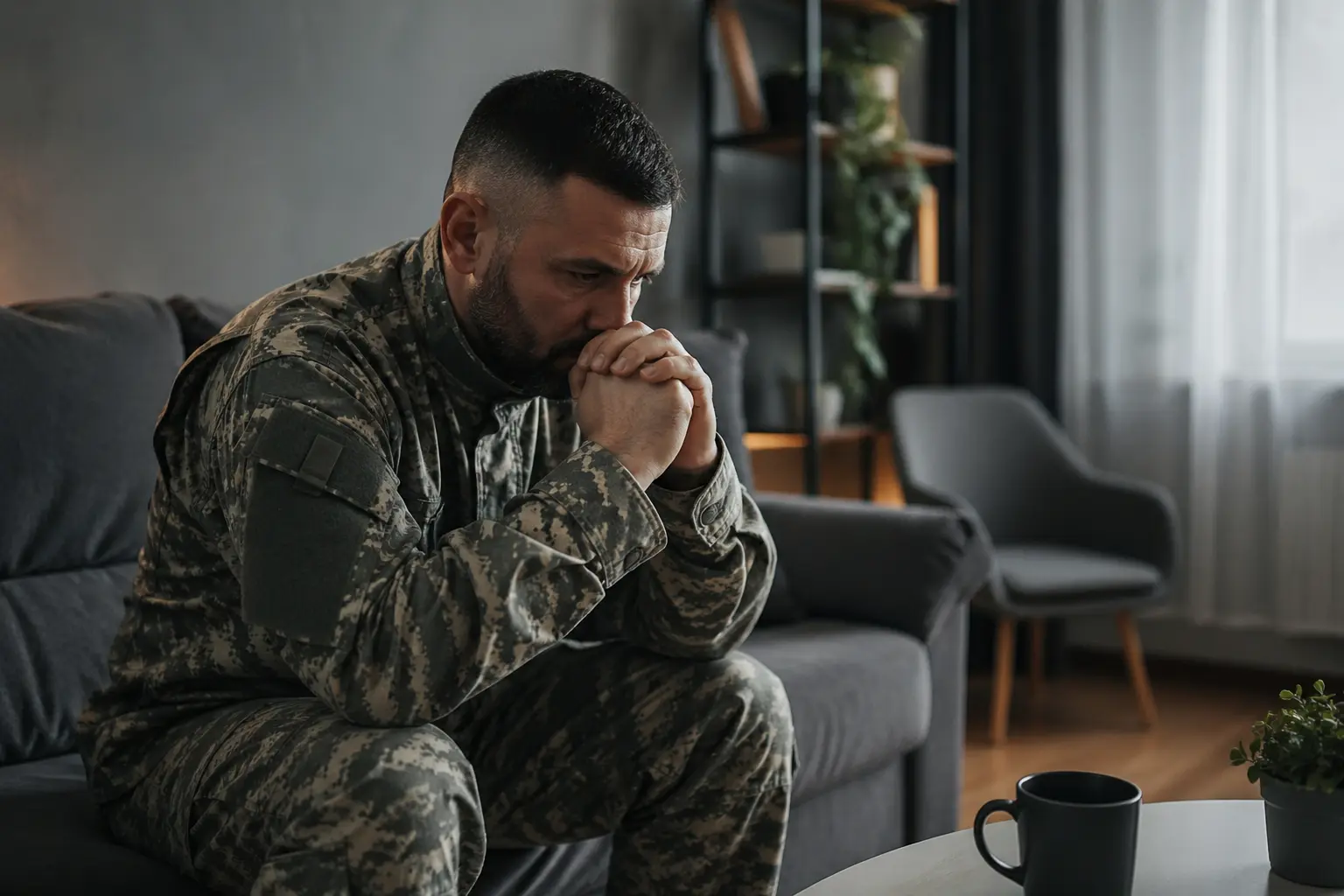
You wake up in a cold sweat at 3 AM, your heart pounding like someone’s chasing you, except no one is – and that’s the thing about psychological effects war trauma, they don’t need a present threat to feel completely real and overwhelming.
Understanding the effects of war trauma
War trauma doesn’t announce itself neatly. For many young adults, it creeps in through intrusive thoughts that hijack your morning commute, flashbacks that feel like you’re reliving the moment, or an emotional numbness that makes everything feel muted and distant. Anxiety can spike without warning. Depression settles in like fog that won’t lift. Post-traumatic stress disorder (PTSD) develops when the brain gets stuck replaying danger signals even when you’re safe. Consider a 24-year-old who served overseas and now finds crowded spaces unbearable because sudden noises trigger panic. Or someone who can’t maintain relationships because trust feels impossible. These aren’t character flaws or weakness. They’re the brain’s protective response gone into overdrive, trying to keep you safe from a threat that’s no longer present. Understanding this distinction matters because it shifts how you see yourself and what recovery might look like.
Biological mechanisms of war trauma
Your brain under threat is a finely tuned survival machine. When war trauma occurs, the amygdala, your brain’s alarm system, becomes hyperactive and stays that way. Meanwhile, the prefrontal cortex, which handles rational thinking and emotional regulation, gets suppressed. Stress hormones like cortisol flood your system, keeping you in a state of high alert. Think of it like a smoke detector that’s been set too sensitive – it goes off when you burn toast, not just when there’s a real fire. This dysregulation means your nervous system struggles to distinguish between actual danger and safe situations. A young adult might experience elevated heart rate and sweating during a normal conversation because their brain misinterprets social cues as threats. The hippocampus, responsible for memory processing, also gets affected, which is why traumatic memories feel fragmented and overwhelming rather than integrated into your life story. Over time, without intervention, these neural pathways can become deeply entrenched, making recovery feel more difficult.
Treatment approaches for war trauma
Evidence-based treatments exist because researchers have studied what actually helps people heal. Cognitive Behavioral Therapy (CBT) works by helping you identify thought patterns that keep you stuck – like believing you’re still in danger when you’re sitting safely at home – and gradually rewiring those connections. Exposure therapy sounds counterintuitive, but it involves carefully revisiting traumatic memories in a controlled setting with a trained therapist, which helps your brain learn that the memory itself isn’t dangerous. Medications like selective serotonin reuptake inhibitors (SSRIs) can reduce the intensity of depression and anxiety symptoms, making it easier to engage in therapy. Some young adults benefit from Eye Movement Desensitization and Reprocessing (EMDR), which uses bilateral stimulation while processing memories. Others find Trauma-Focused Cognitive Behavioral Therapy (TF-CBT) particularly effective because it combines cognitive work with gradual exposure. The key is finding what resonates with you and your specific situation. A therapist might recommend starting with medication to stabilize mood, then adding therapy once you have more emotional capacity. There’s no one-size-fits-all approach, which is why professional assessment matters.
- Engage in therapy sessions with a trauma-informed clinician to explore and process traumatic experiences at your own pace, building trust and safety first.
- Practice relaxation techniques like deep breathing, progressive muscle relaxation, or grounding exercises to manage stress and anxiety levels when symptoms arise.
- Follow prescribed medication regimens under the guidance of a healthcare professional, attending regular check-ins to monitor effectiveness and adjust as needed.
🔬 Science-backed benefits in 2 minuteschoose where to begin:
Impact of war trauma on daily functioning
War trauma doesn’t just affect your thoughts and feelings – it seeps into every corner of your life. Work becomes harder when concentration feels impossible or when you’re exhausted from hypervigilance. Relationships strain when trust is broken or when you can’t explain why you’re irritable or withdrawn. Sleep suffers. Appetite changes. Some young adults describe feeling like they’re watching their life from outside their body, disconnected from people they love. A 26-year-old might struggle to keep a job because they can’t handle the sensory overload of an office environment. Another might isolate themselves because social interaction feels too demanding. Physical health often declines too – chronic pain, digestive issues, and weakened immunity are common. The cumulative effect is that life shrinks. Activities you once enjoyed feel pointless. Future planning feels impossible when you’re stuck in survival mode. This is why seeking appropriate support isn’t optional – it’s essential for reclaiming your life and rebuilding a sense of normalcy and purpose.
Long-term outlook and coping strategies
Recovery from war trauma isn’t linear, but it is possible. Many young adults experience significant improvements with consistent therapy and support, though the timeline varies. Some find that symptoms decrease noticeably within months, while others need years of work. The good news is that your brain has neuroplasticity – the ability to rewire itself. Self-care practices matter more than you might think. Regular exercise reduces stress hormones and improves mood. Mindfulness and meditation help you observe thoughts without getting swept away by them. Maintaining a routine provides structure when everything feels chaotic. Connecting with others who understand – whether through support groups or trusted friends – combats the isolation that trauma breeds. Meaningful activities, whether volunteering, creative pursuits, or learning something new, rebuild a sense of purpose. Some young adults find that helping others who’ve experienced similar trauma becomes part of their healing journey. Progress might look like sleeping through the night, having a conversation without panic, or simply feeling less numb. These small wins accumulate into genuine recovery.
Research and future directions
The field of trauma treatment is evolving rapidly. Researchers are investigating how virtual reality exposure therapy might make treatment more accessible. Neuroscience studies are revealing how meditation and other practices physically change brain structure in ways that support healing. Genetic research is exploring why some people develop PTSD after trauma while others don’t, which could lead to more personalized treatment approaches. Collaborative efforts between researchers, clinicians, and policymakers are crucial because war trauma affects not just individuals but entire communities and healthcare systems. Emerging treatments like psychedelic-assisted therapy show promise in clinical trials. Understanding the role of social support and community resilience is reshaping how we approach treatment beyond the therapy room. For young adults, this means that treatment options will likely become more effective, accessible, and tailored to individual needs in coming years. Staying informed about these developments helps you advocate for yourself and make informed decisions about your care.
War trauma treatment in young adults involves understanding the psychological effects, addressing biological mechanisms, utilizing evidence-based treatment approaches, and fostering resilience through coping strategies and support.
Is war trauma treatment effective in young adults?
Yes, with proper diagnosis and a tailored treatment plan, young adults can experience significant improvements in their mental health and overall well-being. Research shows that evidence-based therapies like CBT and exposure therapy have strong success rates when combined with appropriate support.
What are some self-care strategies for coping with war trauma?
Engaging in activities like exercise, mindfulness, maintaining a routine, and connecting with support systems can be beneficial in managing the psychological effects of war trauma. Additionally, creative outlets, time in nature, and structured social activities help rebuild a sense of normalcy and purpose.
Others also read:
Disclaimer: This article is for informational purposes only and is not a substitute for professional medical advice. Always consult a healthcare professional for personal guidance.
This article has been prepared and reviewed by the GlobalHealthBeacon editorial team and is based on current medical research and published scientific literature available in 2026. It provides structured, evidence-based information to support informed health decisions.
← Back to the Main page on: psychological effects war trauma
