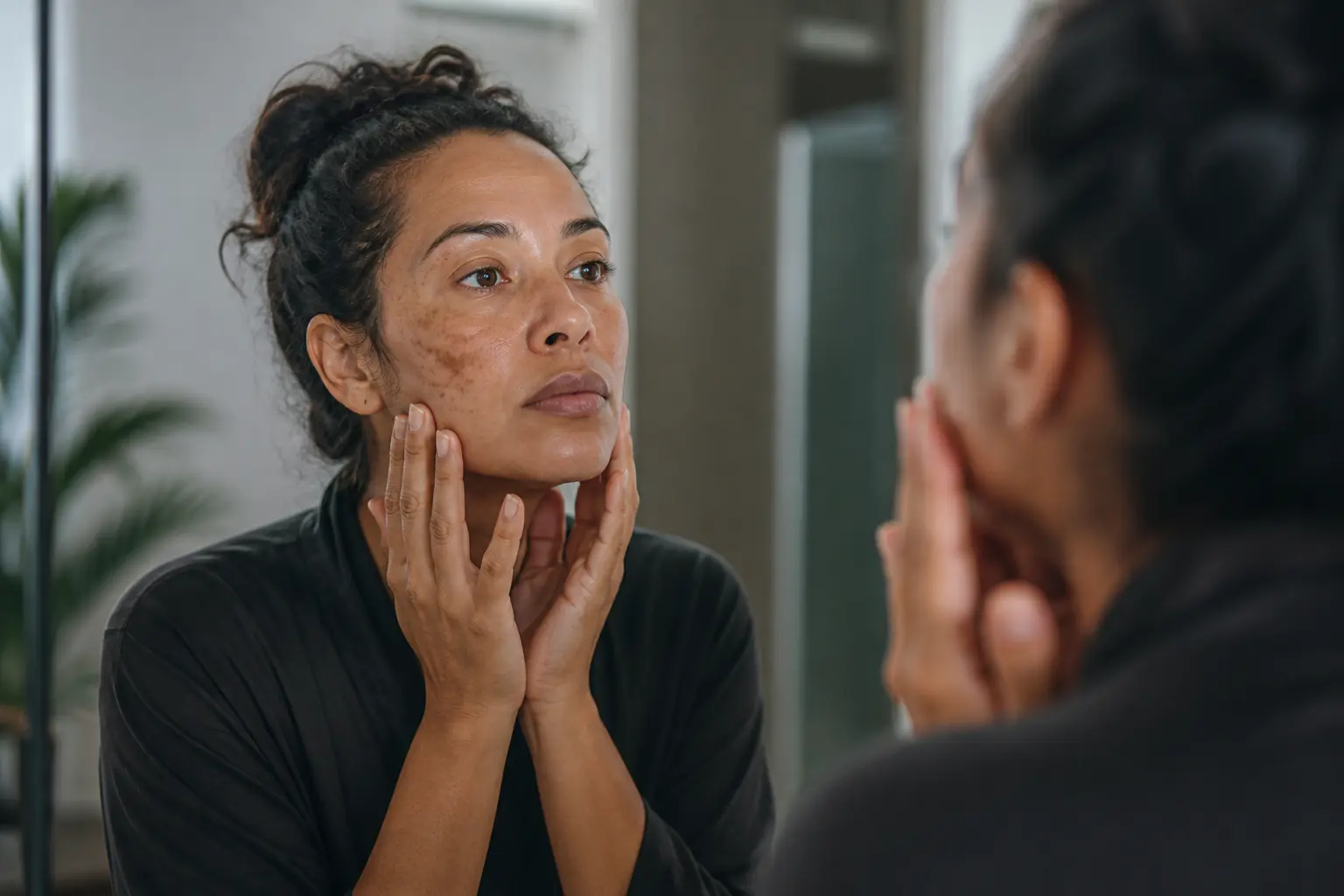
Dark spots are staring back at you in the mirror, and you’re tired of feeling like your skin doesn’t match who you are inside, so let’s treat hyperpigmentation without peels and get your glow back for good.
Understanding hyperpigmentation
Before you can effectively fade dark spots, you need to understand what’s actually happening beneath your skin’s surface. Melanin is the pigment that gives your skin its color, and when it overproduces in certain areas, you get those stubborn dark patches. This happens for real reasons: maybe you spent years in the sun without protection, or hormonal shifts during pregnancy or menopause triggered excess melanin production, or even a past acne breakout left behind post-inflammatory hyperpigmentation. Think of it like your skin’s protective response gone into overdrive. A woman in her 40s might notice age spots appearing after decades of sun exposure, while a younger woman might develop melasma across her cheeks due to hormonal changes. The key is identifying which type you’re dealing with, because the root cause matters when choosing your treatment path. Some dark spots fade naturally over time, while others need targeted intervention to shift.
- Identify the root cause of your hyperpigmentation.
- Consult a dermatologist for a professional evaluation.
- Start your journey towards brighter skin with the right knowledge.
Gentle cleansing and exfoliation
Your dark spot protocol starts with the foundation: a clean canvas. Use a gentle, pH-balanced cleanser morning and night to remove impurities, makeup, and environmental buildup without stripping your skin. This matters because harsh cleansers can irritate skin and potentially trigger more melanin production, worsening hyperpigmentation. After cleansing, introduce a non-abrasive exfoliant like a chemical exfoliant with AHAs or BHAs, which work by dissolving dead skin cells rather than physically scrubbing them away. Physical scrubs can be too aggressive and cause inflammation. Exfoliate 2-3 times weekly to encourage cell turnover and gradually reveal fresher skin underneath. A woman using this approach might notice that her dark spots appear lighter after 4-6 weeks because new, evenly-pigmented skin cells are surfacing. The goal isn’t to strip or damage your skin, but to gently accelerate its natural renewal process so hyperpigmentation fades gradually.
📘 Fix your day in under 2 minuteschoose where to begin:
Targeted serums and treatments
Once your skin is clean and prepped, layer in serums designed to actively reduce hyperpigmentation. Vitamin C serums brighten and even out skin tone while providing antioxidant protection. Niacinamide reduces inflammation and can help regulate melanin production. Kojic acid and alpha-arbutin are gentle brightening ingredients that inhibit tyrosinase, the enzyme responsible for melanin synthesis. Apply these serums to clean, dry skin before moisturizer, allowing each layer to absorb fully. For enhanced results, consider adding a retinoid like retinol or prescription-strength retinoids, which accelerate skin cell renewal and have strong clinical evidence for fading dark spots. Start slowly with retinoids, perhaps 2-3 times weekly, and gradually increase frequency as your skin builds tolerance. A realistic scenario: a woman starts with vitamin C serum and niacinamide, sees modest improvement after 8 weeks, then adds a gentle retinol and notices more significant fading within another 6-8 weeks. Patience and layering the right actives creates compounding results.
Daily sun protection
This step is non-negotiable and often the most overlooked. UV rays are the primary trigger that darkens existing hyperpigmentation and creates new spots. Without sun protection, your other efforts are fighting an uphill battle. Use a broad-spectrum sunscreen with SPF 30 or higher every single day, even on cloudy days and indoors near windows. Reapply every 2 hours if you’re outside, or after swimming or sweating. Consider mineral sunscreens with zinc oxide or titanium dioxide if your skin is sensitive, as they sit on top of skin and reflect UV rays rather than absorbing them. Beyond sunscreen, wear a wide-brimmed hat, sunglasses, and lightweight long sleeves when possible, especially during peak sun hours between 10 AM and 4 PM. A woman who treats her dark spots but skips sun protection will watch them darken again within weeks. Conversely, one who commits to daily SPF 30+ alongside her serums and exfoliation will see consistent, lasting improvement because she’s preventing new damage while treating existing spots.
Stay consistent and patient
The hardest part of any dark spot protocol isn’t finding the right products, it’s sticking with them long enough to see real results. Hyperpigmentation didn’t develop overnight, and it won’t disappear overnight either. Most women see noticeable improvement after 6-8 weeks of consistent use, but significant fading often takes 12-16 weeks or longer, depending on the depth and severity of the spots. Keep a simple log or take monthly photos to track progress, because subtle changes accumulate and become obvious over time. You might not notice a difference week-to-week, but comparing month-to-month reveals the truth. If you’re not seeing any improvement after 12 weeks, revisit your routine: are you using sun protection daily, exfoliating regularly, and applying actives consistently? Sometimes a small adjustment, like increasing exfoliation frequency or switching to a stronger active ingredient, reignites progress. Stay flexible and willing to adapt, but don’t abandon ship after a few weeks. The women who succeed are those who treat their skin like a long-term commitment, not a quick fix.
Understanding hyperpigmentation causes, gentle cleansing, targeted serums, daily sun protection, and consistency are key in treating dark spots effectively.
Can hyperpigmentation be completely eliminated?
While hyperpigmentation can be significantly reduced with the right treatments and skincare regimen, complete elimination may not always be possible depending on the severity and root cause of the condition.
How long does it typically take to see results from a dark spot protocol?
Results vary among individuals, but noticeable improvement in hyperpigmentation typically begins to show after 6-8 weeks of consistent use of the recommended products and practices.
Others also read:
Disclaimer: This article is for informational purposes only and is not a substitute for professional medical advice. Always consult a healthcare professional for personal guidance.
This guide has been prepared and reviewed by the GlobalHealthBeacon editorial team and reflects current medical research as of 2026. It provides structured, evidence-based information to support informed health decisions.
← Go to the treat hyperpigmentation without peels main guide
