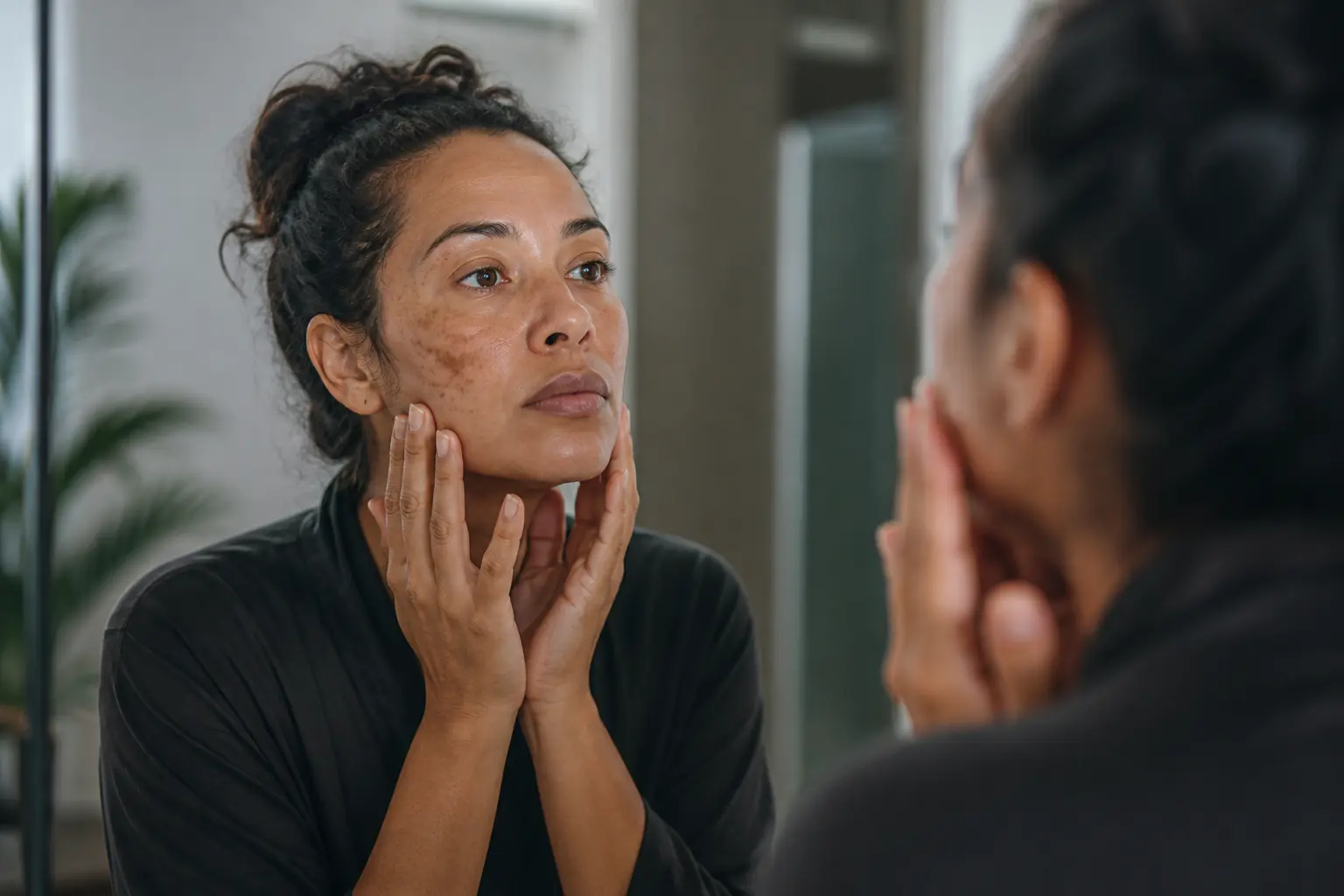
Dark patches creeping across your face, uneven skin tone that makeup can’t quite cover, and the frustration of feeling like your complexion is working against you – you’re not alone, and you don’t need harsh peels to treat hyperpigmentation without peels and finally get the clear, even skin you deserve.
Understanding hyperpigmentation
Hyperpigmentation happens when your skin produces too much melanin in specific areas, creating darker patches that stand out against your natural skin tone. Think of melanin as your skin’s natural sunscreen – it’s protective, but sometimes it goes into overdrive. Sun exposure is the biggest culprit, especially if you’ve spent years without consistent SPF protection. Hormonal changes, particularly during your 20s and 30s, can trigger it too. Even something as simple as picking at a pimple or a minor skin injury can leave behind a dark mark that lingers for months. Young adults often notice hyperpigmentation appearing after acne breakouts, from sun damage accumulated during teenage years, or from hormonal shifts related to birth control or stress. Understanding what’s causing your specific hyperpigmentation is the first step toward addressing it effectively and preventing new spots from forming.
- Protect your skin from the sun with sunscreen daily.
- Incorporate brightening ingredients like vitamin C into your skincare routine.
- Avoid picking at your skin to prevent further pigmentation issues.
Gentle skincare routine
Your skin barrier is delicate, especially when dealing with hyperpigmentation, so aggressive products will only make things worse. Start with a mild, pH-balanced cleanser that removes dirt and oil without stripping your skin. Follow with a hydrating toner or essence to prep your skin for treatment products. Niacinamide is your friend here – it reduces inflammation, strengthens your skin barrier, and helps fade dark spots over time. Licorice extract is another powerhouse ingredient that naturally brightens without irritation. When choosing moisturizers, look for lightweight formulas with hyaluronic acid or glycerin that won’t clog pores. A young adult dealing with hyperpigmentation often has combination or oily skin, so avoid heavy creams that can trap bacteria. Apply products in this order: cleanser, toner, targeted treatment, then moisturizer. Consistency matters more than intensity – using gentle products daily will yield better results than occasional aggressive treatments.
📘 Fix your day in under 2 minuteschoose where to begin:
Exfoliate regularly
Dead skin cells sitting on your surface create a dull appearance and prevent brightening ingredients from penetrating deeply. Chemical exfoliation is gentler and more effective than physical scrubbing, which can irritate hyperpigmented areas and make them darker. AHAs like glycolic acid work on the surface, dissolving the glue that holds dead skin cells together, while BHAs like salicylic acid penetrate pores. Start with exfoliating 2-3 times per week, then adjust based on how your skin responds. Many young adults make the mistake of over-exfoliating, thinking more is better – this actually damages your skin barrier and worsens hyperpigmentation. A typical routine might look like this: use a gentle AHA toner on Monday and Thursday, then a BHA treatment on Wednesday. Leave at least one day between exfoliation sessions to let your skin recover. Within 4-6 weeks of consistent, moderate exfoliation, you’ll notice smoother texture and more even tone as new, brighter skin cells surface.
Targeted treatments
Once you’ve established a gentle foundation routine, add serums or spot treatments designed specifically to fade dark spots. Kojic acid is a fermentation byproduct that inhibits melanin production – it’s particularly effective for sun spots and post-acne marks. Arbutin, derived from bearberry plants, works similarly by preventing melanin from reaching the skin’s surface. Retinol is stronger and requires patience, but it accelerates cell turnover and can fade stubborn hyperpigmentation over 8-12 weeks. Start retinol slowly, perhaps twice weekly, and gradually increase frequency as your skin builds tolerance. A realistic scenario: you notice dark spots from acne scarring, so you begin with a vitamin C serum in the morning for antioxidant protection and a low-dose retinol serum at night. After 6-8 weeks, the spots begin noticeably fading. By week 12, they’re significantly lighter. These ingredients work best when your skin is clean and dry, and always follow with sunscreen during the day since they can increase sun sensitivity.
Consult a professional
If you’ve followed a consistent routine for 8-12 weeks and see minimal improvement, it’s time to see a dermatologist. Some hyperpigmentation runs deeper than topical treatments can reach, or your specific type may require professional intervention. Dermatologists can prescribe hydroquinone, a prescription-strength brightening agent far more potent than over-the-counter options. They can also recommend laser treatments like IPL or fractional lasers that target melanin directly and produce dramatic results in just a few sessions. Chemical peels, despite your goal to avoid them, might actually be necessary for severe cases – but a professional will determine the right strength and type for your skin. Many young adults delay this step out of cost concerns or uncertainty, but a single consultation can clarify whether professional treatment is truly needed or if adjusting your routine will work. Your dermatologist can also rule out other conditions that mimic hyperpigmentation, ensuring you’re treating the right issue.
Protect your skin from the sun, use brightening ingredients, and avoid harsh treatments to tackle hyperpigmentation. Incorporate gentle skincare, exfoliation, targeted treatments, and consult a professional if needed for effective results.
Are natural remedies effective for treating hyperpigmentation?
While natural remedies can help to some extent, targeted treatments with ingredients like retinol or kojic acid may show more significant improvements.
Can hyperpigmentation be completely cured without professional help?
While some cases of hyperpigmentation can improve with at-home treatments, consulting a dermatologist for more severe cases may be necessary for complete resolution.
Others also read:
Disclaimer: This article is for informational purposes only and is not a substitute for professional medical advice. Always consult a healthcare professional for personal guidance.
This guide has been prepared and reviewed by the GlobalHealthBeacon editorial team and reflects current medical research as of 2026. It provides structured, evidence-based information to support informed health decisions.
← Go to the treat hyperpigmentation without peels main guide
