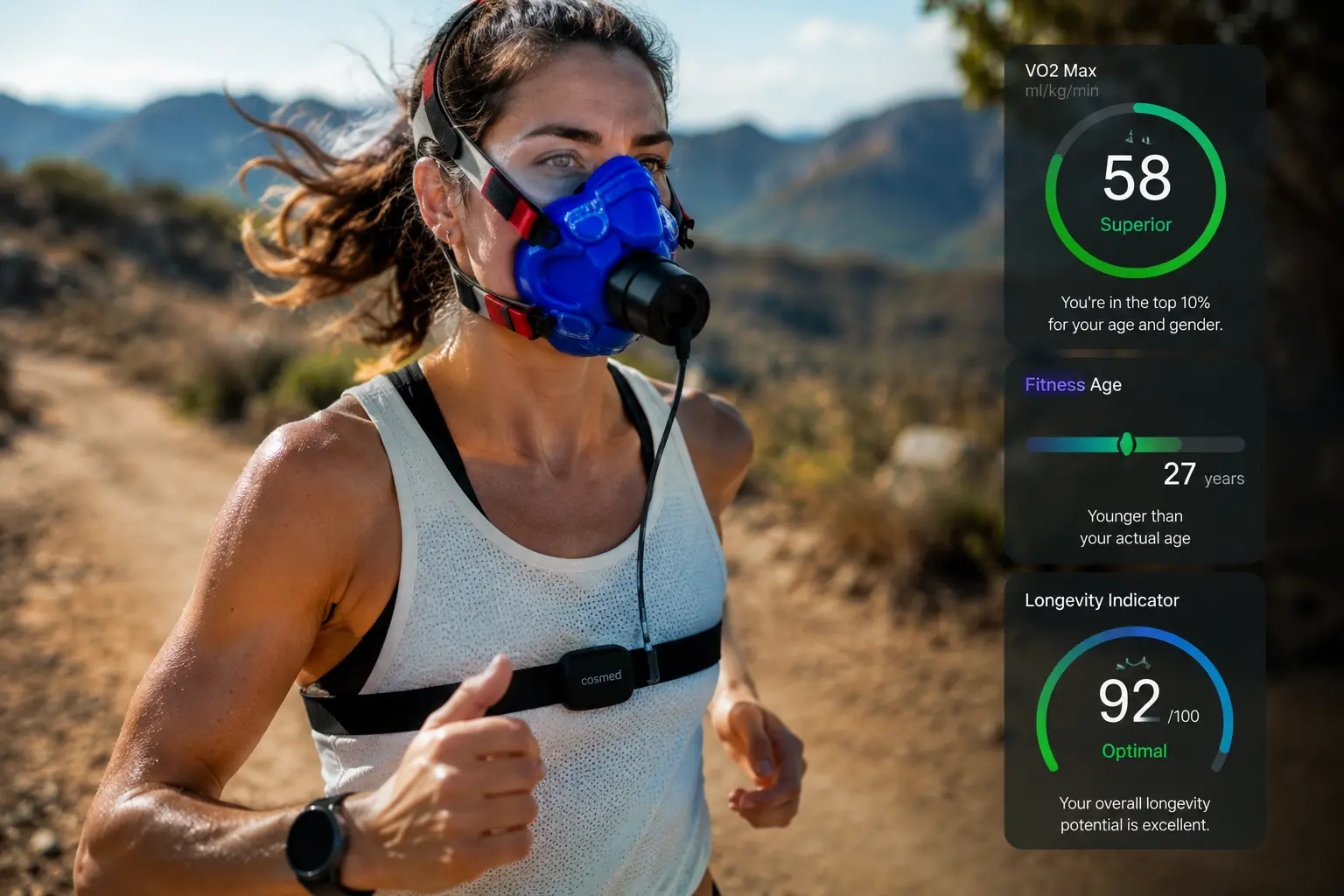
You’re hitting the gym consistently, eating right, sleeping well, and yet you still feel like something’s missing from your fitness picture, like you’re not actually measuring what matters for your long-term health, and that’s where understanding vo2 max longevity marker becomes the game-changer you didn’t know you needed.
What is VO2 max?
VO2 max, or maximal oxygen uptake, represents the maximum amount of oxygen your body can utilize during intense physical activity, measured in milliliters of oxygen per kilogram of body weight per minute. Think of it as your cardiovascular engine’s horsepower. When you sprint up stairs, push through a challenging workout, or sustain a long run, your heart pumps oxygen-rich blood to your muscles, and your muscles extract that oxygen to fuel movement. The more oxygen your body can process and use efficiently, the stronger your cardiovascular system is working. This metric matters because it directly correlates with your heart’s ability to deliver oxygen and your muscles’ capacity to use it. Women often have naturally lower VO2 max values than men due to differences in hemoglobin levels and muscle mass, but that doesn’t mean there’s no room for improvement. Your VO2 max reflects years of training adaptations, genetic predisposition, and lifestyle choices all working together.
- VO2 max is typically measured in milliliters of oxygen per kilogram of body weight per minute (ml/kg/min).
- Higher VO2 max values indicate better cardiovascular fitness and a lower risk of heart disease.
- Factors such as age, genetics, and training can influence your VO2 max levels.
How to determine your VO2 max
Measuring your VO2 max accurately requires either laboratory testing or estimation methods, each with different levels of precision. The gold standard is a maximal exercise test performed in a clinical or sports science lab where you wear a mask connected to a metabolic analyzer while running on a treadmill or cycling on an ergometer. The equipment measures the oxygen you breathe in and carbon dioxide you breathe out, calculating your exact VO2 max as you reach exhaustion. This test is thorough but requires specialized equipment and professional supervision. If lab testing isn’t accessible, field tests like the Cooper 12-minute run or the Rockport one-mile walk test provide reasonable estimates based on distance covered and heart rate response. Wearable devices and fitness trackers estimate VO2 max using algorithms based on your resting heart rate, age, and activity data, though accuracy varies by device. Many women find that tracking estimated VO2 max over time reveals trends even if the absolute number isn’t perfectly precise. A healthcare provider or certified fitness professional can guide you toward the measurement method that fits your situation and goals.
📘 Fix your day in under 2 minuteschoose where to begin:
Benefits of improving your VO2 max
Boosting your VO2 max creates a cascade of health improvements that extend far beyond fitness performance. As your cardiovascular system becomes more efficient at delivering and utilizing oxygen, your heart doesn’t have to work as hard during daily activities, reducing strain on this vital organ and lowering your resting heart rate. This efficiency translates to better endurance during workouts, meaning you can run longer, cycle harder, or sustain activities without fatigue setting in as quickly. Beyond endurance, improved VO2 max enhances your metabolic rate and fat-burning capacity because your body becomes more efficient at aerobic metabolism, the primary way your body burns fat for energy. Women who improve their VO2 max often report better energy levels throughout the day, improved mood due to cardiovascular benefits and endorphin release, and greater resilience against age-related fitness decline. Studies consistently show that higher VO2 max is associated with reduced risk of cardiovascular disease, diabetes, and early mortality. Even modest improvements in VO2 max, like moving from 28 to 32 ml/kg/min, can meaningfully impact your long-term health trajectory.
Factors affecting VO2 max in women
Women’s VO2 max is influenced by a unique constellation of biological and lifestyle factors that differ from men’s experiences. Hormonal fluctuations across the menstrual cycle can temporarily affect oxygen utilization and cardiovascular performance, with some research suggesting VO2 max may vary by a few percentage points depending on cycle phase. Body composition plays a significant role because VO2 max is calculated relative to body weight, meaning that women with higher muscle mass and lower body fat typically show higher values. Age naturally reduces VO2 max by approximately 10 percent per decade after age 25, though this decline can be slowed substantially through consistent training. Estrogen levels, particularly around menopause, can influence cardiovascular function and oxygen-carrying capacity. Beyond biology, lifestyle choices create measurable differences: women who prioritize sleep, manage stress effectively, maintain hydration, and eat nutrient-dense diets consistently show better VO2 max values than those who don’t. Smoking, sedentary behavior, and chronic stress all suppress VO2 max. Environmental factors like altitude training, pollution exposure, and even your training environment matter. Understanding these factors helps you interpret your personal VO2 max results realistically and identify which levers you can actually control.
Tips for optimizing your VO2 max
Building a higher VO2 max requires a strategic approach that combines different training intensities and supports your body’s adaptation. Start with aerobic base building through steady-state cardio like jogging, cycling, or swimming at a conversational pace for 30 to 60 minutes, three to four times weekly. This trains your aerobic system and builds mitochondrial density in your muscles. Layer in high-intensity interval training once weekly, alternating between short bursts of near-maximum effort and recovery periods, which powerfully stimulates VO2 max improvements. Add strength training two to three times weekly because muscle tissue is metabolically active and supports better oxygen utilization. Nutrition matters tremendously: ensure adequate iron intake since iron carries oxygen in your blood, eat sufficient protein to support muscle adaptation, and maintain consistent hydration. Sleep is non-negotiable because cardiovascular adaptations occur during rest, so aim for seven to nine hours nightly. Manage stress through practices like meditation or yoga because chronic stress impairs cardiovascular function. Progress gradually, increasing intensity or duration by no more than 10 percent weekly to avoid injury. Track your efforts over weeks and months because meaningful VO2 max improvements typically take eight to twelve weeks of consistent training to become measurable.
Understanding VO2 max as a longevity marker provides concrete insight into your cardiovascular fitness and overall health trajectory. By learning how to measure your VO2 max, recognizing the factors that influence it, and implementing targeted training strategies, you gain practical tools to enhance your endurance, aerobic capacity, and long-term wellness. Your VO2 max isn’t fixed, it’s a reflection of your current choices and training, making it one of the most responsive health metrics you can improve.
Is a higher VO2 max always better?
While a higher VO2 max is generally associated with better cardiovascular fitness, individual differences and specific health conditions may affect the interpretation. Consult with a healthcare provider for personalized guidance.
Can women improve their VO2 max through exercise?
Yes, women can enhance their VO2 max through consistent aerobic exercise, interval training, and strength training. By following a well-rounded fitness routine and focusing on overall health, women can optimize their cardiovascular endurance.
Others also read:
Disclaimer: This article is for informational purposes only and is not a substitute for professional medical advice. Always consult a healthcare professional for personal guidance.
This guide has been prepared and reviewed by the GlobalHealthBeacon editorial team and reflects current medical research as of 2026. It provides structured, evidence-based information to support informed health decisions.
