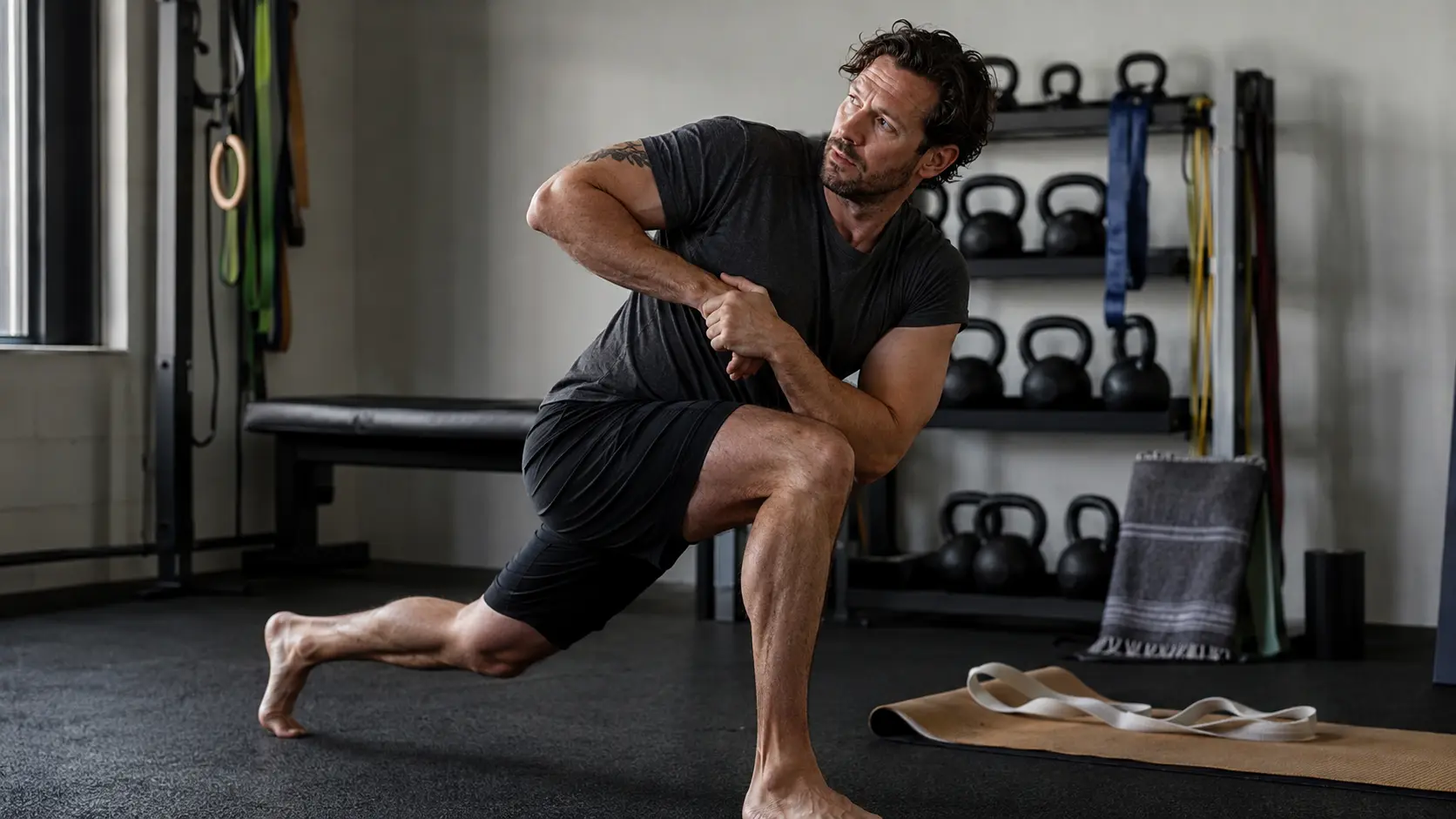
You’re stuck in that painful forward fold, your fingertips nowhere near your toes, and you wonder if you’ll ever feel loose again, but here’s the thing nobody tells you about mobility versus flexibility: they’re not the same battle, and winning one doesn’t guarantee victory in the other.
Understanding mobility and flexibility
Let me paint a picture. You’re reaching for a coffee mug on the top shelf, and your shoulder feels tight. That’s a mobility issue. Then you try to touch your toes after sitting all day, and your hamstrings feel like steel cables. That’s flexibility. Mobility refers to the ability to move a joint freely through its intended range of motion with control and strength, while flexibility is purely about the length and elasticity of your muscles themselves. For women, understanding this distinction changes everything. Mobility is about functional movement, the kind that lets you bend to pick up your child without strain, rotate your hips to look over your shoulder, or squat down to garden without discomfort. Flexibility, on the other hand, is the raw muscle length that allows those movements to happen smoothly. Many women discover that they can be flexible but not mobile, or vice versa, and that’s where confusion sets in.
- Mobility allows you to perform daily activities with ease, like bending to pick up a child or reaching for a high shelf.
- Flexibility promotes muscle elasticity and can help reduce muscle soreness after workouts.
- Both mobility and flexibility are essential for overall functional movement and quality of life.
Mobility challenges for women
Women face unique mobility obstacles that men often don’t encounter. Pregnancy shifts your center of gravity and tightens your hip flexors, leaving lasting effects even after birth. Hormonal fluctuations affect joint stability and connective tissue elasticity throughout your cycle. A sedentary job where you sit for eight hours daily gradually locks your hips and shoulders into a forward-hunched position. Then there’s the anatomical reality: women typically have wider pelvises and different hip angles, which means standard mobility exercises don’t always translate the same way. I’ve watched women struggle with deep squats or lunges because their body mechanics are different, not because they’re doing something wrong. Add in the mental load of juggling work, family, and self-care, and many women simply don’t prioritize movement until pain forces them to. Limited mobility creeps up quietly. First you notice you can’t turn your head as far to check your blind spot while driving. Then your knees start aching when you climb stairs. Before long, everyday movements feel restricted, and that’s when many women realize they need to take action.
💬 Ready to feel better in 2 minutes?choose where to begin:
Flexibility: the elusive goal
Flexibility feels like it should be simple. Stretch more, become more flexible, right? But countless women find themselves frustrated after weeks of stretching with minimal progress. You’re holding a yoga pose for thirty seconds, feeling the burn, thinking you’re making gains, only to feel just as stiff the next week. The problem is that flexibility requires consistency, patience, and often, a completely different approach than what mainstream fitness suggests. Static stretching, the kind where you hold a position, works best after your muscles are warm, not before exercise. Many women stretch cold muscles and wonder why they’re not getting results. There’s also the mental block: if you’ve been tight for years, your nervous system has adapted to that restriction, and your body resists change. Flexibility also depends on factors beyond stretching, like hydration, sleep, stress levels, and whether you’re actually strengthening the muscles you’re trying to lengthen. A woman might spend months doing yoga without understanding that her tight hamstrings are tight because her glutes are weak and underactive. The frustration is real, and it’s valid.
Striking a balance: what works best
Here’s what actually works: stop choosing between mobility and flexibility and start building both simultaneously. A balanced approach means incorporating dynamic movements that challenge your joints through their full range while also strengthening the muscles that stabilize those joints. Think of it like this: if flexibility is the length of your muscle fibers and mobility is your ability to use that length with control, then you need exercises that address both. Yoga helps with flexibility but often neglects strength. Weight training builds strength but can reduce range of motion if you don’t also stretch. The sweet spot is combining mobility drills like hip circles and shoulder dislocations with targeted stretching, adding strength work through full ranges of motion, and including dynamic warm-ups that prepare your body for movement. A woman might do a ten-minute mobility flow in the morning, strength training three times weekly that emphasizes full range of motion, and gentle stretching in the evening. Over weeks, she notices she can squat deeper, reach higher, and move with less pain. The key is consistency and listening to your body’s signals rather than pushing through discomfort.
Understanding the distinction between mobility and flexibility is essential for women looking to improve their movement quality and prevent injuries. By addressing the unique challenges they face and adopting a balanced approach to exercise, women can enhance their overall well-being and functional fitness.
Can women improve both mobility and flexibility simultaneously?
Yes, women can work on enhancing both their mobility and flexibility through a combination of targeted exercises, stretches, and mobility drills. It’s important to listen to your body, progress gradually, and seek guidance from fitness professionals if needed.
Are there specific exercises tailored for improving mobility and flexibility in women?
Yes, there are various exercises like yoga, Pilates, dynamic warm-ups, and mobility routines that can help women enhance their movement capabilities. It’s recommended to incorporate a mix of strength training, cardiovascular exercises, and flexibility work for a well-rounded fitness regimen.
Others also read:
Disclaimer: This article is for informational purposes only and is not a substitute for professional medical advice. Always consult a healthcare professional for personal guidance.
This article presents an experience-based perspective and has been reviewed by the GlobalHealthBeacon editorial team in 2026. It provides structured, evidence-based information to support informed health decisions.
