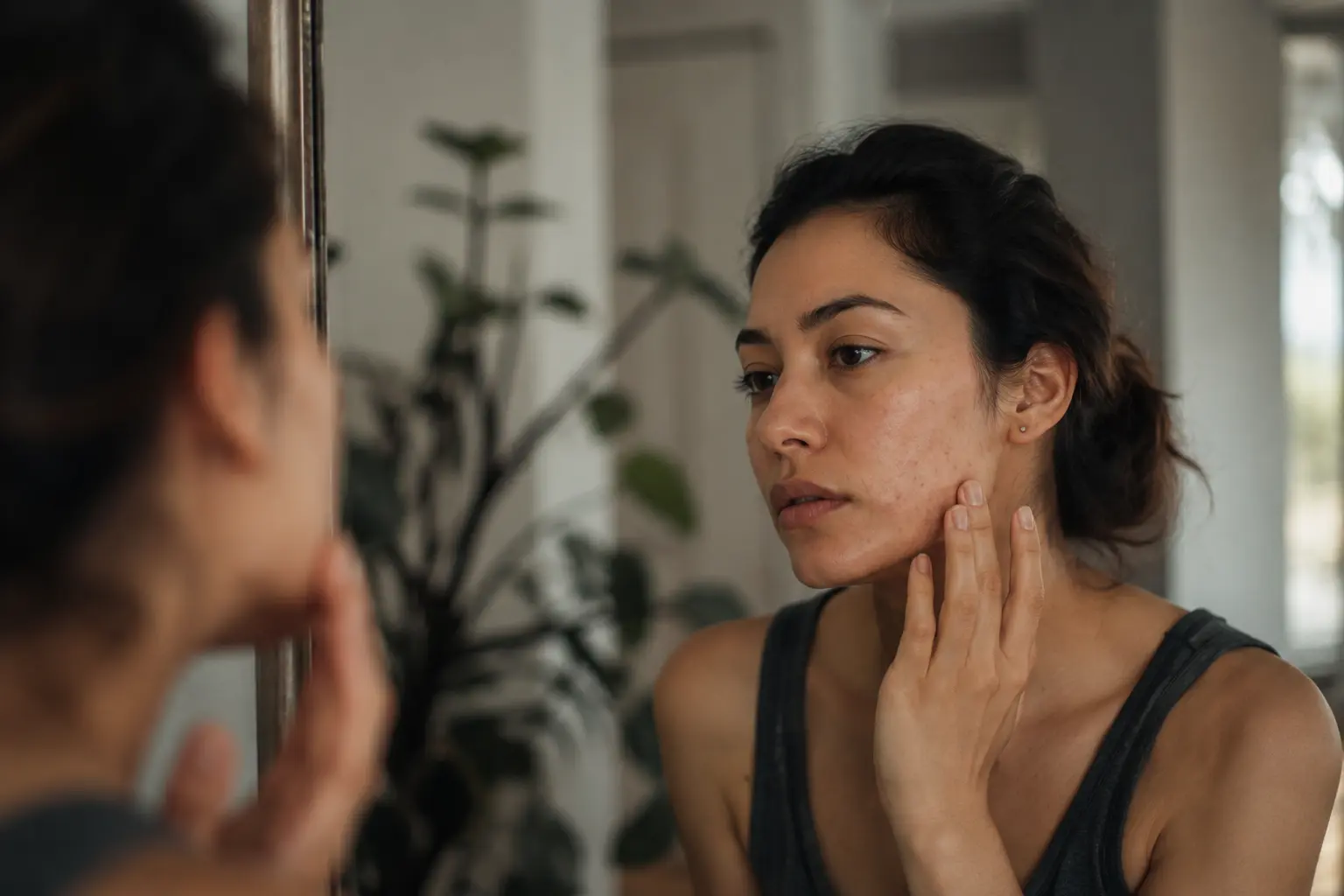
You wake up, look in the mirror, and there it is again: another breakout, or maybe your skin feels impossibly dry and reactive, and you know exactly why hormonal skin changes are wreaking havoc on your complexion because you started a new birth control method last month.
The unpredictable terrain of hormonal skin changes
Hormonal fluctuations triggered by birth control can feel like your skin has a mind of its own, and honestly, it kind of does. One week you’re dealing with unexpected breakouts along your jawline, the next your skin is so dry it feels like parchment paper. Take Sarah, for example. She switched to a progestin-heavy pill hoping for clearer skin, only to develop cystic acne within three weeks. The uncertainty is exhausting because you don’t know if this is temporary adjustment or a sign you need to switch methods entirely. Some birth control options regulate sebum production beautifully, while others can trigger melasma, those stubborn brown patches that seem to mock you every time you catch your reflection. Hormonal changes may also lead to increased sensitivity, redness, or uneven skin tone that makes you feel self-conscious. The key is understanding that these changes are your body responding to hormonal shifts, not a personal failure.
- Acne may worsen or improve depending on the type of birth control used.
- Some birth control options can cause melasma, a skin pigmentation condition.
- Hormonal changes may lead to increased sensitivity, redness, or uneven skin tone.
Navigating the impact on daily skincare routine
When hormonal skin changes disrupt your complexion, your old skincare routine suddenly feels useless, and that’s when adaptation becomes crucial. You might need to swap that heavy moisturizer for something lighter if your skin becomes oily, or completely reverse course and layer hydrating serums if dryness strikes. Start by experimenting with gentle cleansers that won’t strip your skin further, then introduce hydrating moisturizers that respect your skin’s new sensitivity. Targeted treatments like niacinamide can help regulate oil production, while hyaluronic acid serums provide deep hydration without heaviness. Common mistakes include over-treating breakouts with harsh actives or abandoning all skincare out of frustration. Instead, simplify your routine to basics, then slowly reintroduce products one at a time to identify what actually works. A dermatologist can provide personalized guidance and help you understand whether your skin issues are temporary adjustment or a sign to reconsider your birth control choice.
💬 Ready to feel better in 2 minutes?choose where to begin:
Embracing hormonal skin changes as part of your journey
Rather than viewing hormonal skin changes as a setback or proof that something is wrong with you, consider them a natural part of your unique health journey and a signal that your body is responding to medication. Many women find that reframing these changes shifts their entire mindset. Instead of fighting against fluctuations, you start observing them with curiosity. What triggers breakouts? When does your skin feel most resilient? These questions help you understand your body better. Embrace the fluctuations as opportunities to explore skincare options, test different birth control methods if needed, and learn what truly works for your individual biology. You might discover that a specific cleanser or moisturizer becomes your secret weapon, or that switching your pill timing helps. Remember, you’re not alone in this experience. Countless women navigate hormonal skin changes every single day, and many find that patience and self-compassion make the journey feel less isolating.
The power of self-care and positive mindset
Amidst the challenges of hormonal skin changes, prioritizing self-care becomes less about vanity and more about reclaiming your sense of control and confidence. Establishing healthy habits like consistent sleep, stress management, and hydration can genuinely support your skin’s resilience during hormonal shifts. Practicing mindfulness when you feel frustrated about breakouts or discoloration helps you separate your worth from your skin’s temporary condition. Seeking support from loved ones or online communities of women experiencing similar changes normalizes what you’re going through and reminds you that skin fluctuations don’t define you. Some women find that journaling their skin changes alongside their emotional state reveals unexpected patterns. Others prioritize gentle movement, warm baths, or skincare rituals that feel nurturing rather than punitive. A holistic approach that combines practical skincare adjustments with emotional support creates genuine transformation, helping you navigate hormonal skin concerns with resilience and self-compassion.
Understanding the impact of birth control on skin reveals a complex interplay of hormonal fluctuations that manifest in various skin conditions. Adapting skincare routines, embracing changes as part of a personal journey, and emphasizing self-care can empower women in navigating the dynamic effects on their skin.
Can birth control improve skin conditions?
While some birth control methods may help clear acne or regulate oil production, others can exacerbate skin issues. It’s essential to consult a healthcare provider to determine the most suitable option for your individual skin concerns.
How long does it take for skin to adjust to hormonal changes from birth control?
Skin response to hormonal changes from birth control varies among individuals. It may take several weeks to a few months for the skin to adapt. Monitoring your skin and seeking professional advice can aid in managing any adverse effects.
Others also read:
Disclaimer: This article is for informational purposes only and is not a substitute for professional medical advice. Always consult a healthcare professional for personal guidance.
This article presents an experience-based perspective and has been reviewed by the GlobalHealthBeacon editorial team in 2026. It provides structured, evidence-based information to support informed health decisions.

