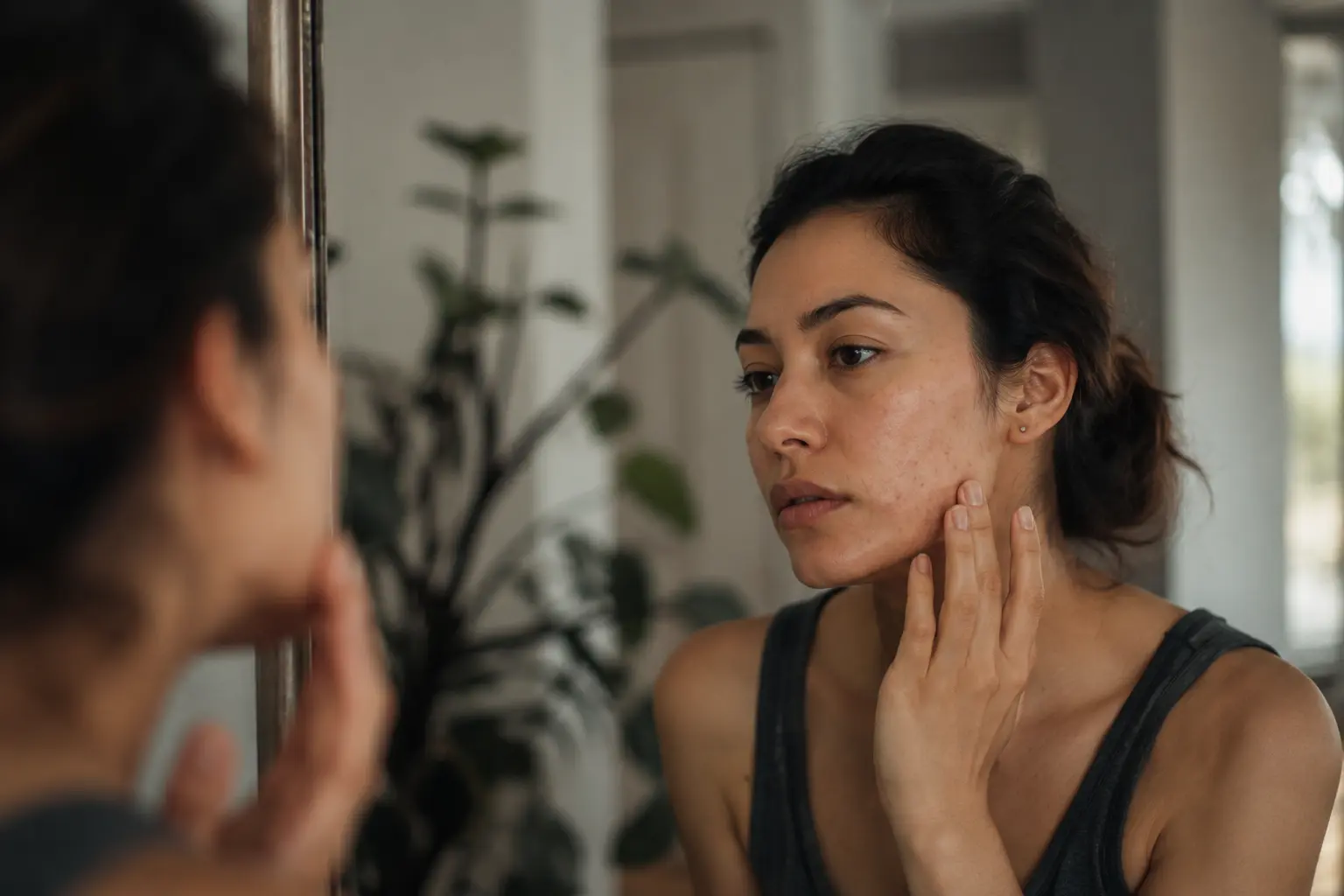
Your skin feels dry, thin, and nothing seems to stick anymore – welcome to hormonal skin changes, and you’re definitely not alone in this frustrating shift.
Understanding hormonal skin changes
Menopausal skin changes stem directly from declining estrogen levels, a natural process that affects nearly every woman entering this life stage. As estrogen drops, your skin loses its ability to retain moisture effectively, collagen production slows, and the protective barrier that kept your complexion plump and resilient begins to weaken. You might notice increased dryness that no amount of lotion seems to fix, a papery texture that catches light differently, or a loss of firmness you took for granted for decades. Some women describe it as watching their skin age faster than their actual years suggest. The good news is understanding exactly what’s happening gives you real power to address it. These changes aren’t permanent damage; they’re a biological shift that responds well to targeted care and lifestyle adjustments. Many women find that once they recognize the connection between hormonal fluctuation and skin appearance, they can stop blaming themselves and start implementing solutions that actually work.
- Stay hydrated to combat dryness and maintain skin health.
- Incorporate skincare products rich in antioxidants to protect against free radicals.
- Consult a dermatologist for personalized advice on managing hormonal skin changes.
Adopting a healthy skincare routine
A consistent skincare routine becomes your daily anchor during menopause, working like a protective shield for your changing skin. Start with a gentle cleanser that doesn’t strip natural oils, since your skin is already struggling to retain moisture. Warm water matters more than you might think; hot water opens pores wider and can increase dryness, while lukewarm water cleanses without shocking your skin. After cleansing, apply moisturizer to damp skin within two minutes to lock in hydration. Look for ingredients like hyaluronic acid, ceramides, or glycerin that actually bind water to your skin rather than just sitting on the surface. Sunscreen becomes non-negotiable, not just for preventing age spots but because UV damage accelerates collagen breakdown. A practical example: a 58-year-old might cleanse at night with a cream cleanser, apply a hydrating serum, then seal it with a rich night cream containing retinol for collagen support. Morning routine stays lighter with cleanser, moisturizer, and SPF 30 minimum. The key is consistency; your skin needs regular nourishment to rebuild its resilience, and skipping days undoes progress.
📘 Fix your day in under 2 minuteschoose where to begin:
Nourishing your skin from within
What you eat directly influences how your skin looks and feels, especially during hormonal shifts when your body needs extra nutritional support. Omega-3 fatty acids found in salmon, sardines, and flaxseeds help maintain your skin’s lipid barrier, reducing that persistent dryness many menopausal women experience. Vitamin C from citrus fruits, berries, and bell peppers supports collagen synthesis, literally helping your skin rebuild structure from the inside. Vitamin E acts as an antioxidant, protecting skin cells from free radical damage that accelerates aging. Zinc from nuts, seeds, and legumes helps regulate oil production and supports skin healing. Consider a real scenario: a woman noticing increased sensitivity and dryness might add a daily salmon dinner twice weekly, snack on almonds rich in vitamin E, and include a citrus fruit with breakfast. Within four to six weeks, many report noticeable improvement in skin texture and reduced flaking. Bone broth, rich in collagen precursors, has become popular among women seeking to support skin elasticity from within. Hydration matters equally; drinking adequate water helps your skin cells function optimally and supports the elimination of toxins that can worsen breakouts or inflammation.
Lifestyle changes for healthy skin
Your daily habits shape your skin’s appearance more than you might realize, and menopause is the perfect time to eliminate habits that accelerate aging. Smoking directly damages collagen and elastin fibers, causing premature wrinkles and a grayish complexion that no skincare product can fully reverse. If you smoke, quitting is the single most impactful change you can make for your skin. Alcohol dehydrates skin from the inside, worsening the dryness already triggered by hormonal changes; limiting consumption to occasional use protects your skin’s moisture balance. Sleep quality matters tremendously; during deep sleep, your body increases blood flow to skin and rebuilds collagen. Menopausal night sweats can disrupt this, so managing sleep through cool bedrooms, breathable fabrics, and stress reduction becomes a skin care strategy. Stress triggers cortisol release, which increases inflammation and can worsen sensitivity or breakouts. A practical example involves a 62-year-old who quit smoking, started a 20-minute daily walk for stress relief, limited wine to weekends, and improved sleep by keeping her bedroom at 65 degrees. Within two months, her skin appeared noticeably clearer, less inflamed, and more hydrated. Exercise increases circulation, delivering oxygen and nutrients to skin cells while promoting toxin elimination through sweat.
Seeking professional advice
A dermatologist becomes your partner in navigating menopausal skin changes, offering treatments and guidance tailored to your specific concerns rather than generic solutions. Professional options range from topical retinoids that boost collagen production and cell turnover, to laser therapy that stimulates collagen remodeling beneath the skin’s surface without invasive procedures. Microneedling creates controlled micro-injuries that trigger your skin’s natural healing response, improving texture and firmness over several sessions. Hormone replacement therapy, discussed with both your dermatologist and primary care physician, can address hormonal skin changes at their source for some women, though it requires careful consideration of individual health factors. Chemical peels performed professionally remove damaged outer layers and stimulate renewal more effectively than at-home versions. A realistic scenario involves a 60-year-old consulting a dermatologist about persistent dryness and fine lines, receiving a prescription retinoid cream, and scheduling quarterly laser treatments. After six months of combined approach, her skin texture improved significantly and she felt more confident. Regular dermatology visits also catch early signs of skin cancer, crucial since sun damage accumulated over decades becomes more visible during menopause. Don’t wait until skin concerns feel severe; early intervention prevents problems from worsening.
Managing menopausal skin changes requires understanding the hormonal shifts driving these changes, establishing a consistent skincare routine with appropriate products, nourishing your skin through diet and hydration, making lifestyle adjustments that support skin health, and seeking professional guidance when needed. This holistic approach addresses skin changes at multiple levels, giving you real control over your appearance during this life transition.
Can hormonal skin changes be reversed?
While hormonal skin changes cannot be reversed, adopting a proactive skincare routine and making healthy lifestyle choices can help minimize their impact.
Are there specific skincare products for menopausal skin?
Yes, there are skincare products formulated to address the unique needs of menopausal skin, such as moisturizers with added hyaluronic acid or collagen-boosting ingredients.
Others also read:
Disclaimer: This article is for informational purposes only and is not a substitute for professional medical advice. Always consult a healthcare professional for personal guidance.
This guide has been prepared and reviewed by the GlobalHealthBeacon editorial team and reflects current medical research as of 2026. It provides structured, evidence-based information to support informed health decisions.

