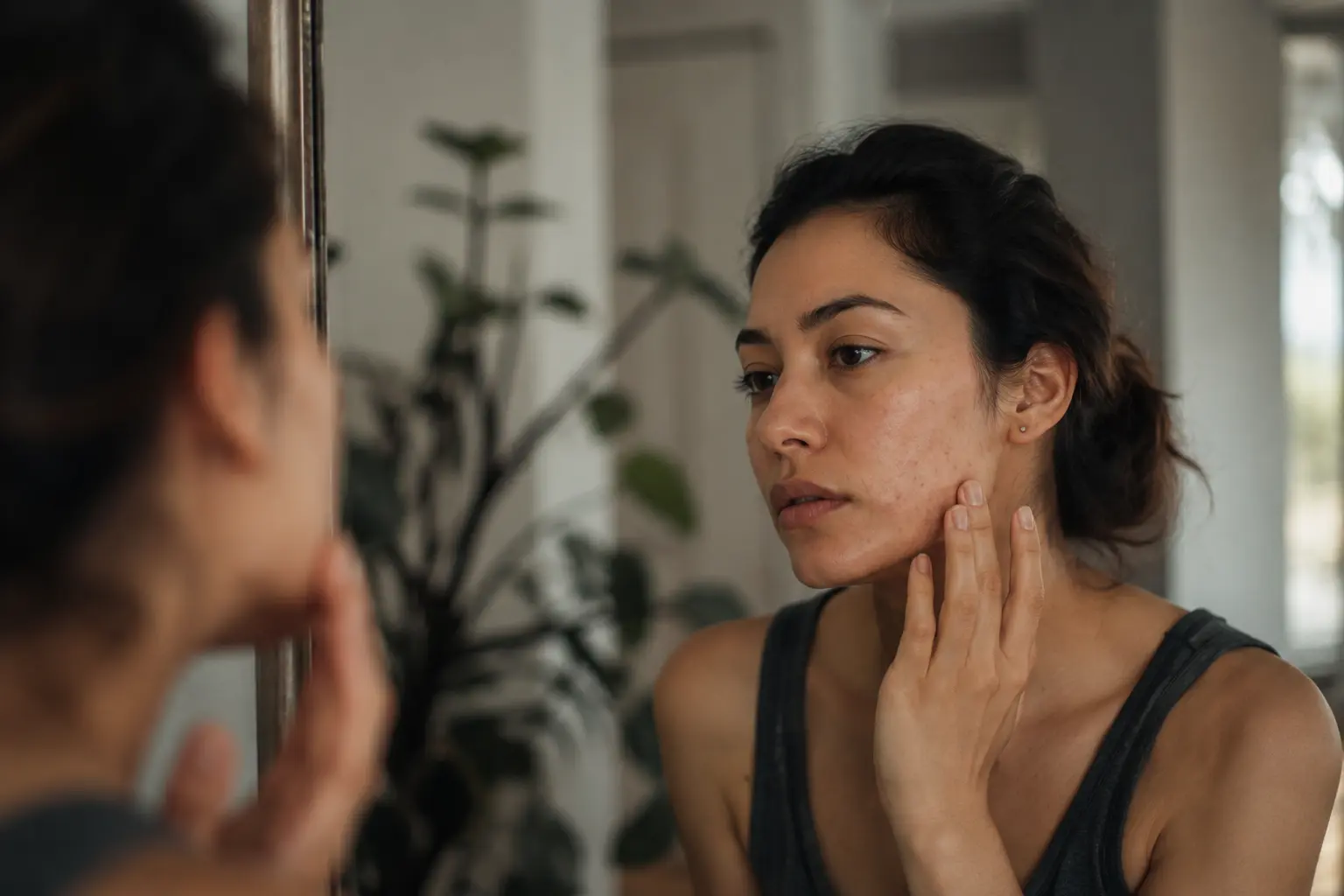
Your skin breaks out right before your period, or suddenly at 30, or during pregnancy, and nothing you’ve tried seems to stick—that’s hormonal skin changes, and you’re not alone in feeling like your face has betrayed you.
Understanding hormonal acne
Hormonal acne isn’t just regular breakouts that happen to show up at inconvenient times. It’s triggered by specific hormonal fluctuations that occur during puberty, menstrual cycles, pregnancy, perimenopause, and menopause. When your hormone levels shift, your skin responds by increasing sebum production, which clogs pores and creates an environment where acne-causing bacteria thrive. Think of it this way: your skin has receptors that are extra sensitive to hormonal changes, particularly androgens. A woman in her mid-twenties might notice breakouts only around her period, while another woman experiences persistent acne throughout her cycle. The location matters too. Hormonal acne typically clusters on the lower face, jawline, chin, and neck rather than spreading across your forehead or cheeks. Understanding this pattern helps you recognize whether you’re dealing with hormonal acne or another type, which directly influences which treatment will actually work for your situation.
- Hormonal acne typically appears on the lower face, jawline, and neck.
- Treatment for hormonal acne may involve topical creams, oral medications, or hormonal therapies.
- It’s important to consult a dermatologist to determine the best treatment plan for your specific skin needs.
Topical treatments for hormonal acne
Topical treatments are often the first line of defense because they’re accessible, you control the application, and they work directly on your skin. Products containing benzoyl peroxide kill acne bacteria and reduce inflammation, while salicylic acid penetrates pores to clear buildup. Retinoids, derived from vitamin A, accelerate cell turnover and prevent pores from clogging in the first place. Here’s what matters: consistency beats perfection. A woman using a 2.5% benzoyl peroxide cleanser twice daily for six weeks will likely see better results than someone who applies it sporadically for two weeks. Start with one active ingredient to avoid irritation, then layer if needed. Common mistake? Using too many actives at once, which damages your skin barrier and makes acne worse. Another frequent misstep is expecting overnight results. Most topical treatments require 6 to 12 weeks to show meaningful improvement because skin cell turnover takes time. If you have sensitive skin, begin with lower concentrations and gradually increase. Azelaic acid is gentler than benzoyl peroxide but still effective for hormonal breakouts.
📘 Fix your day in under 2 minuteschoose where to begin:
Oral medications for hormonal acne
When topical treatments alone don’t cut it, dermatologists often prescribe oral medications that work from the inside out. Antibiotics like doxycycline or minocycline reduce bacteria and calm inflammation, though they’re typically used short-term because bacteria can develop resistance. Spironolactone is an anti-androgen medication that blocks hormones triggering excess oil production, making it particularly effective for women with hormonal acne. Birth control pills regulate hormone fluctuations by stabilizing estrogen and progesterone levels, which directly reduces sebum production. The catch? Different formulations work differently for different women. A woman on a pill with higher progestin might see improvement, while another woman needs to switch formulations. Isotretinoin, or Accutane, is reserved for severe, scarring acne because it’s powerful but comes with strict monitoring requirements and potential side effects. Most women notice improvement within 4 to 8 weeks of starting an oral medication, though some need 3 months to see full results. Your dermatologist will consider your medical history, other medications, and lifestyle before recommending which oral option suits you best.
Hormonal therapies for hormonal acne
For stubborn hormonal acne that doesn’t respond to standard treatments, hormonal therapies offer a more targeted approach. Oral contraceptives specifically formulated to treat acne, like those containing norgestimate or norethindrone, are FDA-approved for this purpose and work by suppressing androgen activity. Anti-androgen medications like spironolactone block testosterone’s effects on your skin, reducing oil production at the source. Some women combine birth control with spironolactone for enhanced results. The timeline matters here: hormonal therapies typically take 2 to 3 months to show noticeable improvement because they’re addressing the root hormonal cause rather than just treating surface symptoms. A woman in her late twenties with persistent jawline acne might start oral contraceptives and see 60% improvement by month three, then reach 90% clear skin by month six. These therapies also offer non-skin benefits like lighter periods or reduced PMS symptoms, which is a bonus. The trade-off is that hormonal therapies require ongoing use and regular monitoring with your healthcare provider. They’re not quick fixes, but they address why your skin is breaking out in the first place.
Lifestyle changes for hormonal acne management
Medical treatments work best when supported by lifestyle habits that reduce inflammation and support hormonal balance. Your diet directly influences skin health: foods high in refined carbohydrates and dairy can trigger or worsen hormonal acne for some women, while others see improvement by reducing sugar and increasing omega-3 rich foods like salmon and walnuts. Stress management matters because cortisol spikes trigger sebum production and inflammation. A woman who starts a consistent yoga or meditation practice while also treating her acne may see faster results than someone relying on treatment alone. Sleep quality affects hormone regulation, so prioritizing 7 to 9 hours nightly supports your skin’s healing. Your skincare routine should be gentle and consistent: cleanse twice daily with a mild cleanser, apply your active treatment, moisturize, and use sunscreen daily because many acne treatments increase sun sensitivity. Avoid touching your face, picking at breakouts, or using overly harsh scrubs, which worsen inflammation. Some women find that tracking their breakouts against their menstrual cycle reveals patterns, helping them anticipate flare-ups and adjust treatment timing. These lifestyle shifts aren’t replacements for medical treatment, but they create conditions where treatment works more effectively.
Hormonal acne treatments, including topical products, oral medications, and hormonal therapies, can be effective in managing acne related to hormonal imbalances. Consulting a dermatologist for personalized treatment recommendations is key to finding the best solution for your skin.
Are hormonal acne treatments safe for all women?
While hormonal acne treatments can be effective for many women, it’s important to consult with a dermatologist to ensure the treatment is safe and suitable for your individual skin type and medical history.
How long does it take to see results from hormonal acne treatments?
The timeline for seeing results from hormonal acne treatments can vary depending on the severity of your acne and the specific treatment plan. In general, it may take several weeks to months to notice significant improvements in skin condition.
Others also read:
Disclaimer: This article is for informational purposes only and is not a substitute for professional medical advice. Always consult a healthcare professional for personal guidance.
This guide has been prepared and reviewed by the GlobalHealthBeacon editorial team and reflects current medical research as of 2026. It provides structured, evidence-based information to support informed health decisions.

