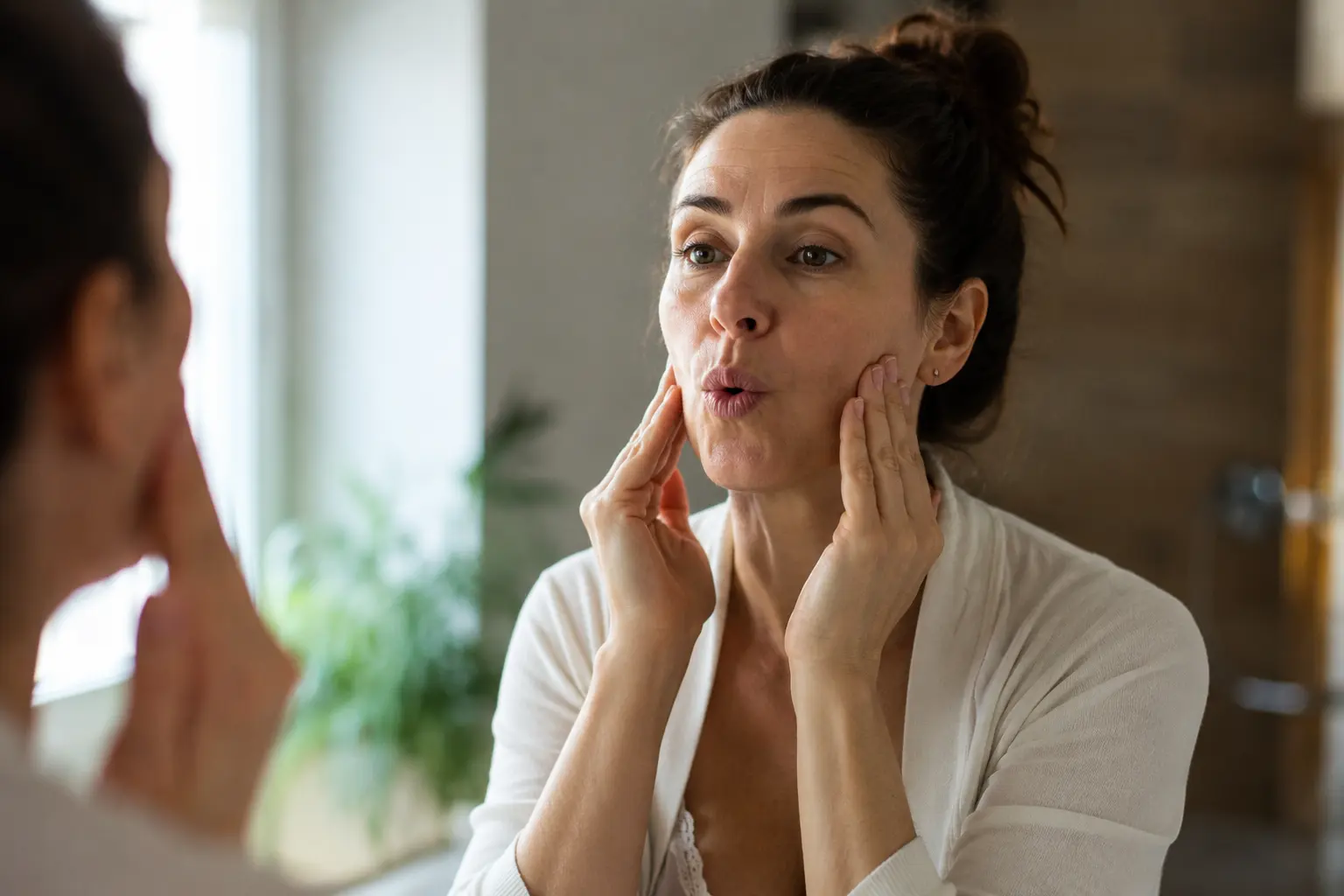
You look in the mirror and notice your skin doesn’t bounce back like it used to, fine lines are creeping in, and that firmness you took for granted is fading fast, but understanding what’s actually happening to your skin health aging process can help you take control.
Collagen: the foundation of skin health
Collagen is essentially the scaffolding that holds your skin together. Think of it as thousands of tiny support beams woven throughout your dermis, the layer beneath your skin’s surface. These protein fibers work together to keep your skin plump, elastic, and resilient. When you’re younger, your body produces collagen efficiently, which is why teenage skin bounces back so easily after a pinch or why young skin looks so luminous and firm. But as you move through your 20s and beyond, your body gradually slows down collagen production. The fibers that do exist start to become less organized and more fragmented. This is why you might notice that your skin feels different to touch, loses that springy quality, and begins to show fine lines and wrinkles. The loss of collagen also affects skin thickness, making it appear thinner and more translucent over time, particularly around delicate areas like the eyes and neck.
Causes of collagen loss
Collagen breakdown happens for multiple reasons, and many of them are within your control. Sun exposure is one of the biggest culprits. When UV rays penetrate your skin, they damage collagen fibers directly and trigger the release of enzymes that break down existing collagen even further. Smoking accelerates this process dramatically because it reduces blood flow to your skin and increases oxidative stress. Your diet matters too. If you’re not getting enough vitamin C, amino acids, and antioxidants, your body simply doesn’t have the raw materials it needs to build new collagen. Environmental stressors like pollution, stress hormones, and poor sleep all contribute to collagen depletion. Even your genetics play a role. Some women naturally produce less collagen or experience faster decline based on their family history. The combination of these factors means that two women of the same age can have very different rates of collagen loss depending on their lifestyle choices and genetic predisposition.
Understanding the science behind collagen decline
At the cellular level, several things happen as you age. First, the collagen fibers in your skin become increasingly disorganized and fragmented, which reduces the structural strength of your skin and makes it more prone to sagging and wrinkling. Second, your fibroblasts, which are the specialized cells responsible for actually manufacturing collagen, become less active over time. They don’t receive the same signals to produce new collagen, and they work more slowly when they do. Third, enzymes called matrix metalloproteinases, or MMPs, become more active with age and sun exposure. These enzymes are designed to break down old collagen so new collagen can replace it, but as you age, the balance shifts. You’re breaking down collagen faster than you’re replacing it, creating a net loss. Additionally, the collagen that does get produced may be of lower quality, with weaker cross-links between fibers. This combination of reduced production, increased breakdown, and lower quality creates the visible signs of aging you see in the mirror.
- Maintain a healthy lifestyle with balanced nutrition to support collagen production by including foods rich in vitamin C, amino acids, and antioxidants.
- Protect your skin from UV rays and environmental pollutants to prevent collagen damage by using sunscreen daily and avoiding excessive sun exposure.
- Consider skincare products containing collagen-boosting ingredients like retinol or peptides to support your skin’s natural repair processes.
🔬 Science-backed benefits in 2 minuteschoose where to begin:
Impact of hormonal changes
Hormones play a surprisingly powerful role in collagen production, and this is where women’s aging journey becomes distinctly different from men’s. Estrogen, the primary female hormone, directly stimulates fibroblasts to produce collagen and also helps maintain skin hydration and thickness. During your reproductive years, estrogen levels remain relatively stable, which is why many women report their skin looking its best in their 20s and 30s. But as you approach menopause, estrogen levels begin to decline significantly. This hormonal shift has a cascading effect on your skin. Fibroblasts become less responsive to signals to produce collagen, and the collagen that is produced may be structurally weaker. Studies show that women can lose up to 30 percent of their skin collagen in the first five years after menopause. This is why many women notice a sudden acceleration in fine lines, loss of firmness, and changes in skin texture during this life stage. Understanding this hormonal connection helps explain why your skin might feel like it’s aging faster than it did in your 40s, and it’s completely normal.
Mitigating collagen loss
While you can’t stop collagen loss entirely, you can absolutely slow it down and support your skin’s natural repair processes. Incorporating collagen-boosting foods into your diet is a practical starting point. Bone broth contains bioavailable collagen and amino acids your body can use directly. Fatty fish like salmon provide omega-3 fatty acids that support skin barrier function. Citrus fruits, berries, and leafy greens supply vitamin C, which is essential for collagen synthesis. Maintaining a consistent skincare routine with products that promote collagen synthesis, such as retinoids or peptide serums, can help stimulate fibroblast activity. Sun protection is non-negotiable. Daily sunscreen use, protective clothing, and avoiding peak sun hours are foundational habits. Getting adequate sleep allows your body to repair and regenerate skin cells more effectively. Managing stress through exercise, meditation, or other relaxation techniques helps reduce cortisol, which can accelerate collagen breakdown. Staying hydrated supports overall skin function and helps maintain skin plumpness.
Future directions in collagen research
The field of collagen research is rapidly evolving, offering promising possibilities for the future. Scientists are investigating oral collagen supplements and peptides to determine whether they can be absorbed and utilized by the body to support skin health. Advanced skincare technologies like microneedling and radiofrequency treatments are being refined to stimulate collagen production more effectively. Researchers are also exploring the role of specific amino acids and cofactors that might enhance the body’s natural collagen synthesis. Some studies are examining how certain plant compounds and peptides can inhibit the activity of collagen-breaking enzymes. Gene therapy and regenerative medicine approaches are being investigated in laboratory settings, though these are still years away from widespread clinical use. Understanding the intricate mechanisms of collagen metabolism at the molecular level may eventually lead to targeted interventions that can slow collagen loss or even stimulate new collagen formation in aging skin. While some of these approaches are still experimental, the trajectory of research suggests that women will have increasingly sophisticated options for supporting skin health aging in the coming years.
Collagen loss is a natural biological process linked to aging that impacts skin elasticity, firmness, and overall appearance. Multiple factors including UV exposure, lifestyle choices, hormonal fluctuations, and genetics can accelerate collagen breakdown. By adopting a holistic approach that includes healthy nutrition, sun protection, targeted skincare, stress management, and adequate sleep, women can support collagen production and maintain skin health throughout their lives.
Can collagen supplements reverse the effects of collagen loss?
While collagen supplements may improve skin hydration and elasticity, their ability to fully reverse collagen loss is still under research. It’s essential to combine supplements with a balanced diet and skincare regimen for optimal results.
At what age does collagen loss typically begin in women?
Collagen production starts to decline in the late 20s and early 30s, with a more noticeable decrease after menopause due to hormonal changes. However, individual variations in genetics and lifestyle can influence the onset and severity of collagen loss.
Others also read:
Disclaimer: This article is for informational purposes only and is not a substitute for professional medical advice. Always consult a healthcare professional for personal guidance.
This article has been prepared and reviewed by the GlobalHealthBeacon editorial team and is based on current medical research and published scientific literature available in 2026. It provides structured, evidence-based information to support informed health decisions.
