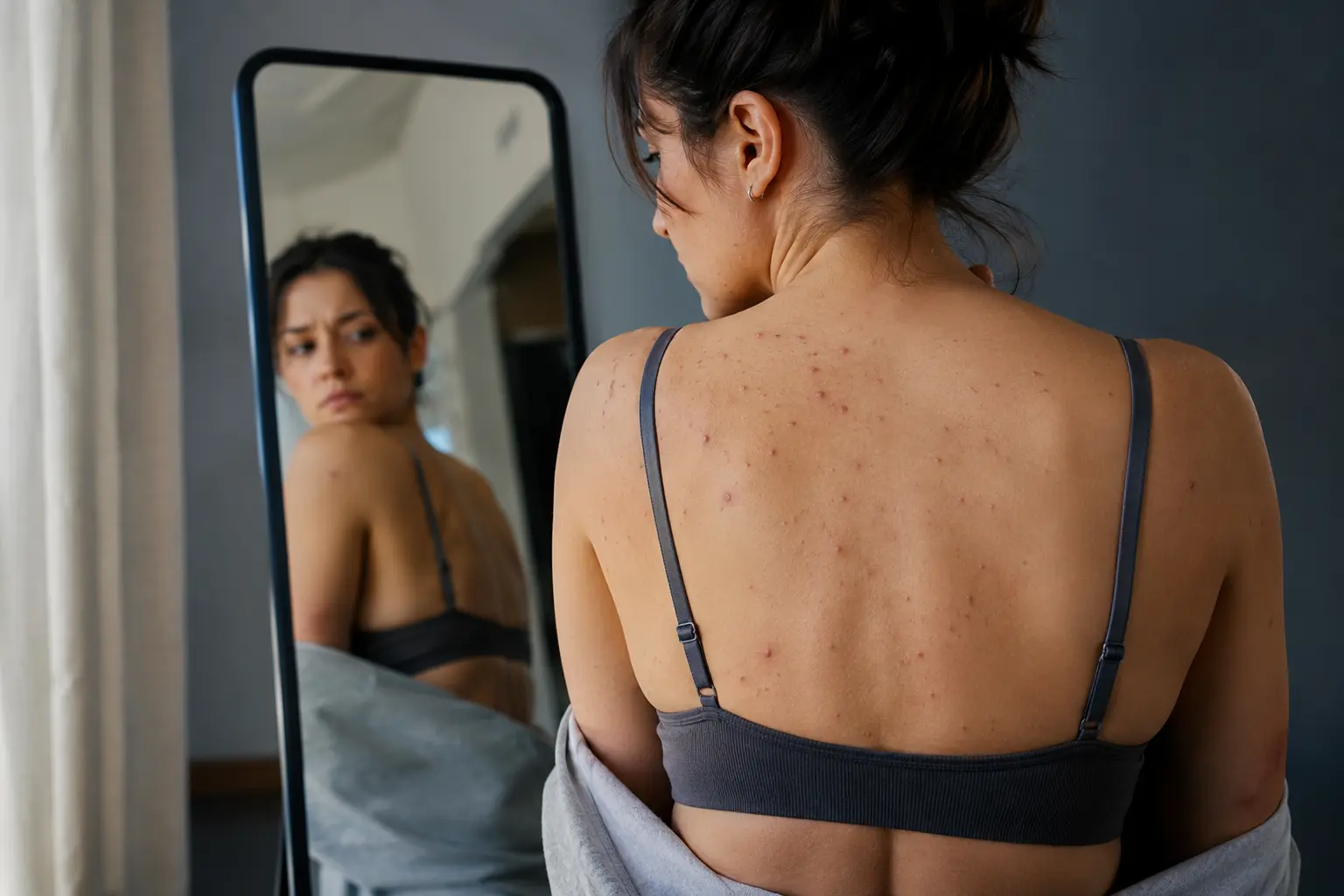
You wake up, pull your shirt off, and there it is again: angry red bumps spreading across your chest, shoulders, or back, making you want to cancel plans and hide under layers, because body acne causes are way more complicated than anyone tells you.
Hormonal imbalance and body acne
Picture this: you’re in your early twenties, and suddenly your back looks like a minefield. Hormones are the silent saboteur here, especially during your menstrual cycle or if you’re dealing with conditions like PCOS. When hormone levels spike, your skin responds by cranking up sebum production like a factory in overdrive. That excess oil doesn’t just sit there looking greasy; it clogs your pores and creates the perfect breeding ground for acne-causing bacteria. Think of it like leaving a dirty dish in the sink for too long. The longer it sits, the more bacteria thrive. Young adults often don’t realize that what feels like a skincare failure is actually their body’s hormonal chemistry working against them. Understanding this connection empowers you to recognize patterns and potentially time your skincare adjustments accordingly.
- Increased sebum production
- Clogged pores
- Bacterial growth
Skincare products and acne
You’ve probably bought that expensive moisturizer promising glowing skin, only to wake up with more breakouts than before. Here’s the frustrating truth: many products marketed as skin saviors are actually comedogenic, meaning they clog pores. Heavy oils, silicones, and certain emollients feel luxurious going on, but they sit on your skin like a plastic wrap, trapping bacteria and sweat underneath. A friend might swear by a product while it destroys your skin because everyone’s microbiome is different. Common culprits include coconut oil, certain sunscreens, and thick body butters. The mistake most young adults make is assuming more expensive equals better, or that if it works for influencers, it’ll work for them. Start reading ingredient lists like you’re solving a puzzle. Look for non-comedogenic labels and patch test new products on a small area first.
💬 Ready to feel better in 2 minutes?choose where to begin:
Dietary influences on acne
You’re grabbing pizza for lunch, downing a sugary energy drink, and wondering why your back is breaking out again. Your diet isn’t just fueling your body; it’s literally communicating with your skin cells. High-glycemic foods like white bread, refined sugars, and processed snacks spike your blood sugar rapidly, triggering an insulin surge that amplifies inflammation throughout your body, including your skin. Dairy is another common culprit that many young adults overlook; the hormones naturally present in milk can mimic your body’s own hormonal signals and aggravate acne. It doesn’t mean you need to go vegan overnight, but being mindful matters. Try swapping one sugary snack for a protein-rich alternative or replacing regular milk with an unsweetened alternative for a week and notice the difference. Small dietary tweaks compound over time, and your skin will thank you.
Stress and acne
Midterms hit, your relationship feels rocky, and suddenly your shoulders are covered in angry bumps. This isn’t coincidence. Stress triggers your body to release cortisol, a hormone that signals your skin to produce more oil and ramps up inflammation. It’s like your body is fighting a battle on the inside, and your skin bears the visible scars. Young adults juggling work, school, relationships, and social pressures are basically living in a constant state of low-grade stress without realizing it. The cycle becomes vicious: acne stresses you out, stress causes more acne. Breaking this requires intentional stress management. Yoga, meditation, even a 10-minute walk can lower cortisol levels. Some people find journaling helpful, others prefer intense workouts. The key is finding what genuinely calms your nervous system, not what you think should work.
Your body acne isn’t a personal failure or a reflection of your hygiene. It’s your skin responding to hormonal shifts, product ingredients, dietary choices, and stress levels. By identifying which factors resonate most with your situation, you’re not just treating symptoms; you’re taking real control. Start with one area, notice what shifts, then layer in additional changes. Clearer skin and genuine confidence follow when you understand what’s actually happening beneath the surface.
Can body acne be a sign of a more serious health condition?
In some cases, persistent body acne may be indicative of an underlying health issue, such as PCOS or hormonal disorders. It’s advisable to consult a healthcare provider for a thorough evaluation.
Are there lifestyle changes that can help prevent body acne?
Maintaining a balanced diet, practicing good skincare habits, managing stress levels, and avoiding trigger foods can contribute to clearer skin and potentially reduce the frequency of body acne breakouts.
Others also read:
Disclaimer: This article is for informational purposes only and is not a substitute for professional medical advice. Always consult a healthcare professional for personal guidance.
This article presents an experience-based perspective and has been reviewed by the GlobalHealthBeacon editorial team in 2026. It provides structured, evidence-based information to support informed health decisions.
