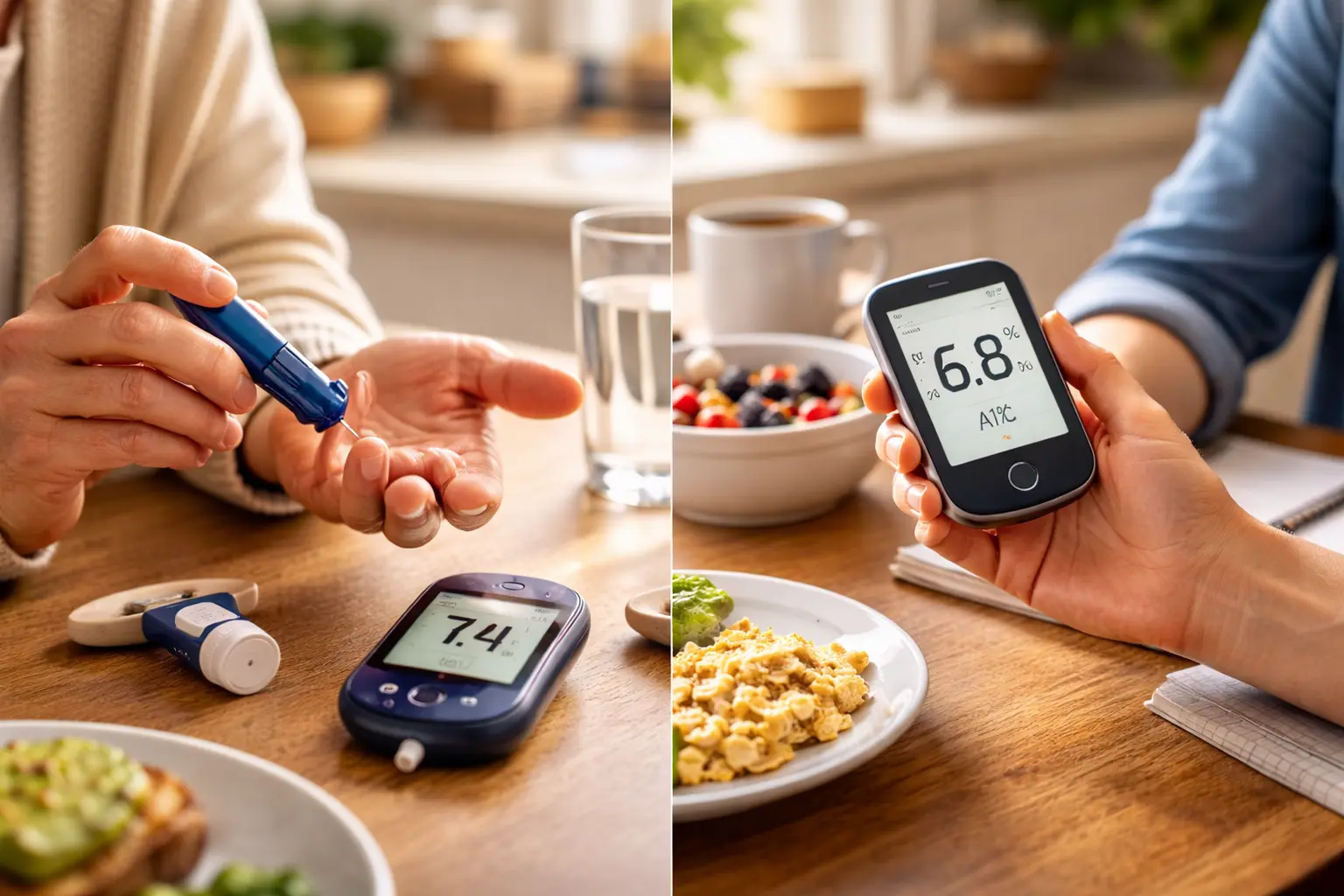
You’re staring at lab results that make zero sense, wondering why your doctor ordered two different blood sugar tests when one should do the job, and now you’re stuck trying to decode what a1c versus fasting glucose actually means for your body.
Understanding A1C
A1C, also known as hemoglobin A1C, functions like a three-month memory card for your blood sugar. This test measures the percentage of hemoglobin that has bonded with glucose molecules, creating a reliable snapshot of your average blood sugar levels over the past 2 to 3 months. Think of it this way: when glucose circulates in your bloodstream, it attaches to hemoglobin proteins in your red blood cells. Since red blood cells live roughly 120 days, the A1C test captures how much glucose has stuck around during that entire lifespan. This is why doctors love A1C for assessing long-term glucose control. If you had a stressful week and binged on sugary foods, your A1C won’t spike dramatically because it reflects months of patterns, not days. For young adults, understanding A1C helps you see whether your everyday habits are adding up to healthy or concerning trends over time.
Interpreting fasting glucose
Fasting glucose measures your blood sugar level after you’ve gone without food for at least 8 hours, typically in the morning before breakfast. This test captures a single moment in time, showing how your body manages glucose when it’s in a rested state and hasn’t received new fuel recently. Your liver naturally releases stored glucose to keep your brain and organs functioning while you sleep, so fasting glucose reveals how efficiently your body handles this process. Imagine your fasting glucose as a snapshot taken at dawn, while A1C is a time-lapse video spanning months. A young adult might have a normal fasting glucose reading of 70 to 100 mg/dL, indicating their body is managing baseline glucose production well. However, fasting glucose can shift based on what happened the night before, your sleep quality, or stress levels. This is why doctors often order fasting glucose tests in the morning and recommend consistent timing for accurate comparisons across multiple tests.
The differences in monitoring
A1C and fasting glucose serve different diagnostic purposes, and understanding when each matters is crucial for young adults navigating their health. A1C reveals your average blood sugar over months, making it ideal for tracking whether your lifestyle changes are actually working over the long haul. If you’ve been exercising more and eating better for two months, A1C will show whether those efforts have genuinely lowered your baseline glucose control. Fasting glucose, by contrast, provides immediate feedback on your current metabolic state. It’s useful for catching early warning signs of blood sugar dysregulation or monitoring how quickly your body responds to dietary or lifestyle interventions. Some young adults check fasting glucose weekly or monthly to see rapid changes, while A1C is typically checked every three months. Together, these tests create a complete picture: fasting glucose tells you how you’re doing right now, while A1C tells you whether your now is building toward a healthier future. Using both tests gives you granular insight into your metabolic patterns.
- Understand the purpose of each test and when your doctor orders them
- Consult with your healthcare provider for personalized guidance on testing frequency
- Recognize the importance of regular monitoring for optimal health and early detection
🔬 Science-backed benefits in 2 minuteschoose where to begin:
Clinical significance
A1C has become the gold standard for diagnosing prediabetes and diabetes because it reflects true long-term glucose control and correlates strongly with the risk of complications like neuropathy, retinopathy, and cardiovascular disease. When your A1C stays elevated over months, it signals that your blood vessels and organs are being exposed to persistently high glucose, which damages them gradually. Fasting glucose levels are pivotal in initial screening and early detection of blood sugar problems. A young adult with a fasting glucose of 110 mg/dL or higher might be flagged for prediabetes, prompting earlier intervention before A1C rises dangerously. Doctors use fasting glucose to identify people at risk before they develop full metabolic dysfunction. Together, these tests help clinicians assess your diabetes risk, monitor disease progression, and evaluate whether treatments or lifestyle changes are working. For young adults, catching abnormal fasting glucose early means you have years to reverse the trend before A1C becomes elevated, potentially preventing diabetes entirely.
Health implications
A1C levels are influenced by your overall glucose control across months, reflecting the cumulative effect of diet, exercise, stress management, sleep quality, and metabolic health. If you’re consistently eating processed foods and skipping workouts, your A1C will climb steadily. Fasting glucose, however, is more sensitive to acute factors like what you ate the night before, how well you slept, whether you’re fighting an infection, or your current stress levels. A young adult might have a slightly elevated fasting glucose on a day they stayed up late or were anxious about an exam, but this doesn’t necessarily mean their A1C is rising. Understanding these nuances empowers you to interpret your results accurately and avoid unnecessary panic. For example, if your fasting glucose is high but your A1C is normal, it might indicate a temporary stressor rather than chronic dysregulation. Conversely, if both are elevated, it signals a genuine pattern requiring lifestyle intervention. This knowledge helps you make informed decisions about diet, exercise, and stress management rather than reacting emotionally to single test results.
Future monitoring
Whether you’re tracking A1C trends quarterly or monitoring fasting glucose fluctuations monthly, staying informed about your blood sugar levels positions you to make proactive health choices before problems develop. Young adults have a unique advantage: your body is still responsive to lifestyle changes, and early intervention can prevent or delay metabolic disease entirely. Consider keeping a simple log of your test results over time, noting any patterns alongside your habits. Did your fasting glucose improve after you started exercising regularly? Did your A1C drop after you reduced sugary drinks? These connections help you understand which changes actually work for your body. Many young adults find that understanding their blood sugar trends motivates them to prioritize sleep, manage stress, and make intentional food choices. Working with your healthcare provider to establish a monitoring schedule that makes sense for your risk profile ensures you’re catching problems early while maintaining the freedom to enjoy your life. The goal isn’t perfection; it’s awareness and gradual improvement over time.
A1C offers insight into long-term blood sugar trends spanning months, while fasting glucose provides immediate readings reflecting your current metabolic state. Understanding the distinctions between the two tests enhances your awareness of your health status and helps you interpret results accurately without unnecessary worry.
Is a high A1C synonymous with diabetes?
While a high A1C level is a strong indicator of diabetes or prediabetes, it is recommended to consult a healthcare professional for a comprehensive evaluation of your metabolic health. A single elevated A1C should typically be confirmed with a repeat test before a diabetes diagnosis is made, as other factors like hemoglobin variants can occasionally affect results.
Can fasting glucose levels fluctuate throughout the day?
Yes, fasting glucose levels can vary based on factors like diet, physical activity, stress, sleep quality, and illness. This is why fasting glucose tests are standardized to morning measurements after 8 hours without food. It is essential to monitor trends over time and maintain consistent testing conditions for a comprehensive understanding of your blood sugar control.
Others also read:
Disclaimer: This article is for informational purposes only and is not a substitute for professional medical advice. Always consult a healthcare professional for personal guidance.
This article has been prepared and reviewed by the GlobalHealthBeacon editorial team and is based on current medical research and published scientific literature available in 2026. It provides structured, evidence-based information to support informed health decisions.
