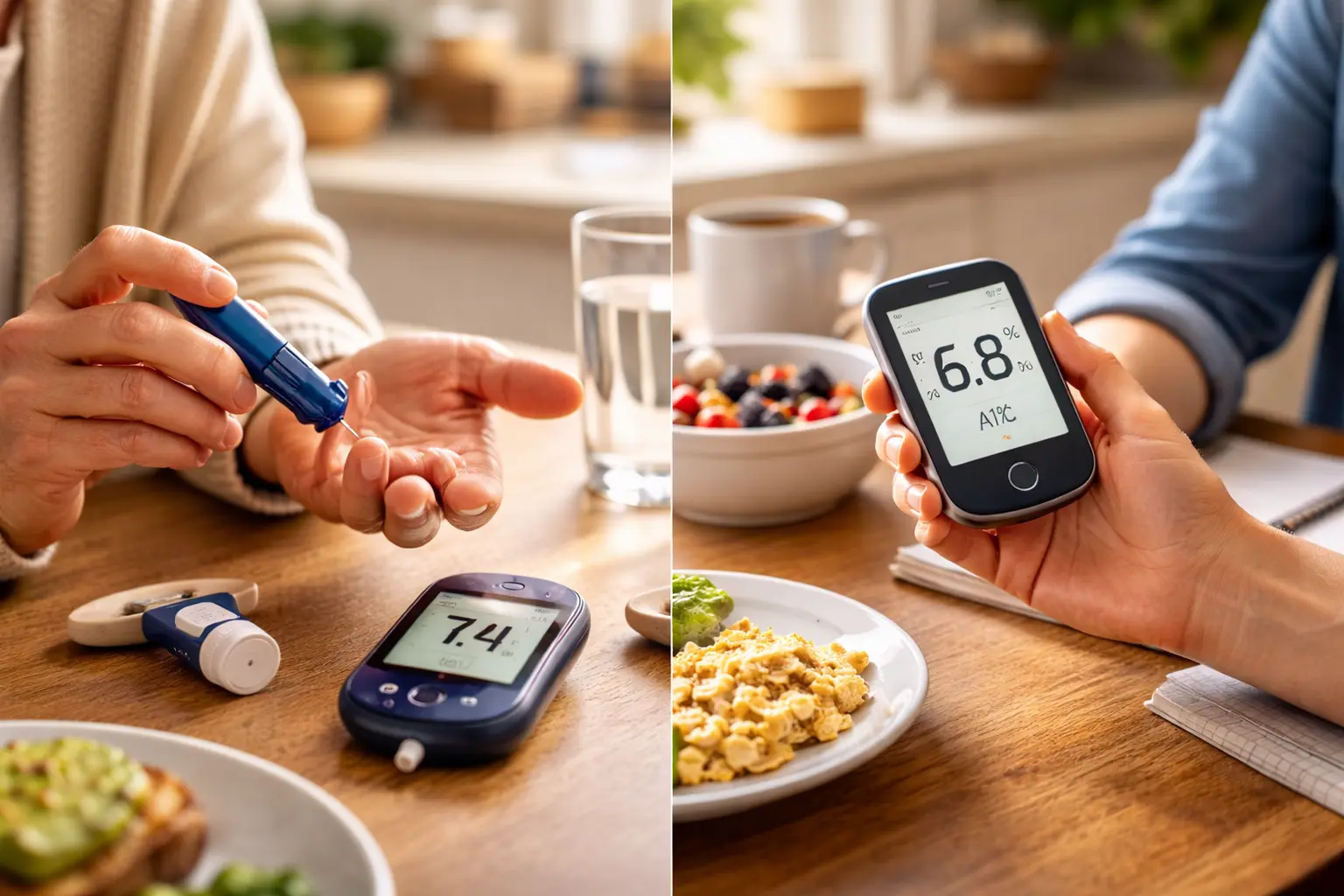
Confused about which blood sugar test actually matters for your health, wondering if you’re getting the right one, and tired of vague answers from your doctor about what these numbers really mean – understanding a1c versus fasting glucose tests could be the clarity you need to finally take control of your blood sugar.
Understanding A1C tests
A1C tests measure your average blood sugar levels over the past two to three months, giving you a big-picture view of how well you’ve been managing your glucose. Think of it like a report card for your blood sugar habits. If you’ve been eating well and staying active, your A1C will reflect that consistency. The beauty of this test is that you don’t need to fast beforehand, so you can take it anytime without disrupting your morning routine. Results come back as a percentage, and your doctor will explain what your specific number means for your health. For someone like Margaret, a 68-year-old managing type 2 diabetes, her A1C of 6.8 percent told her that her three-month average was slightly above the target range, prompting her to adjust her evening snacks and increase her walking routine.
- Provides a comprehensive overview of your blood sugar control over time
- Doesn’t require fasting before the test
- Usually performed in a lab setting rather than at home
Deciphering fasting glucose tests
Fasting glucose tests capture a snapshot of your blood sugar at a single moment in time, specifically after you’ve gone without food for at least eight hours overnight. This test is straightforward and quick, making it a common screening tool during routine doctor visits. Your fasting glucose number tells you how well your body manages blood sugar when it’s in a resting state, without the influence of recent meals. High readings might suggest prediabetes or diabetes and often lead to further testing. Consider James, a 72-year-old who discovered his fasting glucose was 128 mg/dL during a routine physical. That single number prompted his doctor to order an A1C test and recommend lifestyle changes, ultimately helping him catch metabolic issues early before they progressed.
📘 Fix your day in under 2 minuteschoose where to begin:
Comparison and contrast
A1C tests and fasting glucose tests serve different but complementary purposes in managing your health. A1C reflects your long-term trends, showing patterns across weeks and months, while fasting glucose gives you today’s snapshot. Imagine A1C as a weather forecast for the season and fasting glucose as today’s temperature reading. A1C is better for tracking how well your current routine is working, while fasting glucose helps catch sudden spikes or drops. Your healthcare provider might use both tests together to get the full story. If your A1C is stable but your fasting glucose is creeping up, that signals a specific pattern worth addressing. Neither test is superior, but using them together creates a more complete picture of your metabolic health and helps your doctor make better recommendations tailored to your situation.
Pros and cons consideration
A1C tests excel at showing long-term patterns and are unaffected by what you ate yesterday or how stressed you were last week. However, they can’t catch recent changes in your blood sugar habits, and certain conditions like anemia can affect accuracy. Fasting glucose tests are quick, inexpensive, and give immediate feedback about your current state, but they only show one moment in time and can miss the bigger picture of your daily habits. A person might have a normal fasting glucose but a high A1C, indicating their blood sugar spikes after meals throughout the day. Conversely, someone with a slightly elevated fasting glucose might have excellent A1C control if they manage their diet well the rest of the day. The smartest approach combines both tests, using fasting glucose for quick checkups and A1C for tracking progress over months, giving you and your doctor a complete understanding of your blood sugar behavior.
Making informed decisions
Choosing between these tests or using both depends on your personal health goals, your current health status, and what your doctor recommends based on your medical history. If you’re newly diagnosed or concerned about diabetes risk, your doctor might start with both tests to establish a baseline. If you’re already managing diabetes, regular A1C testing every three months combined with occasional fasting glucose checks creates a solid monitoring routine. Don’t hesitate to ask your healthcare provider why they’re recommending a specific test and what the results mean for your next steps. Some seniors benefit from home glucose monitors that track fasting levels daily, while others do better with scheduled lab A1C tests. Your age, medications, and other health conditions all factor into the best testing strategy. Work with your healthcare team to create a personalized plan that fits your lifestyle and gives you the information you need to stay healthy.
A1C tests offer a long-term perspective on blood sugar control, while fasting glucose tests provide immediate feedback. Understanding the differences, advantages, and limitations of each test can empower seniors to make informed decisions about managing their health.
Are A1C tests more accurate than fasting glucose tests?
A1C tests offer a broader view of blood sugar control over time, providing valuable insights for managing diabetes effectively. Fasting glucose tests, on the other hand, are useful for immediate evaluations and may complement A1C results.
Can I rely on just one of these tests for monitoring my blood sugar?
While both A1C and fasting glucose tests play essential roles in monitoring blood sugar levels, combining the results can offer a more comprehensive understanding. Consult with your healthcare provider to determine the best approach for your individual needs.
Others also read:
Disclaimer: This article is for informational purposes only and is not a substitute for professional medical advice. Always consult a healthcare professional for personal guidance.
This guide has been prepared and reviewed by the GlobalHealthBeacon editorial team and reflects current medical research as of 2026. It provides structured, evidence-based information to support informed health decisions.
