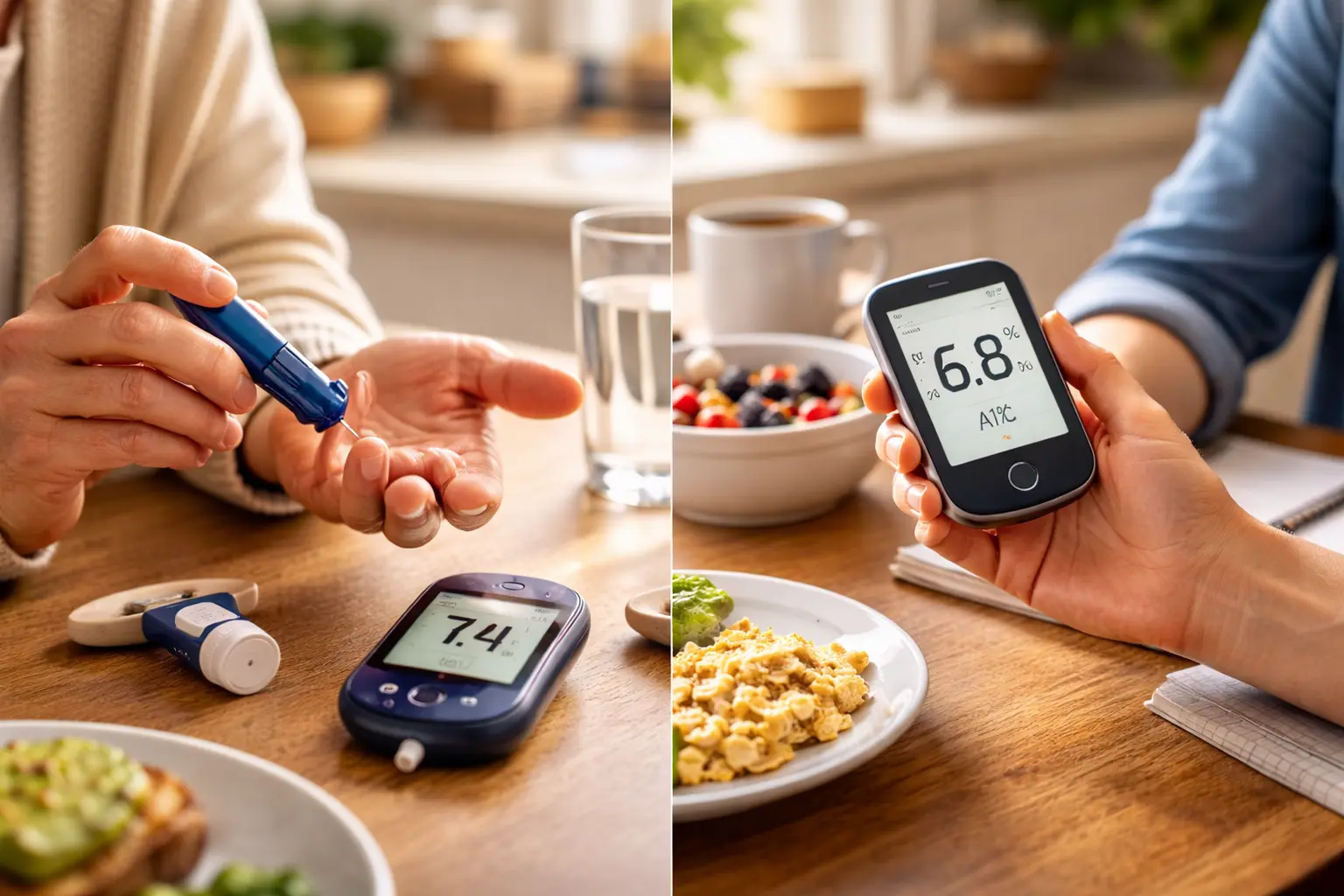
You’re staring at lab results that make no sense, one number says you’re fine and another whispers danger, and nobody’s explaining what a1c versus fasting glucose actually means for your body right now.
Understanding A1C and fasting glucose
Think of your A1C test as a three-month report card for your blood sugar. It measures the percentage of your hemoglobin that’s been coated with sugar over that entire period, giving you the big picture of how well your body has been managing glucose. Your fasting glucose test, by contrast, is a single snapshot taken after you’ve gone eight to twelve hours without eating. It shows what your blood sugar looks like when your body is at rest and hasn’t had fuel recently. Imagine A1C as your average grade across a semester, while fasting glucose is your score on one specific quiz. Both matter because they tell different stories. A1C reveals patterns and trends that show whether your daily habits are working. Fasting glucose catches those moments when your body struggles most, often first thing in the morning when your liver releases stored glucose. For women specifically, hormonal fluctuations can affect both readings, which is why understanding what each test measures helps you recognize what’s actually happening in your body rather than panicking over numbers you don’t understand.
- A1C reflects the percentage of your hemoglobin that’s sugar-coated over time.
- Fasting glucose is a snapshot of your blood sugar level at a specific moment.
- Both tests provide valuable insights into your overall blood sugar control.
Interpreting your results
Your A1C results fall into clear categories that help you understand where you stand. Normal A1C is below 5.7 percent, meaning your blood sugar control is solid and you’re managing glucose well. The prediabetes range sits between 5.7 and 6.4 percent, which is a signal that changes now can prevent diabetes from developing. An A1C of 6.5 percent or higher indicates diabetes, and that’s when medical intervention becomes essential. Fasting glucose readings follow a similar pattern but use different numbers because they’re measuring a single moment rather than an average. Under 100 mg/dL is normal, 100 to 125 mg/dL signals prediabetes, and 126 mg/dL or higher points to diabetes. Here’s where it gets important: you might have a normal fasting glucose but an elevated A1C, which means your blood sugar spikes during the day even though mornings look fine. Or the reverse could be true. A woman might notice her fasting glucose creeps up during her luteal phase due to hormonal changes, even though her A1C remains stable. This is why tracking both matters. Your doctor uses them together to build a complete picture of your metabolic health and decide whether lifestyle changes alone will help or if medication is needed.
📘 Fix your day in under 2 minuteschoose where to begin:
Managing your diet and lifestyle
Food choices directly impact both your A1C and fasting glucose, so this is where you gain real control. Start by building meals around lean proteins, healthy fats, and fiber-rich carbohydrates that digest slowly and don’t spike your blood sugar. A practical example: instead of white toast and jam for breakfast, try eggs with whole grain toast and avocado. That shift alone can flatten your glucose curve throughout the morning. Vegetables should fill half your plate at lunch and dinner because fiber slows sugar absorption. Regular movement matters just as much as food. You don’t need intense workouts; a twenty-minute walk after meals actually lowers blood sugar more effectively than a single long exercise session. Stress management directly affects fasting glucose because cortisol triggers your liver to release glucose, which is why women under chronic stress often see their fasting numbers climb. Sleep quality matters too. Poor sleep disrupts hormones that regulate hunger and glucose metabolism, making it harder for your body to maintain stable blood sugar. A common mistake women make is being too restrictive with food, which creates stress and actually worsens blood sugar control. Instead, aim for sustainable changes you can maintain for months and years, not a rigid diet you’ll abandon in three weeks.
Regular monitoring and doctor consultations
Consistent testing reveals patterns you can’t see from daily life alone. Most healthcare providers recommend A1C testing at least twice yearly if you’re in the normal range, but quarterly or more frequently if you’re in prediabetes or managing diabetes. Fasting glucose can be monitored at home with a meter if your doctor recommends it, giving you real-time feedback on how specific meals or stress levels affect your numbers. Keep a simple log noting your test dates and results, plus any major life changes around those dates. Did you start a new exercise routine? Change jobs? Go through a stressful period? These details help your doctor understand what’s driving your numbers up or down. When you meet with your healthcare provider, come prepared with questions about what your specific numbers mean for your risk and what changes would matter most. Some women benefit from working with a dietitian who specializes in blood sugar management because personalized guidance beats generic advice. Your doctor might also screen for other conditions that affect glucose, like thyroid dysfunction or polycystic ovary syndrome, which are more common in women and can complicate blood sugar control. Regular monitoring isn’t just about catching problems; it’s about celebrating improvements and staying motivated when you see your efforts paying off in better numbers.
Seeking support and resources
Managing blood sugar can feel isolating, especially when you’re trying to make changes alone. Support groups, whether in person or online, connect you with other women navigating the same challenges. Hearing how someone else handles cravings or manages stress eating makes you feel less alone and gives you practical strategies to try. Your healthcare provider can refer you to certified diabetes educators who teach the specific skills that matter most for your situation. Many insurance plans cover these sessions, so ask. Online resources from reputable organizations like the American Diabetes Association offer meal plans, recipes, and educational articles you can access anytime. Some women find apps helpful for tracking meals, exercise, and glucose readings because seeing patterns emerge motivates continued effort. Consider asking a friend or family member to join you in lifestyle changes, even if they don’t have blood sugar concerns. Having someone to walk with, cook healthier meals with, or check in with about stress makes the journey feel less like a solo burden. Remember that managing blood sugar is a marathon, not a sprint. You’ll have days when you eat cake and skip exercise, and that’s okay. What matters is the overall pattern and your willingness to keep trying when you stumble.
Understanding the differences between A1C and fasting glucose tests, interpreting your results accurately, managing your diet and lifestyle effectively, regular monitoring, and seeking support are essential steps in maintaining a healthy blood sugar level.
How often should I get my A1C and fasting glucose levels checked?
It is recommended to get your A1C tested at least twice a year and monitor your fasting glucose levels regularly, as advised by your healthcare provider.
Can diet and exercise alone help manage blood sugar levels?
While diet and exercise play a significant role in managing blood sugar levels, consulting with a healthcare provider to create a comprehensive plan tailored to your needs is crucial for effective management.
Others also read:
Disclaimer: This article is for informational purposes only and is not a substitute for professional medical advice. Always consult a healthcare professional for personal guidance.
This guide has been prepared and reviewed by the GlobalHealthBeacon editorial team and reflects current medical research as of 2026. It provides structured, evidence-based information to support informed health decisions.
