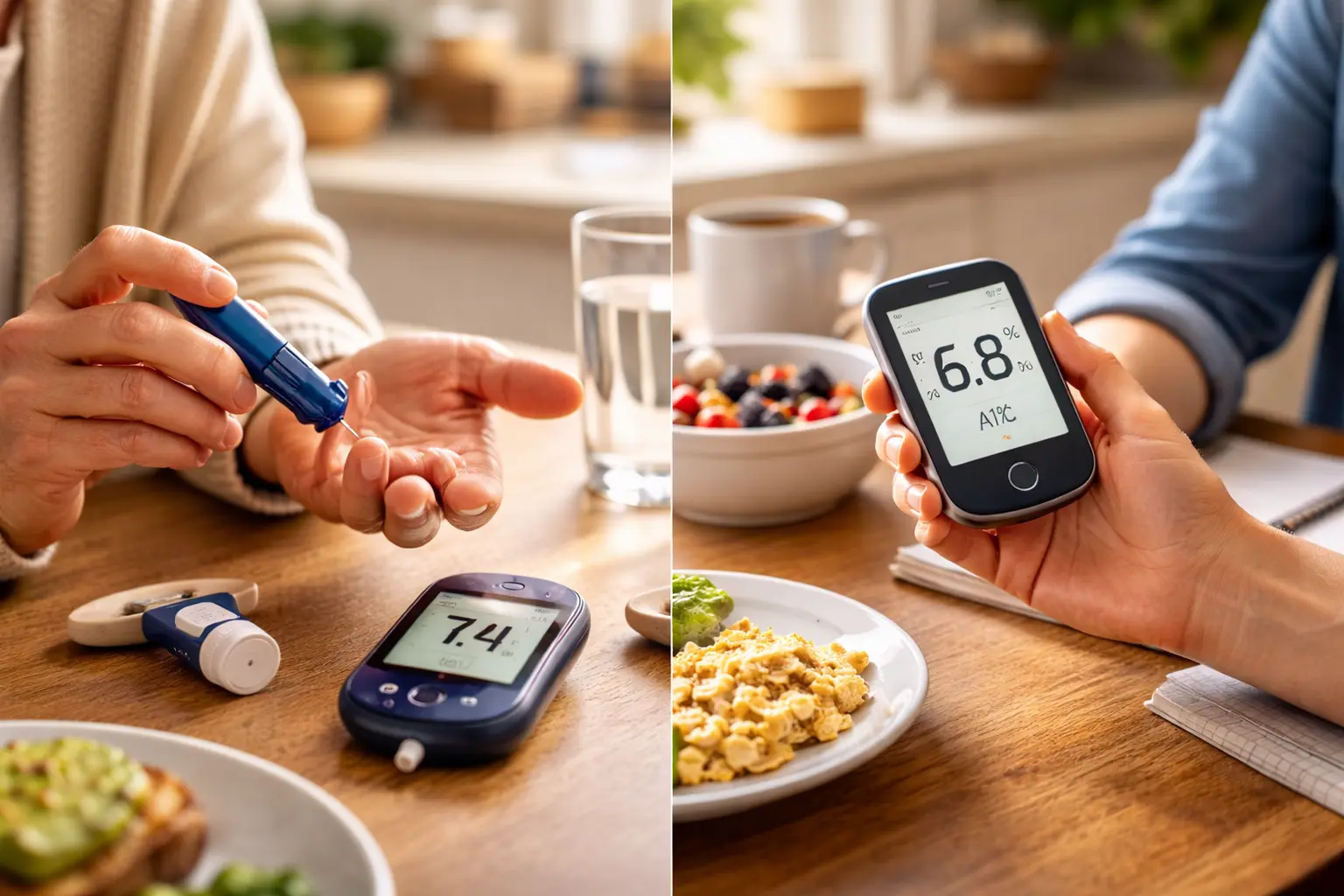
You’re staring at lab results that make no sense, one number says you’re fine and another whispers danger, and nobody’s explaining why your a1c versus fasting glucose readings tell completely different stories about your body.
Understanding A1C and fasting glucose
A1C, also known as hemoglobin A1C, provides an average of your blood sugar levels over the past 2 to 3 months, showcasing long-term glucose control like a weather pattern rather than a single day’s forecast. Think of it as your glucose report card for the entire semester. Fasting glucose, on the other hand, measures blood sugar after an overnight fast, offering a snapshot of your current glucose levels at one precise moment. Imagine waking up after 8 to 10 hours without food and checking your blood sugar right then. For women, understanding this distinction matters because hormonal fluctuations throughout the menstrual cycle can influence fasting glucose readings, while A1C remains more stable across hormonal shifts. A woman might see her fasting glucose spike during certain phases of her cycle, yet her A1C stays consistent, reflecting her true average control. This is why doctors often use both tests together rather than relying on just one.
Mechanisms behind A1C and fasting glucose
A1C reflects the percentage of hemoglobin that has glucose attached to it, a process called glycation. When glucose circulates in your bloodstream, it bonds to hemoglobin proteins in red blood cells. Since red blood cells live about 120 days, this attachment accumulates over time, creating a historical record of your average blood sugar. Fasting glucose, by contrast, directly measures the sugar in your blood at a specific moment, revealing your immediate glucose status. It’s the difference between looking at a three-month bank statement versus checking your account balance right now. For women, this matters significantly because fasting glucose can fluctuate based on stress, sleep quality, and where you are in your menstrual cycle. A woman might have excellent long-term control reflected in her A1C, yet experience elevated fasting glucose on mornings after poor sleep or high stress. Understanding this mechanism helps explain why your doctor might not panic about one elevated fasting reading if your A1C looks solid.
Comparing A1C and fasting glucose
A1C is a better indicator of long-term glucose control, while fasting glucose is more focused on current blood sugar levels. A1C is used to diagnose diabetes and monitor treatment effectiveness, whereas fasting glucose helps diagnose prediabetes and diabetes by catching acute elevations. A1C may be influenced by factors like red blood cell lifespan and certain medical conditions, while fasting glucose is more sensitive to recent food consumption, stress, and sleep patterns. Consider a woman in her 50s approaching menopause. Her A1C might be 6.2 percent, suggesting prediabetes, but her fasting glucose could range from 95 to 110 mg/dL depending on whether she slept well and managed stress that week. This variability is normal and doesn’t necessarily mean her diagnosis is wrong. Another example: a woman taking certain medications or managing thyroid conditions might see her A1C affected differently than her fasting glucose. The key is recognizing that each test answers a different question about your metabolic health, and together they paint a more complete picture than either one alone.
- Understand the difference in timeframes each test represents and recognize that A1C shows your three-month average while fasting glucose captures a single morning moment.
- Learn how each test is used in the diagnosis and management of diabetes, including how doctors combine both results to make treatment decisions.
- Consider the impact of various factors on the accuracy of A1C and fasting glucose results, such as hormonal cycles, sleep quality, stress levels, and underlying health conditions that might affect one test more than the other.
🔬 Science-backed benefits in 2 minuteschoose where to begin:
Key benefits of A1C and fasting glucose tests
A1C provides a comprehensive view of glucose control over time, aiding in treatment decisions and lifestyle adjustments by showing whether your overall diabetes management strategy is working. If you’ve been trying to eat better and exercise more, your A1C will reflect those efforts over weeks and months, giving you concrete feedback on whether your approach is effective. Fasting glucose offers quick insights into your current blood sugar levels, helping to assess immediate health status and potential risks. For women, this means catching morning blood sugar spikes that might indicate dawn phenomenon, a common occurrence where blood sugar naturally rises in early morning hours. The practical benefit is that fasting glucose can prompt you to adjust your evening routine, perhaps by eating a different dinner or adjusting medication timing. Together, these tests create accountability and motivation. A woman might see her fasting glucose improve within weeks of lifestyle changes, while her A1C takes longer to shift, providing both quick wins and long-term validation of her efforts.
Interpreting A1C and fasting glucose results
A1C results under 5.7 percent are considered normal, values between 5.7 to 6.4 percent suggest prediabetes, and 6.5 percent or higher indicate diabetes. These thresholds apply to all adults, though some organizations recommend slightly different targets for older women or those with specific health conditions. Fasting glucose levels below 100 mg/dL are normal, 100 to 125 mg/dL signal prediabetes, and 126 mg/dL or higher point to diabetes. For a woman receiving these results, context matters enormously. If your A1C is 6.3 percent and your fasting glucose is 115 mg/dL, you’re in prediabetes territory, but this is actionable information, not a death sentence. Many women reverse prediabetes through diet and exercise changes within months. If your A1C is 7.2 percent and fasting glucose is 140 mg/dL, diabetes is present, but modern treatment options are extensive. Understanding that these numbers represent risk levels rather than fixed destinies helps women approach their results with both seriousness and hope, motivating change rather than triggering despair.
Conclusion on A1C vs fasting glucose
In summary, A1C and fasting glucose tests complement each other by providing different perspectives on blood sugar control. A1C shows your three-month average, reflecting your overall glucose management strategy, while fasting glucose reveals your morning baseline and how your body handles overnight fasting. For women specifically, understanding these tests means recognizing that hormonal fluctuations, stress, sleep, and menstrual cycle phases can influence results differently. This knowledge transforms lab work from confusing numbers into a meaningful conversation with your healthcare provider. Rather than viewing one test as more important, savvy women learn to read both together, asking questions like: Is my A1C trending up or down? Why might my fasting glucose be elevated this month when my A1C is stable? What lifestyle factors can I adjust to improve both? This informed approach empowers you to actively manage your glucose levels and make decisions about your health based on understanding rather than fear.
A1C offers an overview of long-term blood sugar control over three months, while fasting glucose indicates current glucose levels at a single moment. Both tests have unique roles in diagnosing and managing prediabetes and diabetes, and together they provide a complete picture of your metabolic health.
Which test is more accurate: A1C or fasting glucose?
Both tests offer valuable information about blood sugar levels but from different time perspectives. A1C provides insight into long-term glucose control and is less affected by daily fluctuations, while fasting glucose focuses on immediate levels and can vary based on sleep, stress, and what you ate the previous day. Neither is inherently more accurate; they answer different questions about your health.
Can A1C and fasting glucose results vary based on diet and exercise?
Yes, diet and exercise can impact both A1C and fasting glucose results, though differently. Fasting glucose responds quickly to dietary changes and exercise, sometimes improving within days or weeks. A1C changes more slowly, reflecting cumulative effects over two to three months. Eating a high-carb meal before the fasting glucose test can temporarily raise blood sugar levels, affecting the accuracy of that test, which is why fasting is required.
Others also read:
Disclaimer: This article is for informational purposes only and is not a substitute for professional medical advice. Always consult a healthcare professional for personal guidance.
This article has been prepared and reviewed by the GlobalHealthBeacon editorial team and is based on current medical research and published scientific literature available in 2026. It provides structured, evidence-based information to support informed health decisions.
