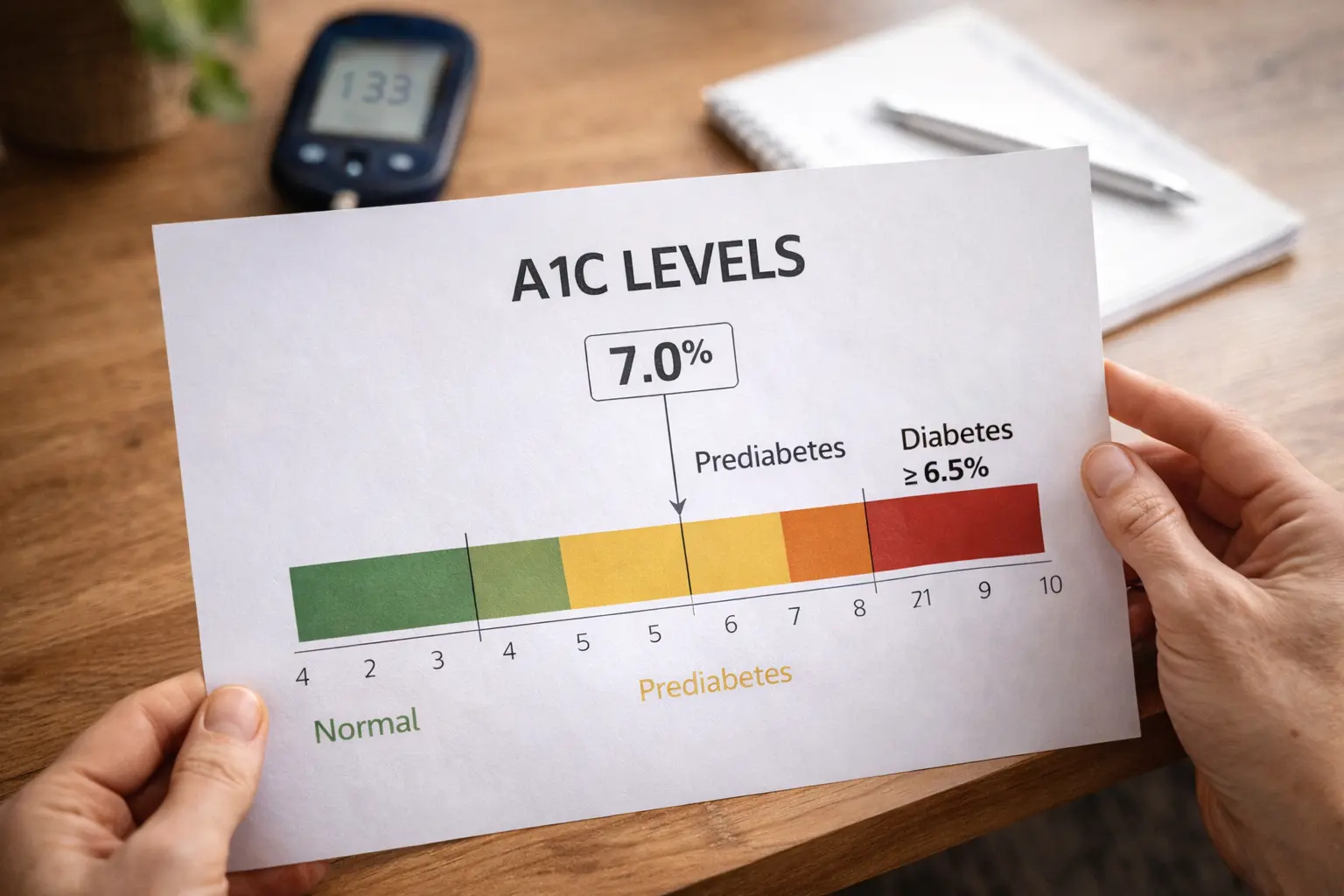
Your A1C levels chart feels like a foreign language, and those numbers keep confusing you every time you get your results back from the lab.
How to interpret your A1C levels chart
Reading your A1C levels chart starts with understanding what that single number actually represents. Your A1C shows your average blood sugar over the past 2 to 3 months, giving you a clearer picture than daily finger-stick readings alone. When you receive your chart, look for the main A1C percentage first. Most charts display this prominently at the top. Below that, you’ll typically see your target range, which your doctor has set based on your age, health conditions, and lifestyle. For example, if your target is below 7% and your result shows 6.8%, you’re within range. But if it jumps to 8.2%, that signals your blood sugar has been running higher than ideal. The key is tracking patterns over time. One high reading doesn’t define your control, but three consecutive results above target suggests your current approach needs adjustment. Many women find it helpful to write down their A1C results in a notebook alongside notes about what was happening in their life at that time: stress levels, diet changes, exercise habits, or medication adjustments. This creates a personal narrative that helps you and your healthcare team spot what actually influences your numbers.
- Identify the target range for A1C levels set by your healthcare provider.
- Track trends in your A1C levels over time to assess the effectiveness of your treatment plan.
- Consult with your healthcare team to interpret any fluctuations or abnormal readings on your A1C levels chart.
Tips for maintaining healthy A1C levels
Keeping your A1C stable requires consistent daily habits rather than occasional big efforts. Start by building a realistic eating pattern that you can sustain. This doesn’t mean strict dieting; it means choosing whole grains over refined carbs most of the time, adding protein to each meal to slow sugar absorption, and keeping portions reasonable without obsessing over them. Physical activity matters more than intensity for many women. A 20-minute walk after dinner, gardening, or dancing to music while cooking all count. The goal is moving regularly, not training for marathons. Medication adherence is equally important. If your doctor prescribed metformin or another diabetes medication, taking it exactly as directed makes a measurable difference in your A1C. Set phone reminders if you tend to forget. Stress management often gets overlooked but directly impacts blood sugar. When you’re stressed, your body releases hormones that raise glucose levels. Try deep breathing, yoga, journaling, or whatever calms you personally. Monitor your blood sugar at home if recommended, but don’t let the numbers become obsessive. Some women check once daily, others weekly. Work with your doctor to find a frequency that gives you useful information without creating anxiety.
📘 Fix your day in under 2 minuteschoose where to begin:
Understanding A1C levels chart for women
Women face unique challenges with A1C management that men typically don’t experience. Hormonal fluctuations throughout your menstrual cycle can cause blood sugar to swing, sometimes significantly. Many women notice their A1C readings are higher in the week before their period, when progesterone rises and insulin sensitivity drops. This is completely normal and not a failure on your part. If you’re approaching menopause, hormonal shifts become even more dramatic. Some women find their A1C worsens during perimenopause despite unchanged habits, while others see improvement after menopause. Pregnancy changes everything about glucose management, requiring close monitoring and often different medication. Hormonal birth control can also affect blood sugar, so if you switch methods, watch your A1C carefully over the next few months. The practical takeaway: track your results alongside your cycle or life stage. If you notice patterns, share them with your doctor. A gynecologist and endocrinologist working together can optimize your care in ways that account for your full hormonal picture. You’re not imagining these fluctuations. They’re real, they’re documented in research, and they deserve attention in your treatment plan.
Effective strategies for lowering A1C levels
If your A1C is higher than target, you have multiple levers to pull. Dietary changes often make the biggest difference. Swap white bread and pasta for whole grain versions, add beans and lentils to meals for fiber and protein, and eat vegetables with every lunch and dinner. A practical example: instead of a sandwich on white bread with chips, try a whole grain wrap with turkey, lettuce, and hummus, plus carrot sticks. The second meal has more fiber, more protein, and lower glycemic impact. Exercise becomes more powerful when combined with diet changes. Aim for at least 150 minutes of moderate activity weekly, spread across most days. This could be brisk walking, cycling, swimming, or fitness classes. Resistance training twice weekly also helps because muscle tissue uses glucose more efficiently than fat. Stress reduction directly lowers A1C. Women who practice meditation, tai chi, or regular therapy often see improvements within weeks. Sleep quality matters too; poor sleep raises A1C, so prioritize 7 to 9 hours nightly. If you’re taking medication, discuss whether adjusting your dose or adding another medication could help. Sometimes lifestyle changes alone aren’t enough, and that’s okay. Many women need medication support, and combining it with healthy habits produces the best results. Track your progress monthly rather than obsessing daily.
Monitoring progress and setting goals
Effective diabetes management requires a structured approach to tracking and goal-setting. Start by establishing a baseline. If your current A1C is 8.5%, your first goal might be reaching 8.0% within three months, then 7.5% within six months. Breaking the journey into smaller milestones makes the process feel manageable rather than overwhelming. Schedule regular check-ins with your healthcare team every three to six months, depending on your situation. Between appointments, keep a simple log of your daily habits: what you ate, how much you moved, stress levels, and any symptoms. This creates accountability and helps identify patterns. Celebrate small wins genuinely. When you hit a goal, acknowledge it. Maybe you’ve been consistent with evening walks for a month, or you’ve successfully swapped soda for water. These victories compound. Use a tracking app if technology helps you, or stick with pen and paper if that feels more natural. Some women benefit from joining a diabetes support group, either in person or online, where they can share strategies with others facing similar challenges. Knowing you’re not alone in this journey matters psychologically and practically. Finally, be patient with yourself. A1C changes slowly because it reflects three months of blood sugar patterns. You won’t see results overnight, but consistent effort produces measurable improvement over time.
Interpreting your A1C levels chart, maintaining a healthy lifestyle, understanding the unique factors for women, implementing effective strategies, and tracking progress are key components for managing diabetes successfully.
What is a normal A1C level for women?
The target A1C level for most women with diabetes is typically below 7%. However, it’s essential to consult with your healthcare provider to determine the ideal range based on your individual health needs and medical history.
How often should I check my A1C levels?
Most healthcare providers recommend checking your A1C levels every 3 to 6 months, depending on your current treatment plan and overall health status. Regular monitoring is essential for tracking progress and making adjustments as needed.
Others also read:
Disclaimer: This article is for informational purposes only and is not a substitute for professional medical advice. Always consult a healthcare professional for personal guidance.
This guide has been prepared and reviewed by the GlobalHealthBeacon editorial team and reflects current medical research as of 2026. It provides structured, evidence-based information to support informed health decisions.

