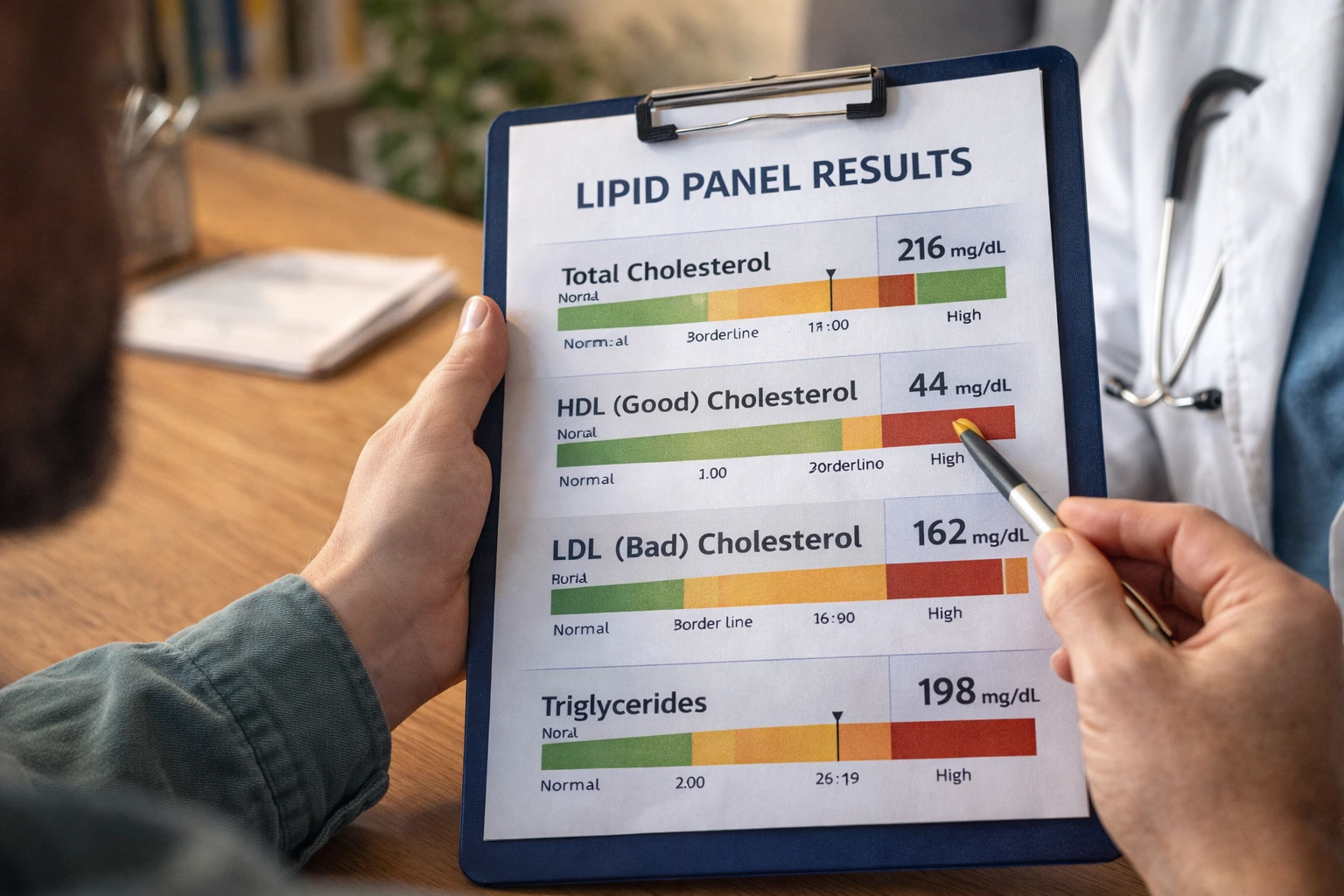
You got your lipid panel results back and now you’re staring at numbers that might as well be written in another language, wondering if you should panic or just ignore them until your next checkup – but understanding lipid panel results explained is actually simpler than you think, and it matters way more than you realize.
Understanding lipid panel results
Your lipid panel is basically a health snapshot that breaks down the different types of cholesterol and fats floating around in your bloodstream. Think of it like a financial report for your arteries. Total cholesterol adds up all the cholesterol in your blood, but that number alone doesn’t tell the whole story. HDL cholesterol is the cleanup crew, actively removing harmful cholesterol from your arteries and transporting it to your liver for disposal. LDL cholesterol is the troublemaker that builds up on artery walls if levels get too high. Triglycerides are another type of fat that can spike after eating fatty foods or refined carbs. Imagine your arteries as highways: LDL is like traffic congestion, HDL is like traffic control, and triglycerides are extra vehicles adding to the jam. When you get your results, you’re seeing a moment-in-time measurement of how well your body is managing these different components. Young adults often think lipid panels are something to worry about later, but your twenties and thirties are actually when habits start showing up in these numbers.
- Total cholesterol should ideally be less than 200 mg/dL.
- High levels of LDL cholesterol may increase your risk of heart disease.
- HDL cholesterol is considered ‘good’ as it helps remove LDL from the bloodstream.
- Elevated triglyceride levels may indicate an increased risk of heart disease.
Interpreting your results
Once you have your numbers, the real work begins: understanding what they mean for you personally. Your healthcare provider will give you reference ranges, but context matters. A young adult with an LDL of 130 might need attention if there’s family history of early heart disease, but might be fine otherwise. Compare your results to the standard benchmarks, then look at the bigger picture. Are your numbers trending up or down compared to last year? Did you change your diet or exercise routine between tests? Consider a hypothetical scenario: Sarah, 28, got her lipid panel and saw LDL at 145, HDL at 35, and triglycerides at 200. She felt fine, but these numbers suggested her current lifestyle of late-night fast food and minimal exercise was catching up with her. Her doctor didn’t prescribe medication but gave her three months to make changes through diet and activity before retesting. This is where interpretation becomes action. The numbers aren’t just abstract figures; they’re feedback from your body about what’s working and what isn’t. Don’t just glance at them and move on. Sit with them. Ask questions. Understand the ‘why’ behind each number.
📘 Fix your day in under 2 minuteschoose where to begin:
Tips for maintaining healthy lipid levels
Healthy lipid levels aren’t locked in by genetics alone; your daily choices matter tremendously. Start with what you eat. Swap out saturated fats from processed foods for unsaturated fats from avocados, nuts, and olive oil. Fiber is your friend here too, especially soluble fiber from oats, beans, and apples, which actively helps lower LDL. Exercise doesn’t require a gym membership or hours of training. Thirty minutes of moderate activity most days, whether that’s brisk walking, cycling, or dancing, raises HDL and lowers triglycerides. Sleep and stress management matter more than many young adults realize; poor sleep and chronic stress elevate triglycerides and lower HDL. Cut back on refined carbs and added sugars, which spike triglycerides fast. If you drink alcohol, keep it moderate. Avoid smoking entirely. Consider adding foods specifically shown to help: fatty fish like salmon twice a week for omega-3s, plant sterols from fortified foods, and dark chocolate in moderation. Small consistent changes compound over months. You don’t need perfection; you need direction and consistency.
Consulting your healthcare provider
Your lipid panel results are a conversation starter, not a verdict. Schedule time with your doctor to review the numbers together and understand what they mean for your specific situation. Bring questions. Ask whether your results warrant lifestyle changes alone or if medication might be appropriate. Discuss your family history, current habits, and any symptoms you’ve noticed. Your provider can assess your overall cardiovascular risk, not just isolated numbers. They might refer you to a registered dietitian who specializes in heart health, which can be incredibly valuable for personalized meal planning. Be honest about your lifestyle. If you know you won’t hit the gym five days a week, say so; your doctor can suggest realistic alternatives. If you’re struggling with diet changes, ask for practical strategies or resources. Some providers offer apps or programs to help track progress. This isn’t about judgment; it’s about partnership. Your healthcare provider has seen countless lipid panels and knows what works. Use their expertise. If you feel dismissed or like your concerns aren’t being heard, it’s okay to seek a second opinion.
Regular monitoring and follow-up
One lipid panel is a snapshot; multiple panels over time paint a real picture of your health trajectory. Most guidelines suggest rechecking every four to six years for adults with normal results, but more frequently if your numbers are elevated or you’re making lifestyle changes. Schedule follow-up appointments and actually keep them. When you retest after making changes, you’ll see whether your efforts are working. This feedback loop is motivating. Imagine testing again after three months of consistent exercise and dietary changes, only to see your LDL drop 20 points and HDL increase. That’s tangible proof that your actions matter. Keep a simple record of your results over time so you can spot trends yourself. Are numbers improving, staying stable, or worsening? Share this history with your provider. If you’re on medication to manage lipids, regular monitoring ensures your dose is appropriate and you’re tolerating it well. Young adults sometimes skip follow-ups thinking they’re healthy, but consistency is what prevents problems down the road. Your lipid panel is like a progress report card for your cardiovascular health. Check in regularly, adjust as needed, and stay engaged with your own wellbeing.
Lipid panel results are a crucial aspect of assessing heart health. Understanding your numbers, interpreting the results, maintaining healthy levels, consulting your healthcare provider, and regular monitoring are key steps in ensuring optimal well-being.
What is the ideal range for total cholesterol?
The ideal total cholesterol level should be less than 200 mg/dL to maintain good heart health.
How can I improve my lipid panel results?
You can improve your lipid panel results by adopting a heart-healthy lifestyle, including regular exercise, a balanced diet, and avoiding smoking, as well as consulting with your healthcare provider for personalized guidance.
Others also read:
Disclaimer: This article is for informational purposes only and is not a substitute for professional medical advice. Always consult a healthcare professional for personal guidance.
This guide has been prepared and reviewed by the GlobalHealthBeacon editorial team and reflects current medical research as of 2026. It provides structured, evidence-based information to support informed health decisions.
