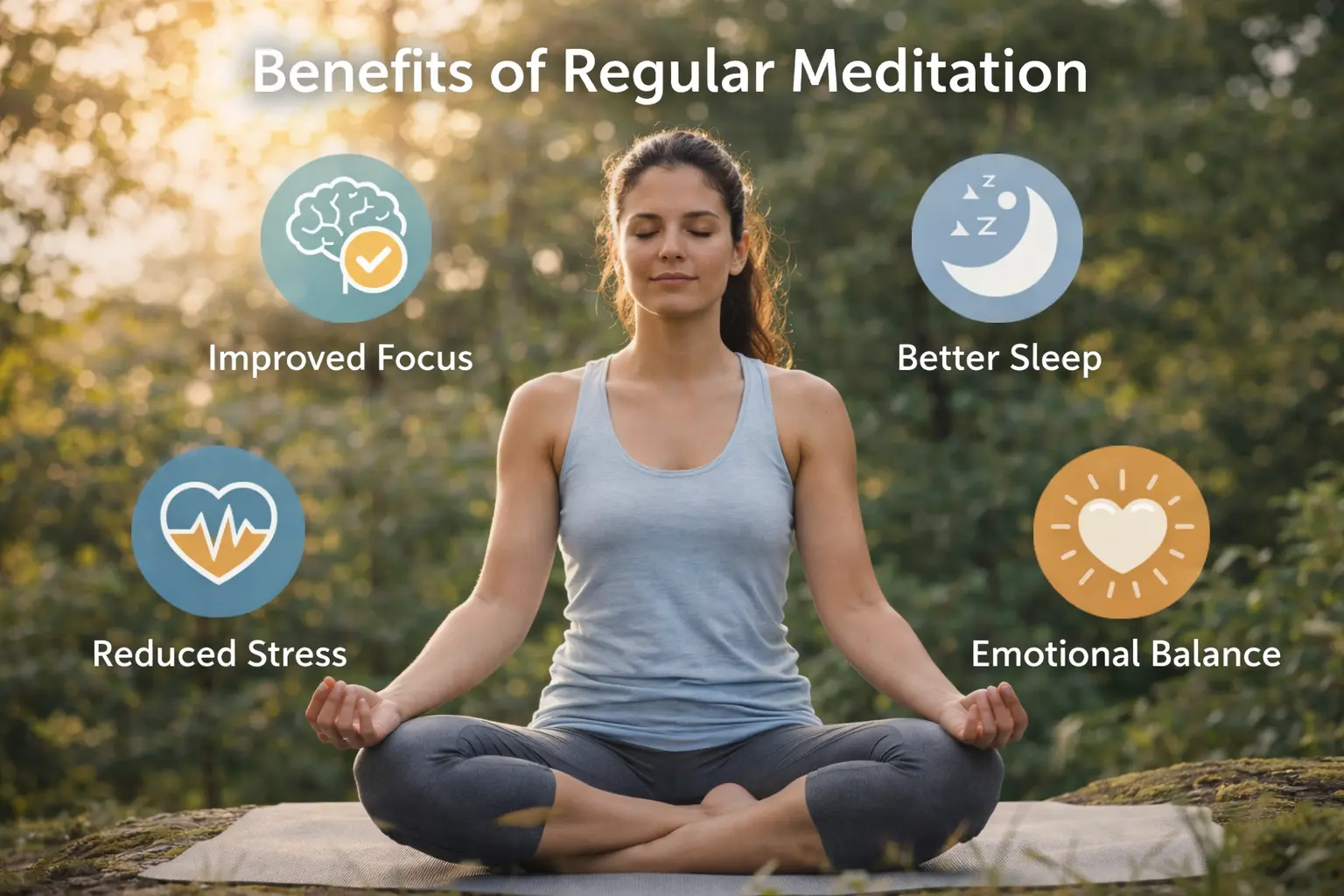
If you’re tired of feeling scattered, anxious, and mentally foggy every single day, the benefits of regular meditation might be exactly what you’ve been missing to finally reclaim your peace of mind.
Enhanced mental clarity
Picture yourself struggling to remember where you put your keys, or sitting in a conversation and losing your train of thought mid-sentence. These moments feel frustrating, don’t they? Regular meditation addresses this directly by training your brain to focus. When you practice mindfulness meditation, you’re essentially exercising your attention span like a muscle. Research shows that consistent practitioners experience measurable improvements in concentration, memory retention, and decision-making abilities. Consider Margaret, a 68-year-old who started with just 10 minutes daily. Within weeks, she noticed she could read a full chapter without rereading paragraphs. Her ability to follow complex conversations improved noticeably. The mechanism is straightforward: meditation reduces mental chatter and strengthens neural pathways associated with attention. Seniors often report feeling sharper, more present, and better equipped to handle complex tasks after establishing a regular practice.
Stress reduction
Stress doesn’t just feel bad in the moment; it accumulates in your body like rust on machinery. When you’re stressed, your cortisol levels spike, triggering a cascade of physical responses: tension, shallow breathing, racing thoughts. Meditation interrupts this cycle. Through deep breathing techniques and mindfulness practices, your nervous system gradually learns to downshift from high alert to calm. Think of it like teaching your body a new default setting. A 72-year-old named Robert practiced meditation for just 15 minutes each morning and noticed his shoulders weren’t perpetually tense anymore. His wife commented that he seemed less reactive to minor frustrations. The science backs this up: regular meditators show consistently lower cortisol levels, reduced blood pressure spikes, and improved stress resilience. Rather than eliminating stressors, meditation changes how your body responds to them, creating genuine relief.
Improved emotional well-being
Emotional regulation becomes harder as life piles on experiences, losses, and disappointments. Meditation offers a pathway back to emotional stability. It enhances self-awareness by creating space between your thoughts and your reactions. Instead of automatically spiraling when something upsets you, you notice the feeling first. This pause is powerful. Many seniors report that meditation fosters a more positive outlook, even during difficult times. You become less reactive and more reflective. Additionally, the practice cultivates empathy and compassion, both toward others and yourself. Common emotional struggles like anxiety and depression show measurable improvement with consistent practice. One 70-year-old woman described meditation as finally giving her permission to feel her emotions without being controlled by them. She could acknowledge sadness without letting it consume her entire day.
- Practice mindful breathing exercises daily, starting with five minutes and gradually extending to fifteen minutes as comfort increases.
- Engage in guided meditation sessions specifically designed for emotional healing, which provide structure and support for beginners.
- Join meditation classes tailored for seniors to connect with like-minded individuals and build accountability through community.
🔬 Science-backed benefits in 2 minuteschoose where to begin:
Physical health benefits
Your mind and body aren’t separate systems; they’re deeply interconnected. When your mind relaxes through meditation, your body follows. Regular practice has been linked to lower blood pressure, improved cardiovascular health, and enhanced immune system functioning. The mechanism works through stress reduction: chronic stress damages your cardiovascular system and weakens immunity, while meditation reverses these effects. Imagine your blood vessels as highways. Stress causes them to constrict, forcing your heart to work harder. Meditation helps them relax and expand. A 75-year-old man with borderline hypertension started meditating and saw his blood pressure readings normalize within two months without medication changes. His doctor was impressed. Beyond blood pressure, regular practitioners report fewer infections, faster recovery times, and improved energy levels. These aren’t miraculous claims; they’re measurable physiological responses to reduced stress and improved nervous system regulation.
Quality sleep promotion
Sleep troubles plague many seniors. Your mind races at bedtime, replaying the day’s events or worrying about tomorrow. Meditation directly addresses this by calming both mind and body before sleep. When you practice meditation in the evening, you’re signaling your nervous system that it’s safe to relax. Your breathing slows, your muscles release tension, and your racing thoughts settle. This creates the ideal conditions for deep, restorative sleep. A 69-year-old woman who’d struggled with insomnia for years started a simple 10-minute meditation routine before bed. Within a week, she noticed falling asleep faster. Within a month, she was sleeping through the night. The quality of her sleep improved dramatically. She woke refreshed rather than groggy. Incorporating meditation into your daily routine, especially in the evening, can transform your sleep patterns and overall well-being by addressing the root cause of sleeplessness rather than masking symptoms.
Maintaining cognitive function
Cognitive decline feels inevitable as we age, but research suggests meditation can slow this process significantly. When you engage in mindfulness practices, you’re stimulating multiple brain regions simultaneously: attention networks, memory centers, and emotional processing areas. This stimulation strengthens neural connections and promotes neuroplasticity, your brain’s ability to form new pathways. Think of it as keeping your brain actively engaged rather than letting it coast. Studies show regular meditators maintain better memory, sharper mental acuity, and slower cognitive decline compared to non-practitioners. A 73-year-old man who started meditating after his wife’s dementia diagnosis wanted to protect his own cognitive health. Five years later, his cognitive assessments showed stability while his peers experienced typical age-related decline. He credits his consistent practice. The evidence suggests that meditation contributes to long-term brain health by maintaining the structural and functional integrity of critical brain regions associated with memory and executive function.
Regular meditation for seniors offers enhanced mental clarity, stress reduction, improved emotional well-being, physical health benefits, quality sleep promotion, and maintenance of cognitive function.
Can seniors with mobility issues practice meditation?
Yes, seniors with mobility issues can practice meditation in seated positions or even lying down. Guided meditation sessions specifically designed for individuals with limited mobility are available.
How often should seniors practice meditation to experience benefits?
Seniors can start with short meditation sessions of 10-15 minutes daily and gradually increase the duration based on comfort level. Consistency is key to reaping the benefits of meditation.
Others also read:
Disclaimer: This article is for informational purposes only and is not a substitute for professional medical advice. Always consult a healthcare professional for personal guidance.
This article has been prepared and reviewed by the GlobalHealthBeacon editorial team and is based on current medical research and published scientific literature available in 2026. It provides structured, evidence-based information to support informed health decisions.
