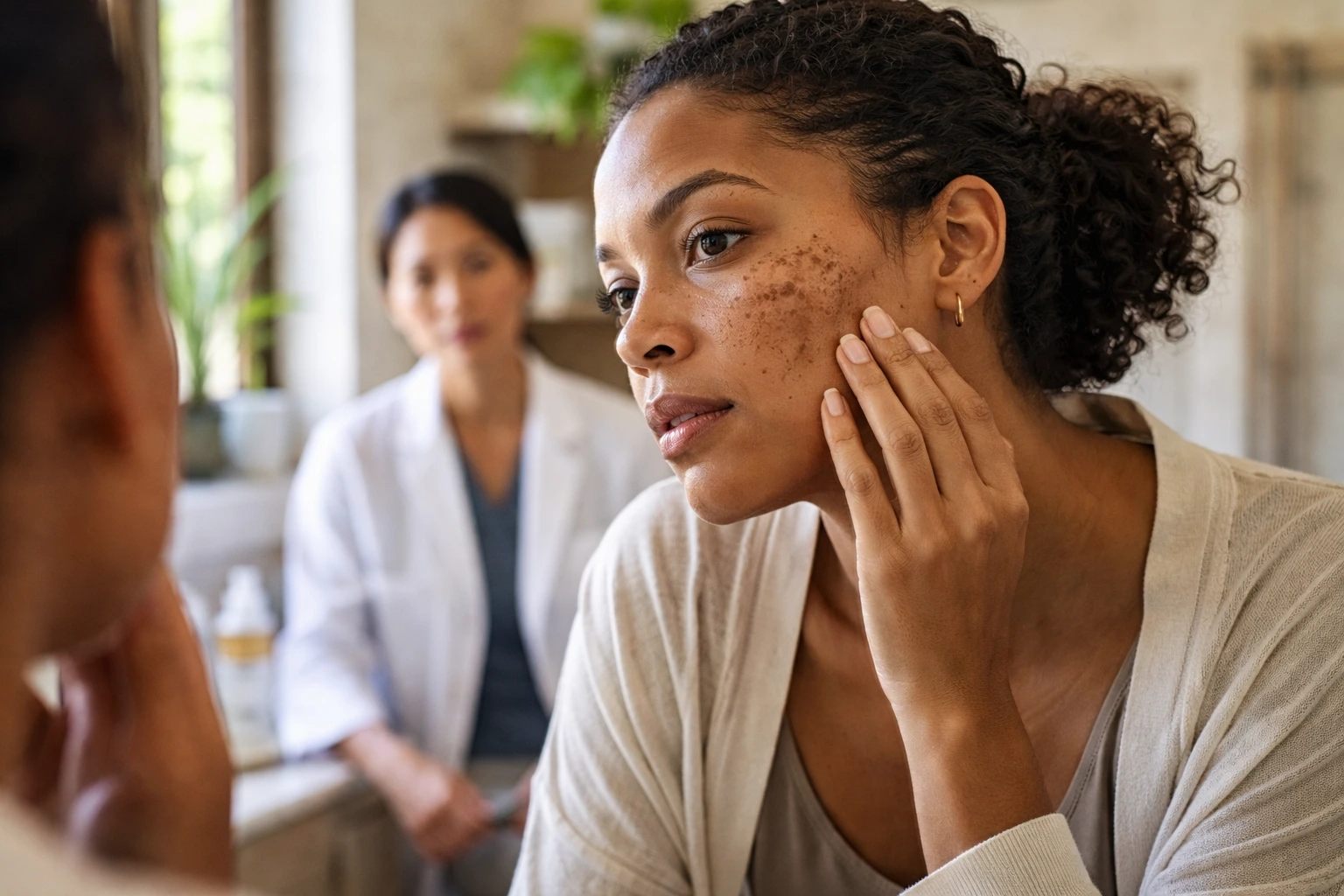
You catch your reflection in the mirror and those dark patches staring back at you feel like they’re getting worse, making you reach for concealer before leaving the house, but there are real hyperpigmentation treatment options that actually work.
Understanding hyperpigmentation treatments
When you’re dealing with hyperpigmentation, the treatment landscape can feel overwhelming at first. I remember scrolling through endless options and feeling paralyzed by choice. The reality is that treatments fall into distinct categories, each working differently on your skin. Topical creams like hydroquinone work gradually, lightening dark spots over weeks or months by slowing melanin production. Chemical peels use acids to physically exfoliate away the darkened outer layer, revealing fresher skin underneath. Laser therapy is the heavy hitter, using focused light to break down melanin clusters deep in your skin. Some people see results in weeks, others need months. The key is understanding that your skin type, the depth of pigmentation, and your lifestyle all influence which treatment will actually work for you.
- Topical creams like hydroquinone can lighten dark spots over time.
- Chemical peels use acids to exfoliate the skin, revealing a brighter complexion.
- Laser therapy targets melanin with intense light pulses, breaking down dark pigmentation.
Making lifestyle changes for hyperpigmentation
Here’s what nobody tells you: treatments work so much better when you’re not undoing them every single day. Sun exposure is basically your enemy when you’re trying to fade hyperpigmentation. I learned this the hard way after a beach weekend completely reversed three months of progress. Daily sunscreen, even on cloudy days and indoors, becomes non-negotiable. Hydration matters too, not just for your skin but for how treatments absorb and work. Eating foods rich in antioxidants, like berries and leafy greens, supports your skin’s natural healing process from the inside. Some people find that reducing stress and getting better sleep actually speeds up their results. It sounds simple, but these lifestyle tweaks create the foundation that lets your actual treatments shine.
💬 Ready to feel better in 2 minutes?choose where to begin:
The emotional impact of hyperpigmentation
Let’s be real: hyperpigmentation messes with your head more than your skin sometimes. You start avoiding photos, wearing long sleeves in summer, or spending way too much money on makeup just to feel normal. That self-consciousness is completely valid and more common than you think. Young adults especially feel this pressure because social media shows you endless flawless skin while yours feels broken. The emotional toll can actually slow your healing because stress triggers inflammation. Finding your people, whether that’s friends who get it or online communities where others are on the same journey, genuinely helps. Practicing self-compassion instead of self-criticism isn’t just feel-good advice, it’s actually part of the healing process.
Seeking professional advice and support
This is where everything changes. A dermatologist isn’t just someone who prescribes creams, they’re someone who actually sees your skin and understands what will work for your specific situation. During my first appointment, I thought I’d get a quick fix recommendation. Instead, my dermatologist explained that my hyperpigmentation was caused by sun damage and inflammation, which completely changed my treatment approach. They can assess your skin type, determine how deep the pigmentation goes, and recommend whether you need topical treatments, professional procedures, or a combination. They’ll also manage expectations, which is huge because knowing you’ll need three laser sessions over six months is way less frustrating than hoping for overnight results. Don’t hesitate to ask questions or get a second opinion if something doesn’t feel right.
Hyperpigmentation treatments offer a range of solutions from topical creams to lifestyle changes. Managing this condition involves a holistic approach that addresses both physical and emotional aspects for optimal results.
Is hyperpigmentation treatment a one-time fix?
Hyperpigmentation treatments often require consistent use over time for noticeable results. It may involve multiple sessions or a combination of therapies for best outcomes.
Are there natural remedies for hyperpigmentation?
Natural ingredients like Vitamin C, niacinamide, and licorice extract have shown promise in brightening dark spots. However, results may vary, and it’s advisable to consult a dermatologist for personalized advice.
Others also read:
Disclaimer: This article is for informational purposes only and is not a substitute for professional medical advice. Always consult a healthcare professional for personal guidance.
This article presents an experience-based perspective and has been reviewed by the GlobalHealthBeacon editorial team in 2026. It provides structured, evidence-based information to support informed health decisions.
