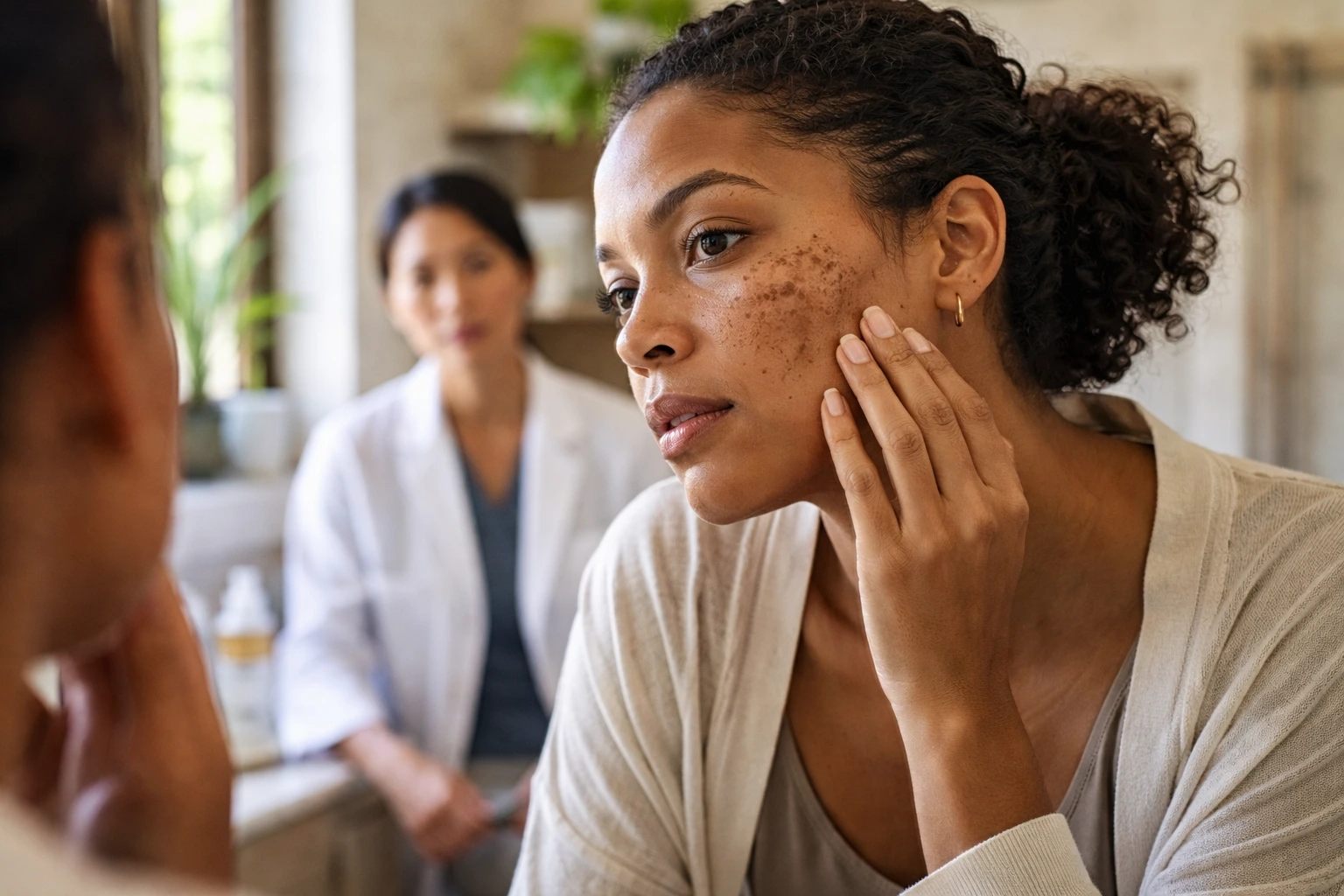
Dark patches are taking over your face and no amount of concealer is cutting it anymore, so let’s talk about actual hyperpigmentation treatment options that work and get you back to feeling like yourself.
Understanding hyperpigmentation
Hyperpigmentation happens when your skin produces too much melanin in certain spots, creating dark patches that can range from small freckles to larger areas of discoloration. For young adults, this often shows up after acne scars, sun damage, or hormonal shifts. Think of melanin as your skin’s natural pigment factory. When it goes into overdrive in one area, you get those stubborn dark spots. The key is figuring out why it’s happening in the first place. Is it sun exposure from years of beach trips without sunscreen? Post-inflammatory hyperpigmentation from picking at breakouts? Or maybe melasma triggered by hormonal changes or genetics? Understanding your specific type matters because it changes which treatment will actually work for you.
- Identify the triggers that contribute to hyperpigmentation.
- Consult a dermatologist for a proper diagnosis and personalized treatment plan.
- Stay informed about the different types of hyperpigmentation to tailor your treatment approach.
Topical treatments for hyperpigmentation
Topical creams are usually the first line of defense and for good reason. Hydroquinone is the gold standard, working by slowing down melanin production so new skin cells come in lighter. Retinoids speed up cell turnover, pushing out darker cells faster. Kojic acid and vitamin C serums brighten while protecting against future damage. A typical routine might look like this: start with a low concentration hydroquinone cream at night, add a vitamin C serum in the morning, and always use SPF 30 or higher. Results take patience, usually 8 to 12 weeks before you notice real fading. Some people see faster progress by combining treatments, but that’s where a dermatologist’s guidance becomes crucial to avoid irritation or overuse.
📘 Fix your day in under 2 minuteschoose where to begin:
Chemical peels and microdermabrasion
Professional treatments work differently than creams because they physically remove or chemically dissolve the outer layers of skin where pigmentation sits. Chemical peels use acids like glycolic or salicylic to dissolve the top layer, revealing fresher skin underneath. Microdermabrasion uses tiny crystals or a diamond tip to gently sand away discolored skin. For young adults with mild to moderate hyperpigmentation, these treatments often deliver visible results in just a few sessions. A typical schedule might be one treatment every two to four weeks. The downside is temporary redness and sensitivity afterward, so you need to commit to strict sun protection. Many people combine peels with topical treatments for faster fading. The advantage is you can see progress relatively quickly compared to waiting months for a cream to work.
Laser therapy for hyperpigmentation
Laser treatments are the heavy hitters when other options haven’t worked. Different laser types target pigment differently. Q-switched lasers break down melanin deposits directly, while fractional lasers create controlled damage that triggers healing and collagen production. Imagine the laser as a precise tool that zaps only the dark cells while leaving healthy skin untouched. Most people need multiple sessions spaced four to six weeks apart. Results can be dramatic, with significant fading visible after just two or three treatments. The catch is cost and potential side effects like temporary darkening or lightening of the treated area, especially in darker skin tones. That’s why choosing an experienced dermatologist matters. Recovery is minimal, usually just some redness for a day or two, making it appealing for young adults who can’t take extended downtime.
Natural remedies and homecare tips
While natural ingredients won’t erase hyperpigmentation as quickly as professional treatments, they can support your overall strategy and prevent it from getting worse. Aloe vera has soothing properties and contains compounds that may help with pigmentation. Licorice extract is backed by research showing it can lighten dark spots over time. Vitamin C serums brighten and protect against UV damage that worsens hyperpigmentation. The real game changer though is prevention. Wear sunscreen daily, even on cloudy days, because UV exposure is the number one trigger for worsening existing hyperpigmentation. Avoid picking at acne or scars since inflammation triggers more melanin production. A consistent routine of cleansing, treating, and protecting your skin creates the foundation that makes any treatment work better.
Exploring various hyperpigmentation treatment options can help you address skin discoloration effectively, whether through topical treatments, professional procedures, or natural remedies. Understanding the causes and types of hyperpigmentation is crucial in selecting the most suitable approach for your skin condition.
Are over-the-counter products effective for treating hyperpigmentation?
While some over-the-counter products may help fade minor hyperpigmentation, severe cases often require prescription-strength treatments or professional procedures for optimal results.
Is hyperpigmentation a reversible skin condition?
Hyperpigmentation can be managed and minimized with appropriate treatment and lifestyle changes, but complete reversal may depend on factors like the underlying cause, skin type, and individual response to treatments.
Others also read:
Disclaimer: This article is for informational purposes only and is not a substitute for professional medical advice. Always consult a healthcare professional for personal guidance.
This guide has been prepared and reviewed by the GlobalHealthBeacon editorial team and reflects current medical research as of 2026. It provides structured, evidence-based information to support informed health decisions.
