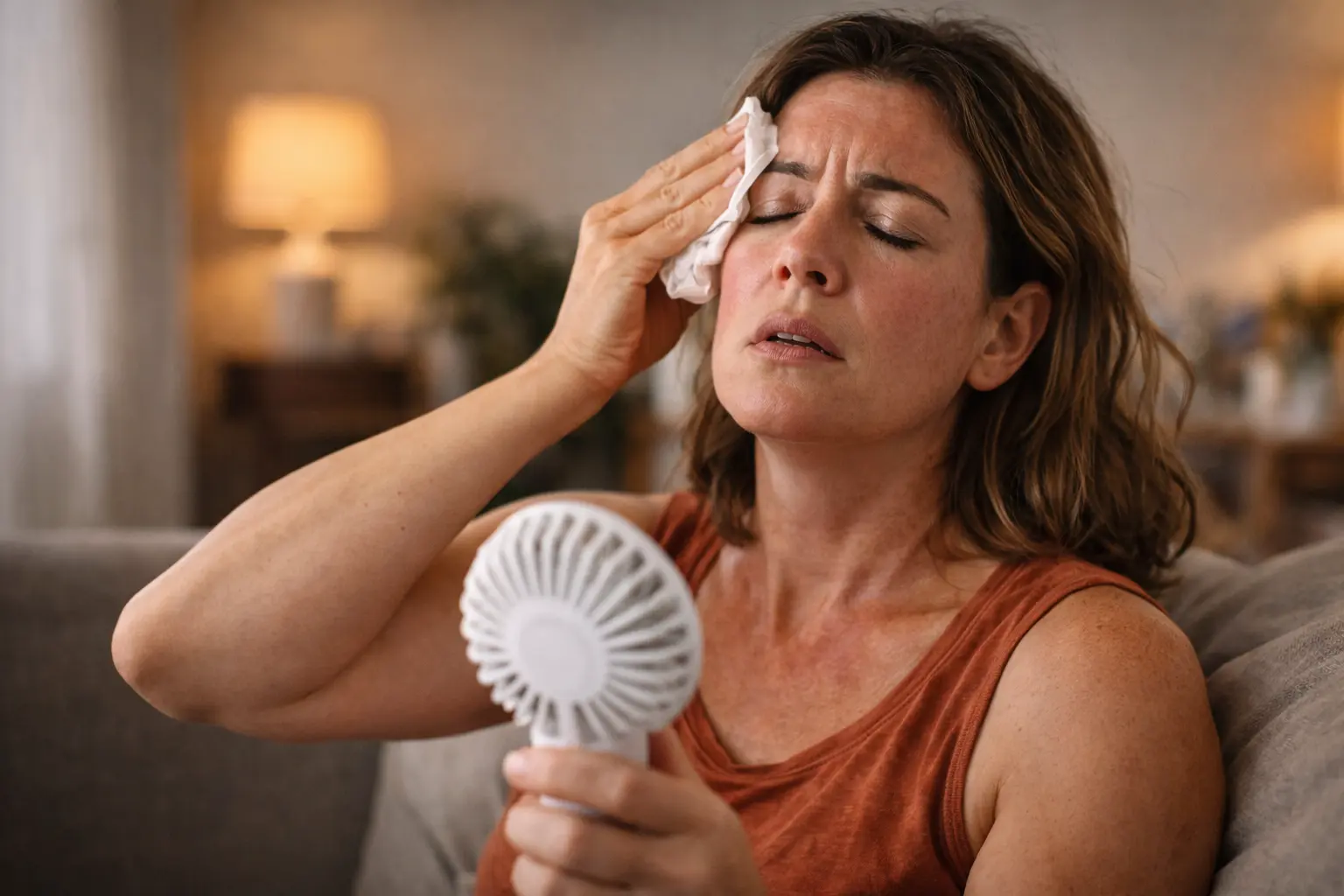
You’re sitting in a meeting, at dinner with friends, or just trying to get through your workday when suddenly your body feels like it’s on fire, sweat pours down your face, and you’re desperately pulling off layers while everyone stares – welcome to menopause hot flashes, and you’re definitely not alone in this frustrating reality.
Understanding menopause hot flashes
Menopause hot flashes hit differently than regular body heat. They’re sudden, intense waves of warmth that flood your face, neck, and chest without warning, often accompanied by drenching sweats, a racing heartbeat, and that unmistakable flushed feeling. Picture this: you’re at work, feeling completely fine, and then within seconds your internal temperature spikes so dramatically that you’re peeling off your sweater while your coworkers are reaching for jackets. These episodes can strike multiple times daily, lasting anywhere from a few seconds to several minutes, and they’re driven by hormonal fluctuations that your body is actively processing. What makes them particularly challenging is their unpredictability. You might experience one hot flash during your morning commute and then have several clustered together in the afternoon. Understanding that these are your body’s natural response to changing estrogen levels helps normalize the experience, even when it feels completely disruptive to your daily life and sleep schedule.
- Hot flashes can occur multiple times a day and may last for a few seconds to several minutes.
- Avoiding triggers like caffeine, spicy foods, and alcohol can help reduce the frequency and intensity of hot flashes.
- Dressing in layers and using a portable fan can provide quick relief when a hot flash strikes.
Natural remedies for hot flash relief
If you’re hesitant about jumping straight to prescription medications, natural remedies offer a gentler entry point worth exploring. Black cohosh, a plant extract that’s been used for centuries, has shown promise in reducing hot flash frequency for some women, though results vary from person to person. Sage leaf tea is another option gaining traction, with some users reporting meaningful relief within weeks of consistent use. Red clover and evening primrose oil are also popular choices in the natural wellness space. Beyond supplements, lifestyle shifts like yoga and mindfulness meditation work by calming your nervous system, which can reduce the intensity of hot flashes. Imagine starting your day with ten minutes of breathwork or gentle stretching, which might sound simple but can genuinely shift how your body responds to hormonal triggers. Herbal teas like chamomile or peppermint offer both hydration and a grounding ritual. However, this is crucial: before adding any supplement or herbal remedy to your routine, talk with your healthcare provider. Some natural products interact with medications, and your doctor can help you identify which options align with your specific health profile and needs.
📘 Fix your day in under 2 minuteschoose where to begin:
Healthy habits to manage hot flashes
Your daily choices directly influence how often and intensely hot flashes strike. Start with hydration, which sounds basic but genuinely matters. Staying consistently hydrated helps regulate your body temperature and supports hormonal balance. Regular exercise, whether that’s brisk walking, swimming, or cycling, reduces hot flash severity over time by improving cardiovascular health and stabilizing hormone levels. Aim for at least 150 minutes of moderate activity weekly. Nutrition plays a supporting role too. A balanced diet rich in whole grains, lean proteins, fruits, and vegetables provides the nutrients your body needs during this transition. Consider keeping a food diary for a week to identify your personal triggers, which might include hot beverages, spicy dishes, or high-sugar foods. Stress management is equally important. When you’re anxious or tense, your body is more reactive to hormonal shifts, amplifying hot flash episodes. Try progressive muscle relaxation, journaling, or spending time in nature. Sleep quality matters significantly as well. A cool bedroom temperature, breathable bedding, and a consistent sleep schedule help reduce nighttime hot flashes that disrupt your rest and leave you exhausted the next day.
Alternative therapies for hot flash relief
Beyond conventional approaches, alternative therapies offer different pathways to symptom relief. Acupuncture works by stimulating specific points on your body to restore energy balance, and several studies suggest it can reduce hot flash frequency and intensity. Some women report noticeable improvements after just a few sessions, though consistency matters. Hypnosis might sound unconventional, but it’s grounded in real neuroscience. A trained hypnotherapist guides you into a relaxed state where your mind becomes more receptive to suggestions that help your body respond differently to hormonal triggers. Aromatherapy using essential oils like lavender or peppermint can provide immediate cooling sensations and promote relaxation during a hot flash episode. Massage therapy, particularly focused on stress-prone areas like your shoulders and neck, reduces physical tension that amplifies hot flash symptoms. Tai chi combines gentle movement with breathing techniques, creating a meditative practice that many women find calming and effective. The common thread across these therapies is that they all promote relaxation and help your nervous system shift out of fight-or-flight mode, which can significantly reduce how intensely your body reacts to hormonal changes.
Seeking professional help for hot flashes
If hot flashes are genuinely disrupting your life, stealing your sleep, or making work and social situations unbearable, professional support becomes essential. Your healthcare provider can evaluate your specific situation and discuss options tailored to your needs. Hormone replacement therapy (HRT) remains one of the most effective treatments for moderate to severe hot flashes, working by stabilizing the hormonal fluctuations that trigger them. Modern HRT comes in various forms, including patches, pills, and gels, allowing your doctor to find what works best for your lifestyle. Non-hormonal prescription medications like SSRIs or SNRIs can also reduce hot flash frequency, though they work differently than HRT. Gabapentin is another option that some women find helpful. Your doctor will consider your personal health history, family medical background, and symptom severity when recommending treatment. Some women benefit from combining approaches, like using a natural remedy alongside lifestyle changes, or starting with behavioral strategies before moving to medication if needed. The key is having an honest conversation with your healthcare provider about how much hot flashes are impacting your quality of life, your sleep, your work performance, and your mental health, so together you can create a realistic management plan.
Menopause hot flashes are a common and disruptive symptom experienced by many women during the menopausal transition. Understanding potential triggers, exploring natural remedies, adopting healthy habits, considering alternative therapies, and seeking professional help are essential steps to managing hot flashes effectively.
Are hot flashes dangerous?
Hot flashes themselves are not dangerous, but they can indicate hormonal changes associated with menopause. If hot flashes persist or significantly impact your quality of life, consult your healthcare provider for further evaluation and management.
Can menopause hot flashes be prevented?
While hot flashes are a natural part of menopause, adopting a healthy lifestyle, avoiding triggers, and exploring various treatment options may help reduce the frequency and intensity of hot flashes.
Others also read:
Disclaimer: This article is for informational purposes only and is not a substitute for professional medical advice. Always consult a healthcare professional for personal guidance.
This guide has been prepared and reviewed by the GlobalHealthBeacon editorial team and reflects current medical research as of 2026. It provides structured, evidence-based information to support informed health decisions.
